• Fri frakt över 249 kr
  • •
  • Snabba leveranser
  • •
  • Billiga böcker
Kundservice

Du är på sajten för privatpersoner.

Företag, bibliotek eller offentlig verksamhet?

Du handlar på classic.bokus.com, där alla dina funktioner finns intakta.
Till classic.bokus.com
Bokus logotyp. Gå till startsidan.
  • Erbjudanden
  • Nyheter
  • Student
  • Topplistor
  • Barn & ungdom
  • Bokus Play
  • E-böcker
  • Pocketböcker
  • Spel & pussel

10% rabatt på allt med kod: NYSTART10 →

Sidfot

Mina sidor

    Hjälp

    • Kundservice
    • Vanliga frågor och svar
    • Frakt och leverans
    • Retur vid ångerrätt
    • Reklamera vara
    • Betalning
    • Köpvillkor
    • Allmänna villkor
    • Information om webbplatsens tillgänglighet

    Om Bokus

    • Om oss
    • Pressrum
    • För studenter
    • För företag
    • För bibliotek och offentlig verksamhet
    • För leverantörer
    • Hållbarhet

    Populärt

    • Aktuella erbjudanden
    • Presentkort
    • Studentlitteratur
    • Nya böcker
    • Topplistor
    • Signerade böcker
    • Engelska böcker

    Inspiration

    • Boktips
    • BookTok
    • Populära bokserier
    • Barnbokskaraktärer
    • Populära författare
    Logotyp för Bokus
    Följ oss på Facebook (extern länk)Följ oss på Instagram (extern länk)Följ oss på YouTube (extern länk)Följ oss på TikTok (extern länk)
    bokus @ CookiesAnpassa cookiesIntegritetspolicyKöpvillkor
    Till Citymail hemsida (extern länk)Till Budbee hemsida (extern länk)Till Postnord hemsida (extern länk)Till Schenker hemsida (extern länk)Till Early Bird hemsida (extern länk)Till Walleys hemsida (extern länk)
    1. Samhälle och politik
    2. Politik och statsskick
    3. Politisk aktivism

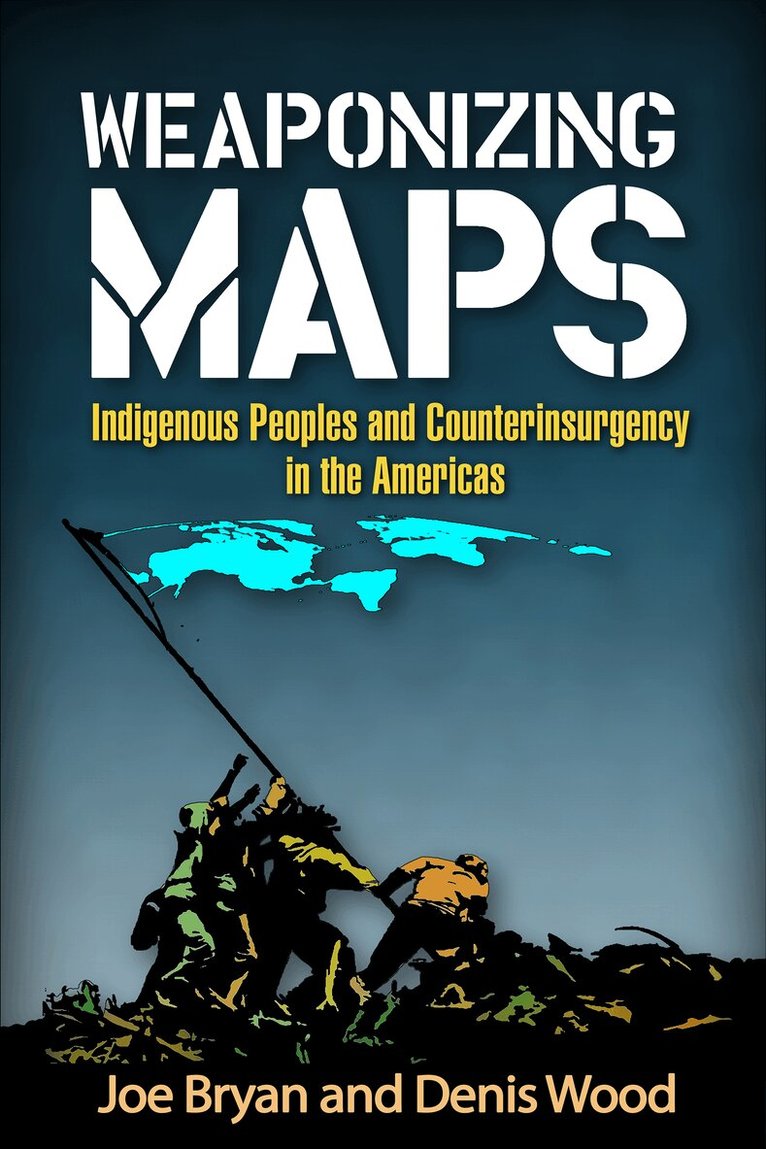
    Weaponizing Maps

    Indigenous Peoples and Counterinsurgency in the Americas

    AvJoe Bryan,Denis Wood

    Häftad, Engelska, 2015

    513 kr

    Beställningsvara. Skickas inom 5-8 vardagar. Fri frakt över 249 kr.

    Fler format och utgåvor

    Inbunden

    780 kr

    Beskrivning

    Maps play an indispensable role in indigenous peoples’ efforts to secure land rights in the Americas and beyond. Yet indigenous peoples did not invent participatory mapping techniques on their own; they appropriated them from techniques developed for colonial rule and counterinsurgency campaigns, and refined by anthropologists and geographers. Through a series of historical and contemporary examples from Nicaragua, Canada, and Mexico, this book explores the tension between military applications of participatory mapping and its use for political mobilization and advocacy. The authors analyze the emergence of indigenous territories as spaces defined by a collective way of life--and as a particular kind of battleground.

    Produktinformation

    • Utgivningsdatum:2015-04-28
    • Mått:152 x 229 x 16 mm
    • Vikt:406 g
    • Format:Häftad
    • Språk:Engelska
    • Antal sidor:272
    • Förlag:Guilford Publications
    • ISBN:9781462519910

    Utforska kategorier

    • Politisk aktivism inom Samhälle och politik
    • Geografi inom Naturvetenskap och teknik
    • Etnicitet inom Samhälle och politik

    Mer om författaren

    Joe Bryan, PhD, is Assistant Professor of Geography at the University of Colorado Boulder. He is the author of numerous articles, book chapters, and papers on participatory mapping and indigenous rights that draw from his research with indigenous communities in the United States, Honduras, Nicaragua, and Mexico. He has also participated in mapping projects with indigenous communities in the United States and Central America as an independent consultant.Denis Wood, PhD, is an independent scholar living in Raleigh, North Carolina. He lectures widely and is the author of a dozen books and over 150 papers. From 1974 to 1996, he taught in the School of Design at North Carolina State University. In 1992, he curated the Power of Maps exhibition for the Cooper-Hewitt National Museum of Design (remounted at the Smithsonian in Washington, DC, in 1994), for which he wrote the book The Power of Maps. His other books include Rethinking the Power of Maps; Making Maps, Third Edition (coauthored with John Krygier); and Weaponizing Maps (coauthored with Joe Bryan).

    Recensioner i media

    "A gripping account of how academic research, military intelligence, and indigenous mapping projects became embroiled in the service of geopolitics. Bryan and Wood present an adventure story of geopolitical struggle right in the heart of geographical research institutions in the United States and indigenous communities in the Americas. This book is necessary reading for geographers and all social scientists interested in the ways in which knowledge production and state interests merged in the late 20th century."--John Pickles, PhD, Earl N. Phillips Distinguished Professor of International Studies, Department of Geography, University of North Carolina, Chapel Hill"'Map or be mapped,' the saying goes among those associated with the wave of participatory mapping that began in the 1980s. Weaponizing Maps gives this saying radically new meaning, with equal parts analytic depth and political charge. Readers inclined to use maps for causes of social justice will proceed fully informed of the daunting forces they are up against--from the counterinsurgency designs of the world’s most powerful military to ostensibly progressive scholars who deploy the fine tradition of participatory mapping toward dubious ends."--Charles R. Hale, PhD, Director, LLILAS Benson Latin American Studies and Collections, University of Texas at Austin"Bold and confrontational. Bryan and Wood pull no punches in their indictment of the creeping militarization of geography and the once-respected American Geographical Society. The book's legacy will be marked by the extent to which geographers rethink their relationships with indigenous groups. It’s quite possible that we’re seeing the next generation of critical thinking about mapping in this book."--Jeremy Crampton, PhD, Department of Geography, University of Kentucky"Using Oaxaca as a case study of a global trend, the book makes a compelling case that militarized colonial geographies seek to replace Indigenous collective lands with a privatized Western model, under the guise of both national security and Native self-determination. But the book is also a rich example of interdisciplinary inquiry, straddling the normative divides between domestic and foreign colonialism, historical and contemporary surveys, academic and activist analysis, and Indigenous and Left discourse. It is essential for understanding land disputes of the 21st century, anywhere in Native America or the world."--Zoltán Grossman, PhD, Professor of Geography and Native Studies, The Evergreen State College -At times refreshingly polemical and unapologetically critical, Bryan and Wood provide valuable historical sketches that link the ideological and material ramifications of maps on indigenous communities and trace the development of property-based cartographic and geographic logics during wartime. Though the México Indígena project serves as a focal point, the authors deftly weave together the development of the American Geographical Society, the rise of indigenous mapping projects in the 1990s and their subsequent limitations, and the relationship between dominant geographic practices and the academic-military-industrial complex.--Great Plains Research, 10/18/2017ƒƒJoe and Denis trace how maps, over and over and over again, perform vital discursive work, how they transform territory into property, how they create facts, and how those facts seem to, time and time again, serve the particular interest of the state and/or capital at the expense of certain groups of people.--Human Geography, 3/28/2017ƒƒRecommended. Upper-division undergraduates and above.--Choice Reviews, 10/1/2015

    Innehållsförteckning

    • List of FiguresA Narrative Table of Contents1. In the Rincón of the Sierra Juárez2. The Decline and Fall of the Once August American Geographical Society3. “Red Mike” Edson’s U.S. Marine Patrols Up Nicaragua’s Río Coco in 1928–1929 and the Development of the Small Wars Manual4. The Birth of Indigenous Mapping In Canada5. Maps, Guns, and Indigenous Peoples6. From Territory to Property: Indigenous Mapping after the Cold War7. Counterinsurgency and the Rise of the “Warrior Scholars”8. The AGS, the Bowman Expeditions, and the México Indígena ProjectCoda: Kill the Insurgent, Save the Man—Indigenous Peoples and Human TerrainA Note on MapsNotesBibliographyIndex