• Fri frakt över 249 kr
  • •
  • Snabba leveranser
  • •
  • Billiga böcker
Kundservice

Du är på sajten för privatpersoner.

Företag, bibliotek eller offentlig verksamhet?

Du handlar på classic.bokus.com, där alla dina funktioner finns intakta.
Till classic.bokus.com
Bokus logotyp. Gå till startsidan.
  • Erbjudanden
  • Nyheter
  • Student
  • Topplistor
  • Barn & ungdom
  • Bokus Play
  • E-böcker
  • Pocketböcker
  • Spel & pussel

10% rabatt på allt med kod NYSTART10 →

Sidfot

Mina sidor

    Hjälp

    • Kundservice
    • Vanliga frågor och svar
    • Frakt och leverans
    • Retur vid ångerrätt
    • Reklamera vara
    • Betalning
    • Köpvillkor
    • Allmänna villkor
    • Information om webbplatsens tillgänglighet

    Om Bokus

    • Om oss
    • Pressrum
    • För studenter
    • För företag
    • För bibliotek och offentlig verksamhet
    • För leverantörer
    • Hållbarhet

    Populärt

    • Aktuella erbjudanden
    • Presentkort
    • Studentlitteratur
    • Nya böcker
    • Topplistor
    • Signerade böcker
    • Engelska böcker

    Inspiration

    • Boktips
    • BookTok
    • Populära bokserier
    • Barnbokskaraktärer
    • Populära författare
    Logotyp för Bokus
    Följ oss på Facebook (extern länk)Följ oss på Instagram (extern länk)Följ oss på YouTube (extern länk)Följ oss på TikTok (extern länk)
    bokus @ CookiesAnpassa cookiesIntegritetspolicyKöpvillkor
    Till Citymail hemsida (extern länk)Till Budbee hemsida (extern länk)Till Postnord hemsida (extern länk)Till Schenker hemsida (extern länk)Till Early Bird hemsida (extern länk)Till Walleys hemsida (extern länk)
    1. Psykologi och pedagogik
    2. Psykologi

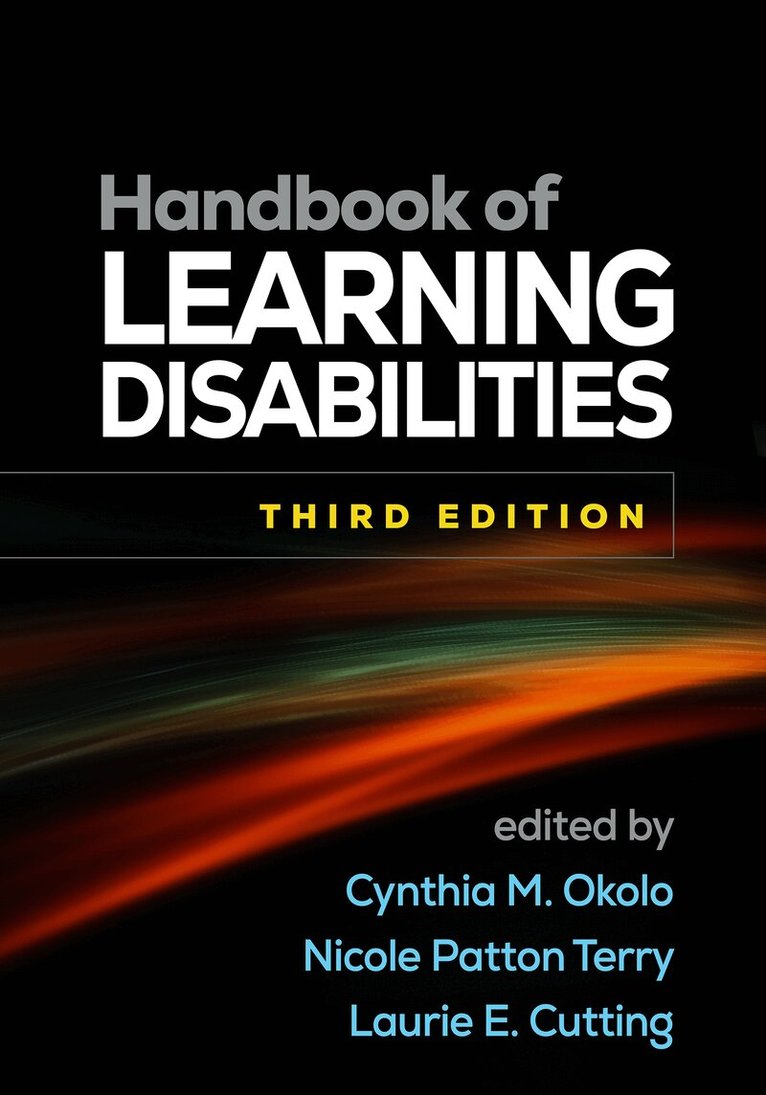
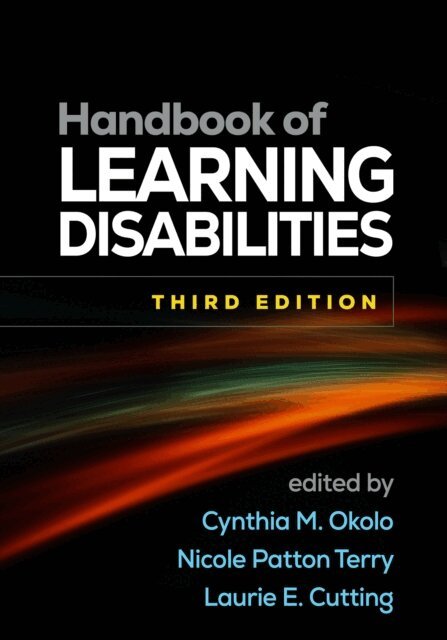
    Handbook of Learning Disabilities, Third Edition

    AvCynthia M. Okolo,Nicole Patton Terry

    Inbunden, Engelska, 2026

    1 444 kr

    Beställningsvara. Skickas inom 3-6 vardagar. Fri frakt över 249 kr.

    Beskrivning

    This definitive handbook is now in an extensively revised third edition, including many all-new chapters and new topics. Foremost experts review the breadth of current knowledge about learning disabilities (LD), from core psychological and neurobiological processes to evidence-based instruction. Chapters describe best practices in identifying and supporting students with difficulties in reading, writing, math, and other content areas. Service delivery models that support differentiated instruction and data-based decision making are examined, and ways to meet the needs of specific populations, including English learners with LD, are explored. Prior edition editors: H. Lee Swanson, Karen R. Harris, and Steve Graham.New to This EditionReflects a decade of advances in research, policy, and educational practice. Most chapters are new or extensively updated. Chapters on language development and reading disabilities, LD in English learners, social–emotional learning, comorbidity with LD, dyslexia legislation, cultural and equity issues, the use of technology to support differentiated instruction, state-of-the-art research methods, teacher preparation, integrated multi-tiered systems of support, and other timely topics.

    Produktinformation

    • Utgivningsdatum:2026-02-23
    • Mått:178 x 254 x 33 mm
    • Vikt:1 320 g
    • Format:Inbunden
    • Språk:Engelska
    • Antal sidor:588
    • Upplaga:3
    • Förlag:Guilford Publications
    • ISBN:9781462559077

    Utforska kategorier

    • Psykologi inom Psykologi och pedagogik
    • Pedagogisk psykologi inom Psykologi och pedagogik
    • Specialundervisning inom Psykologi och pedagogik

    Mer om författaren

    Cynthia M. Okolo, PhD, is Professor Emeritus of Counseling, Educational Psychology, and Special Education at Michigan State University. Her research focuses on technology and literacy for students with mild disabilities, universal design for learning, and history instruction for students with learning challenges. Dr. Okolo is a former special education teacher, and her scholarship is rooted in applied issues related to instruction in inclusive classrooms. She has played a leadership role in numerous state, regional, and national boards and organizations; has directed undergraduate, master’s, and doctoral programs; and has been a frequent contributor to the scholarly literature as an author and editor. Dr. Okolo is a recipient of the Lifetime Achievement Award from the Council for Exceptional Children.Nicole Patton Terry, PhD, is the Olive and Manuel Bordas Professor of Education in the School of Teacher Education and Director of the Florida Center for Reading Research (FCRR) at Florida State University. She is the founding director of The Urban Child Study Center at Georgia State University and The Village at FCRR, two research entities where researchers collaborate with school and community partners to promote student success. Dr. Patton Terry’s work focuses on young learners who are vulnerable to experiencing difficulty with language and literacy achievement in school, in particular, African American children, children growing up in poverty, and children with disabilities. A former special education teacher, she currently serves as president of the Society for the Scientific Study of Reading and is a Fellow of the American Speech–Language–Hearing Association and the American Educational Research Association (AERA). Dr. Patton Terry is the recipient of AERA's 2026 Exemplary Contributions to Practice-Engaged Research Award.Laurie E. Cutting, PhD, is the Patricia and Rodes Hart Professor of Neuroscience in the Departments of Special Education, Psychology and Human Development, Radiology, Pediatrics, and Electrical and Computer Engineering at Vanderbilt University. She is also Associate Director of the Vanderbilt Kennedy Center, a member of the Vanderbilt Brain Institute, and training faculty for Vanderbilt’s Neuroscience PhD program, and was the recipient of the 2017–2018 Joe B. Wyatt Distinguished University Professorship. Dr. Cutting recently completed a 2-year assignment as Associate Provost in the Office of the Vice Provost for Research and Innovation. Her work focuses on brain–behavior relations in children and adolescents, with a particular emphasis on academic and cognitive development.

    Recensioner i media

    “Okolo, Patton Terry, and Cutting continue in the tradition of Swanson et al. to provide a current, comprehensive picture of the field of LD. The third edition captures updated perspectives on genetics and neurobiology, language and cognitive processes, measurement and classification, instructional practices, educational technology, and policy. Notable new topics include multi-tiered systems of support and social–emotional learning, reflecting the field’s growing complexity and responsiveness to real-world educational challenges. Contributors thoughtfully examine the shift toward dimensional models of classification and emphasize the need for equitable access to high-quality instruction as a foundation for fair LD identification.”--Nicole Landi, PhD, Department of Psychological Sciences, University of Connecticut“From MVPs in the field, the third edition of this handbook should be required reading for researchers, teacher educators, and teachers. The volume addresses advances in topics covered in previous editions while introducing such timely topics as progress monitoring, preventing and ameliorating reading disabilities among English learners, trends in dyslexia legislation, and preparing teachers to provide evidence-based instruction for students with LD. The editors have pulled off an impressive feat by including a wide breadth of issues without sacrificing depth.”--Jade Wexler, PhD, Department of Counseling, Higher Education, and Special Education, University of Maryland, College Park“At a time when scientific findings and scholarly expertise are being called into question, the third edition of this handbook represents the very best knowledge available in a field that advances and grows because of systematic research. Okolo, Patton Terry, and Cutting have brought together a peerless group of LD experts to address a wide range of relevant topics. Chapters address perennial psychological and epidemiological questions, advance our understanding of instructional interventions and their impacts, and consider the implications of emerging research methods, sociocultural changes, and trends in teacher education. This handbook is essential reading for LD researchers and school leaders, as well as graduate students in special and general education, psychology, and related fields.”--David J. Chard, PhD, Professor Emeritus and Dean Emeritus, Wheelock College of Education and Human Development, Boston University“Building on theory and current evidence, this handbook comprehensively covers the most pressing issues that LD researchers and practitioners face today. Chapters carefully review foundational work in etiology and treatment and offer nuanced consideration of the multifaceted effects of LD, including co-occurrence across diagnoses and the interactions between children and instructional environments. The challenges of optimal identification and intervention are covered with a balance of breadth and depth. This is a volume that I know I will reach for often as a key research reference and a resource for teaching the next generation of reading and language scholars and clinicians.”--Elizabeth Norton, PhD, Department of Communication Sciences and Disorders, Northwestern University-

    Innehållsförteckning

    • I. Causes, Correlates, and Manifestations of Learning Disabilities1. Classification and Definition of Learning Disabilities: A Hybrid Approach to Identification, Jeremy Miciak & Jack M. Fletcher2. Representational Quality in Children with Dyslexia: Issues of Precision and Redundancy That Affect Long-Term Word Reading and Decoding Development, Donald L. Compton, Laura M. Steacy, Valeria M. Rigobon, Ashley A. Edwards, Nuria Gutiérrez, Nancy C. Marencin, & Rebecca M. Vasile3. Mathematics Learning Difficulties, Nancy C. Jordan, Dana Miller-Cotto, & Kelly-Ann Gesuelli4. Social and Emotional Learning and Learning Disabilities, Laura Larissa Feuerborn, Barbara A. Gueldner, & Ashli D. Tyre5. Cognitive Processes, Neuroscience, and Learning Disabilities, Emily M. Harriott & Laurie E. Cutting6. Genetics, Learning Abilities, and Disabilities, Stephen A. Petrill & Alexa Levison7. Executive Functions and Learning Disabilities, Marcia A. Barnes & Peng Peng8. Memory Difficulties in Children with Specific Learning Disabilities (An Update), H. Lee Swanson & Jennifer E. Kong9. Language Development, Developmental Language Disorder, and Reading Disabilities, Suzanne M. Adlof & Lesly Wade-Woolley10. Learning Disabilities and Comorbidity: Prevalence, Etiology, and Implications, Erik G. WillcuttII. Instructional Interventions11. Effective Instruction and Intervention for Word-Level Reading for Students with and At Risk for Learning Disabilities, Stephanie Al Otaiba, Dayna Russell-Freudenthal, & Mai W. Zaru12. Reading Comprehension Instruction and Students with Learning Disabilities in the Twenty-First Century, Jeanne Wanzek, Katherine Sargent, & Sally K. Fluhler13. Direct and Extended Vocabulary Instruction and Intervention for Students with Learning Disabilities, Michael D. Coyne & Susan M. Loftus-Rattan14. Intervention to Address the Needs of Students with Mathematics Learning Disabilities, Lynn S. Fuchs, Pamela M. Seethaler, Douglas Fuchs, & Daniel Espinas15. Writing and Students with Learning Disabilities, Steve Graham & Karen R. Harris16. Social Studies and History Instruction for Students with Learning Disabilities, Susan De La Paz, Daniel R. Wissinger, & Josue Otarola17. Science Education for Students with Learning Disabilities, Delinda van Garderen, William Romine, Heba Abdelnaby, Cassandra Smith, & Rachel Juergensen18. Key Practices for Preventing and Ameliorating Reading Disabilities among English Learners, Philip Capin, Tim T. Andress, & Sharon VaughnIII. Future Directions in Learning Disabilities19. Recent Trends in Dyslexia Legislation, Timothy N. Odegard, Emily A. Farris, Anna E. Middleton, Sheryl Rimrodt-Frierson, & Julie A. Washington20. Advances in Assessment to Monitor Progress and Performance, Matthew K. Burns, Monica E. Romero, McKinzie D. Duesenberg-Marshall, Hoi Ting Wan, & Heba Abdelnaby21. Child X Instruction Interactions: Using Technology to Support Differentiated Instruction, Ashley Adams Sanabria & Sarah Siegal22. Trends in Research Methods in the Learning Disabilities Field, Bryan G. Cook, Jesse I. Fleming, William J. Therrien, & Vivian C. Wong23. Beyond Demography: Integrating Mind, Culture, and Equity in LD Research, Amy L. Ferrell & Alfredo J. Artiles24. Integrated Multi-Tiered Systems of Support (I-MTSS): New Directions for Supporting Students with or At Risk for Learning Disabilities, Allison Gruner Gandhi, Nathan Clemens, Michael Coyne, Steve Goodman, Kathleen Lynne Lane, Erica Lembke, & Brandi Simonsen25. Understanding and Developing Expert Teachers for Students with Learning Disabilities, Mary T. Brownell, Melinda M. Leko, & Amber E. Benedict