Häftad, Engelska, 2014
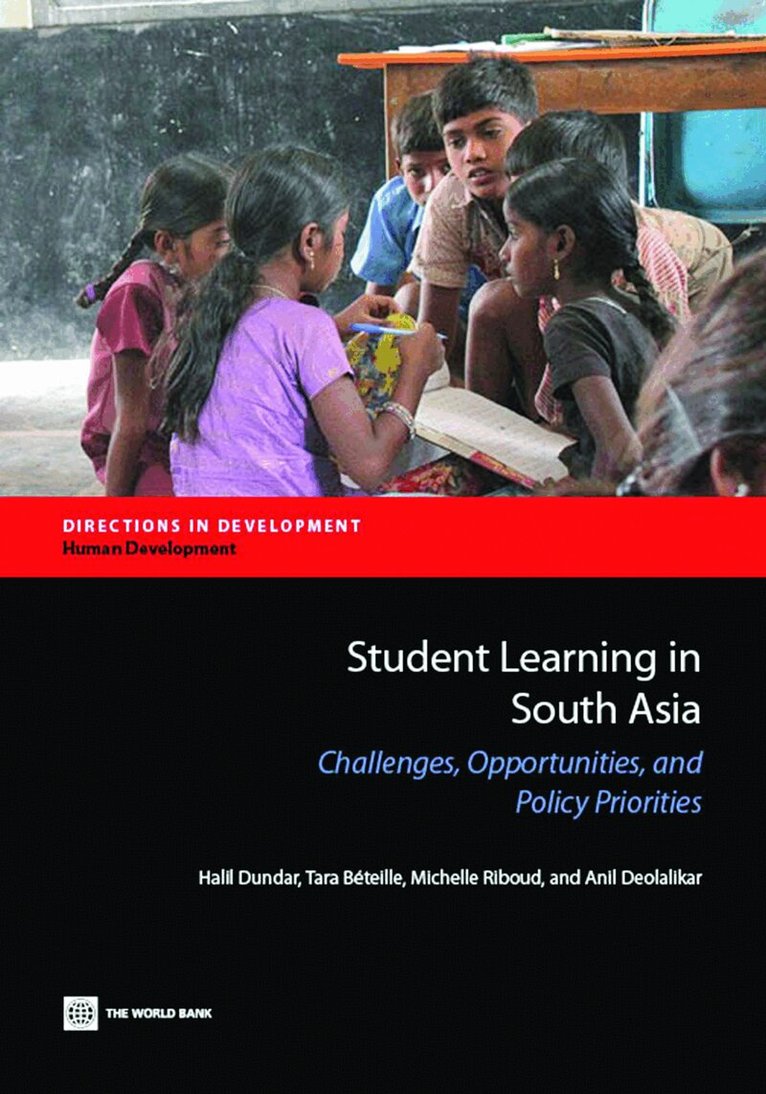
Student Learning in South Asia
Av Halil Dundar, Tara Béteille, Michelle Riboud, Anil Deolalikar
504 kr
Skickas inom 10-15 vardagar
Beskrivning
For the past decade, most South Asian countries have directed their efforts towards achieving universal access to elementary education. While these investments have led to more children being retained in school, they have not translated into better learning outcomes. This report comprehensively analyses the performance of South Asian educational systems in terms of student learning. It attempts to answer three questions:How well do education systems in South Asia perform?What determines student learning outcomes?What policy options are effective in improving learning outcomes, especially given increasing demand and competition for public resources?Because learning outcomes and skill acquisition in the region are low in both absolute and relative terms, schooling does not translate, as it should, into better life chances, including escape from poverty for many more. Nor does schooling contribute to higher productivity and economic growth, so that countries in the region find it difficult to accelerate economic and social development. Governments in the region now fully realize that they need to direct their attention toward improving quality so that students can aspire to fuller lives as both individuals and labour market participants. Merely spending time in school is not enough; students need to register a significant gain in both noncognitive and cognitive skills if countries in the region are to reap full returns on their investments and generate gains in employment, job creation, and productivity.To examine what policies hold promise for improving student learning, the report reviews evidence from large-scale national learning assessments and findings from impact evaluations being conducted in the region. It identifies the following strategic priorities for improving learning outcomes in South Asia: (1) Make learning outcomes the central goal of education policy; (2) Invest in early childhood nutrition; (3) Improve teacher effectiveness and accountability; (4) Provide additional support to disadvantaged children in early grades; (5) Use financing effectively; (6) Leverage the contribution of the non-state sector; and (7) Build learning assessment systems. Each of these policy options will need to be integrated within a larger agenda of inclusive economic growth and governance reform to be truly effective.
Produktinformation
- Utgivningsdatum: 2014-05-22
- Mått: 178 x 254 x 21 mm
- Vikt: 456 g
- Format: Häftad
- Språk: Engelska
- Antal sidor: 408
- Förlag: World Bank Publications
- Serie: Directions in Development
- ISBN: 9781464801600
Utforska kategorier
Betyg & recensioner
0 recensioner
Inga recensioner tillgängliga.