
Phenotypic Variation in Populations
Relevance to Risk Assessment
E-bok
PDF, Engelska, 20121 470 kr
Läs direkt i Bokus Reader – eller ladda ned till din enhet (PDF kräver ofta zoom och scroll på små skärmar).
Beskrivning
The human race has enormous he terogenei ty, founded on genetic and environmental sources. Variability, therefore, is a vital dimension in any consideration of human risk assessment. In the estimation of risks, current methods of extrapolation based upon converting the response of a median man are inadequate, as they ignore phenotypic variation and there fore, susceptible subgroups. There is a growing literature defining the extent of human variation in normal populations; thus, the normal young adult population may have 10-20% known hyperreactors. How far can we ignore human variability in risk assessment? Should we be concerned with susceptible groups, and how can we modify the risk assessment analysis accordingly? The aim of our meeting was to bring together experts from the fields of human epidemiology, toxicology, aging, genetics, carcino genesis and teratology, and to provide a forum in which we might assimi late knowledge of human heterogeneity as a coherent whole. Since the resolution and obligations of risk assessment, in the last analysis, are a political process, we also involved representatives from the legal field, the unions, and the regulatory agencies. We are most grateful for financial support from the National Institute on Aging; the u. S. Environmental Protection Agency; the U. S. Department of Energy; FDA - National Center for Toxicological Research; The Council for Tobacco Research-USA, Inc; Johnson and Johnson; Merck Sharp and Dohme Research Laboratories; and Associated Universities, Inc. We thank our Symposium Coordinator, Ms.
Produktinformation
Utforska kategorier
Hoppa över listan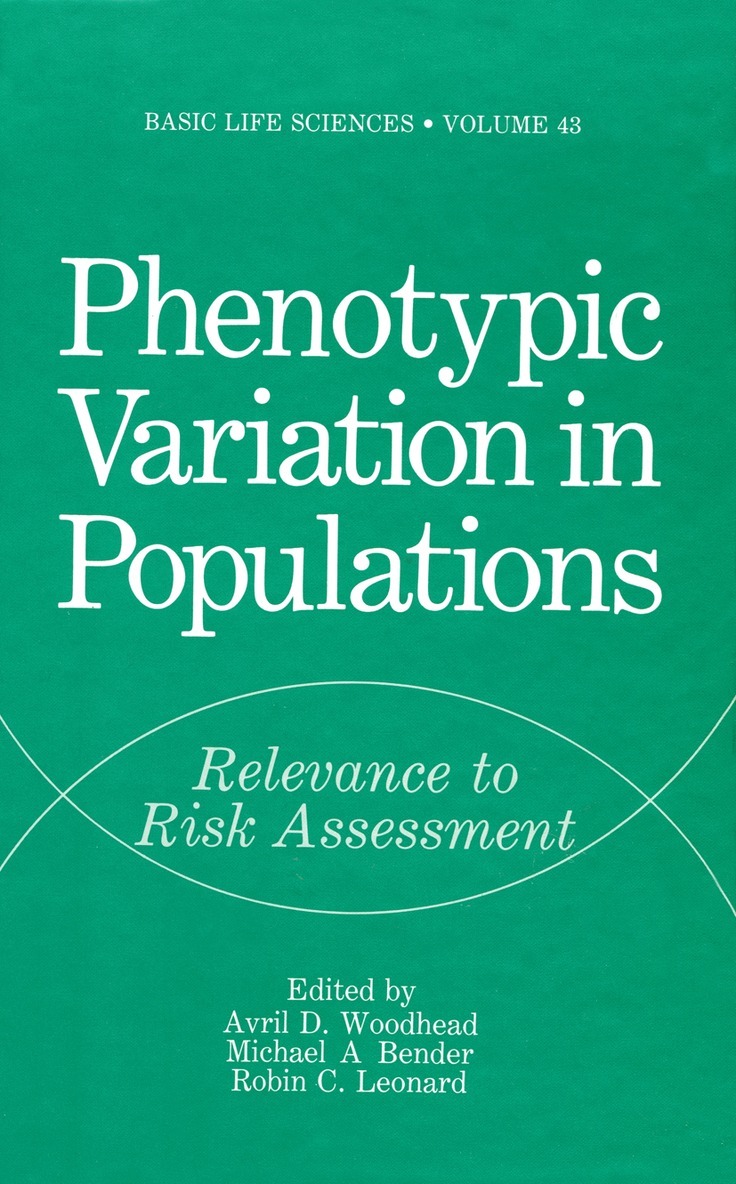






Du kanske också är intresserad av
- Nyhet
- Nyhet
- Signerad!
- Signerad!
- Signerad!
Del 3
- Nyhet
- -19%