• Fri frakt över 249 kr
  • •
  • Snabba leveranser
  • •
  • Billiga böcker
Kundservice

Du är på sajten för privatpersoner.

Företag, bibliotek eller offentlig verksamhet?

Du handlar på classic.bokus.com, där alla dina funktioner finns intakta.
Till classic.bokus.com
Bokus logotyp. Gå till startsidan.
  • Erbjudanden
  • Nyheter
  • Student
  • Topplistor
  • Barn & ungdom
  • Bokus Play
  • E-böcker
  • Pocketböcker
  • Spel & pussel

10% studentrabatt med kod TERM26

Sidfot

Mina sidor

    Hjälp

    • Kundservice
    • Vanliga frågor och svar
    • Frakt och leverans
    • Retur vid ångerrätt
    • Reklamera vara
    • Betalning
    • Köpvillkor
    • Allmänna villkor
    • Information om webbplatsens tillgänglighet

    Om Bokus

    • Om oss
    • Pressrum
    • För studenter
    • För företag
    • För bibliotek och offentlig verksamhet
    • För leverantörer
    • Hållbarhet

    Populärt

    • Aktuella erbjudanden
    • Presentkort
    • Studentlitteratur
    • Nya böcker
    • Topplistor
    • Signerade böcker
    • Engelska böcker

    Inspiration

    • Boktips
    • BookTok
    • Populära bokserier
    • Barnbokskaraktärer
    • Populära författare
    Logotyp för Bokus
    Följ oss på Facebook (extern länk)Följ oss på Instagram (extern länk)Följ oss på YouTube (extern länk)Följ oss på TikTok (extern länk)
    bokus @ CookiesAnpassa cookiesIntegritetspolicyKöpvillkor
    Till Citymail hemsida (extern länk)Till Budbee hemsida (extern länk)Till Postnord hemsida (extern länk)Till Schenker hemsida (extern länk)Till Early Bird hemsida (extern länk)Till Walleys hemsida (extern länk)
    1. Kultur
    2. Musikböcker
    3. Musikhistoria

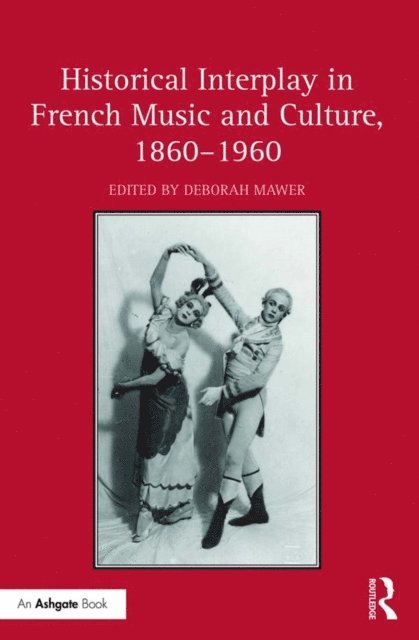
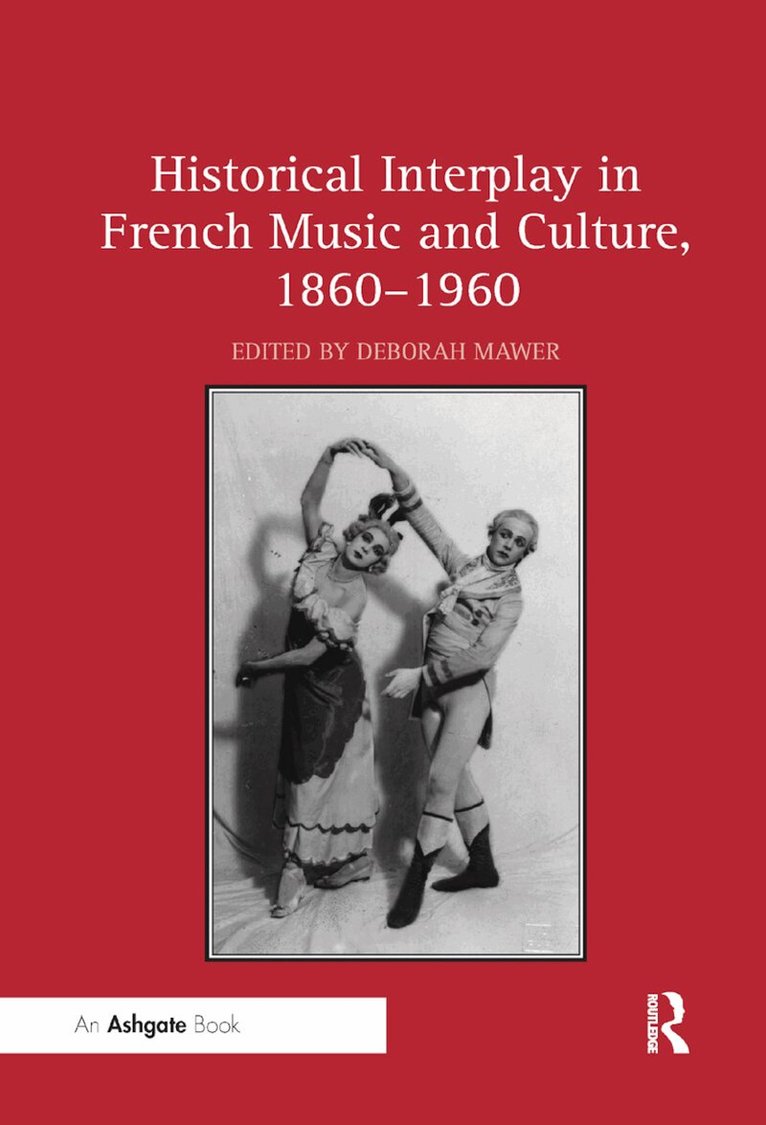
    Historical Interplay in French Music and Culture, 1860–1960

    AvDeborah Mawer

    Inbunden, Engelska, 2017

    2 506 kr

    Beställningsvara. Skickas inom 10-15 vardagar. Fri frakt över 249 kr.

    Beskrivning

    This edited volume of case studies presents a selective history of French music and culture, but one with a dynamic difference. Eschewing a traditional chronological account, the book explores the nature of relationships between one main period, broadly the 'long' modernist era between 1860–1960, and its own historical ‘others’, referencing topics from the Romantic, classical, baroque, renaissance and medieval periods. It probes the emergent interplay, intertextualities and scope for reinterpretation across time and place. Notions of cultural meaning are paramount, especially those pertaining to French identity, national and individual. While founded on historical musicology, the approach benefits from interdisciplinary association with philosophy, political history, literature, fine art, film studies and criticism. Attention is paid to French composers’ celebrations and remakings of their predecessors. Editions of and writings about earlier music are examined, together with the cultural reception of performances of past repertoire. Organized into two parts, each of the eleven chapters characterizes a specific cultural network or temporal interplay, which may result in synthesis, disjunction, or historical misreading. The interwar years and those surrounding the Second World War prove particularly rich sources of enquiry. This volume aims to attract a wide readership of musicologists and musicians, as well as cultural historians, other humanities scholars and concert-goers.


    Produktinformation

    • Utgivningsdatum:2017-11-22
    • Mått:156 x 234 x 20 mm
    • Vikt:538 g
    • Format:Inbunden
    • Språk:Engelska
    • Antal sidor:270
    • Förlag:Taylor & Francis Ltd
    • ISBN:9781472474759

    Utforska kategorier

    • Musikhistoria inom Kultur
    • Kultur och medier inom Samhälle och politik
    • Europas historia inom Historia och arkeologi

    Mer om författaren

    Deborah Mawer is Research Professor of Music and the Director of Research at the Royal Birmingham Conservatoire, Birmingham City University, UK, where she also leads the large project ‘Accenting the Classics’, funded by the Arts and Humanities Research Council.

    Recensioner i media

    ‘An intricate web of essays that offers captivating insights into a key aspect of French musical culture between 1860 and 1960. By exploring the historical interplay at work in French musical modernism, the authors present innovative and engaging reflections on the politics of performance, composition, and critical engagement. The threads woven between the essays also reveal the transhistorical presence of cultural reference points and their transformation in specific moments, whether through the recomposition of local folk-music traditions in opera or the ensounded nostalgia for the ancien régime.’ Professor Annegret Fauser, University of North Carolina at Chapel Hill, USA‘The essays in Deborah Mawer’s collection cover a century of French music, from 1860 to 1960, and offer perspectives that are both new and invigorating. By taking into consideration the roles played by literature, painting, cinema, and the interactions among the various arts, the essays offer a reconsideration of the ways in which a number of composers – among them Saint-Saëns, Debussy, Poulenc, Satie, Jolivet, and Messiaen – were able to create links between their music and that of previous centuries. By employing a multiplicity of approaches and methodologies, the essays renew with conspicuous energy both the question of national identity, which has too often been treated with too narrow a focus, and the question of the nature of musicians’ relationships with their traditional French heritage.’ Professor Denis Herlin, Director of Research, IReMus, CNRS, Paris, France

    Innehållsförteckning

    • Introduction: revisiting French musical history (Deborah Mawer) PART I French music and culture, 1860–1930 1 Patrimoine in French music: layers and crosscurrents from the Romantics to the 1920s (Katharine Ellis) 2 ‘Le Paradis deux fois perdu’: Debussy, Watteau and the fête galante (Richard Langham Smith) 3 Saint-Saëns, d’Indy and the Rameau OEuvres complètes: new light on the Zoroastre editorial project (1914) (Graham Sadler) 4 Adventures in gastromusicology: Satie, La Sirène and Trois petites pièces montées (1919) (Caroline Potter) 5 Le Tombeau de Ronsard in La Revue musicale (1924): memory and historical interplay (Helen Julia Minors) PART II French music and culture, 1930–1960 6 Beyond neoclassicism: symphonic form, catharsis and political commentary in Barraine’s Deuxième symphonie (1938) (Laura Hamer) 7 Tristan und Isolde in occupied Paris, 1941: a convenient solution to France’s Wagner problem? (Rachel Orzech) 8 Historical French music in French feature films of the Occupation years (Isabel De Berrié) 9 Jolivet’s Rameau: theory, practice and temporal interplay (Deborah Mawer) 10 Jolivet’s Beethoven: supplementarity, topicality and alterity (Jun Zubillaga-Pow) 11 Commission and omission: the canon according to Messiaen (Christopher Dingle)