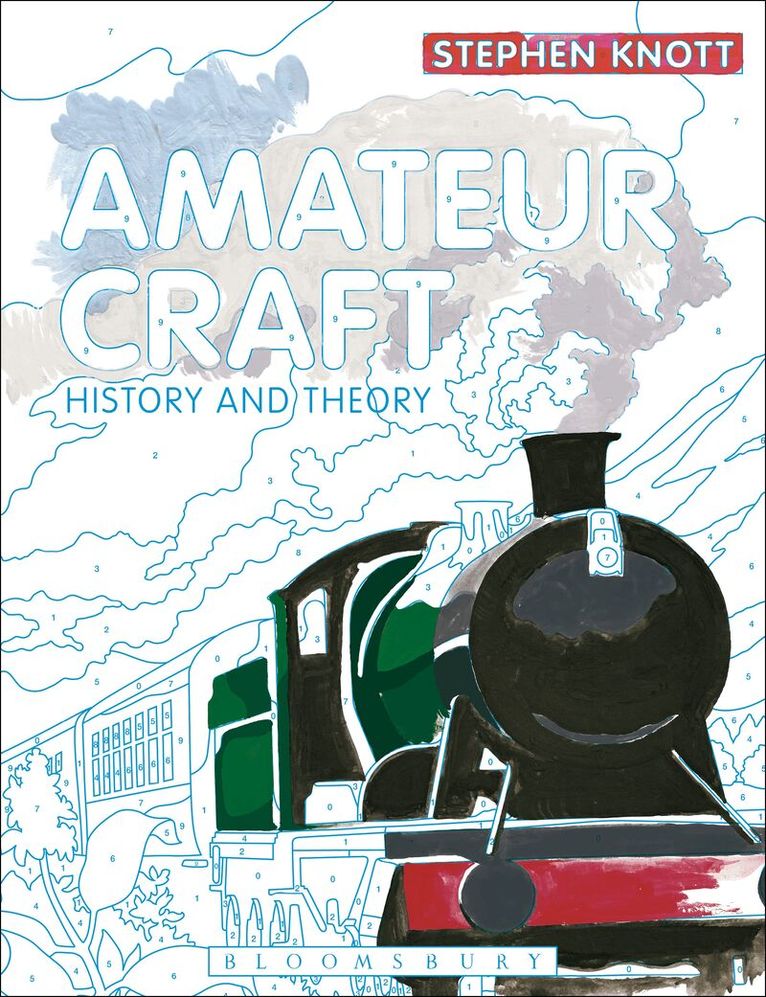
Häftad, Engelska, 2015
Amateur Craft
History and Theory
471 kr
Beställningsvara. Skickas inom 10-15 vardagar. Fri frakt över 249 kr.
Beskrivning
Produktinformation
- Utgivningsdatum: 2015-08-27
- Mått: 184 x 244 x 12 mm
- Vikt: 360 g
- Format: Häftad
- Språk: Engelska
- Antal sidor: 184
- Förlag: Bloomsbury Publishing PLC
- ISBN: 9781472577344
Utforska kategorier
Mer om författaren
Stephen Knott is Director of the Crafts Study Centre in Farnham, a museum and research centre that is part of the University of the Creative Arts, UK. As a writer, researcher and lecturer in craft theory, design history and material culture, he has taught at Kingston University, UK and the Royal College of Art, UK and is one of the editors of The Journal of Modern Craft. He is author of Amateur Craft: History and Theory (Bloomsbury, 2015), and has written articles and reviews for Design and Culture, Performance Research, West 86th, Crafts and Craft Research. In 2018 he curated Tendenser at Galleri F15 in Moss, Norway, a showcase of contemporary craft and edited the accompanying catalogue, and was co-curator for Presence and Absence at the Crafts Study Centre (2021-22), an exhibition which responds to the lack of diversity within the Centre’s collections.
Recensioner i media
Amateur Craft is one of several craft-related titles published by Bloomsbury. Knott (independent scholar) strives to show how amateur and professional crafters can thrive in the same space and how their work can feed off the thoughts and processes of each other. Specifically, Amateur Craft is written to demonstrate that amateur need not indicate ‘inadequacy or shoddy work.’ The book is organized into three well-illustrated chapters. Chapter 1, "Surface," discusses the agents needed for amateur surface intervention—‘bases, carriers, and arbiters.’ Bases are the objects that provide the blank surface. Carriers are the goods that make intervention—or the craft making—possible. Finally, arbiters, e.g., handbooks and encyclopedias, provide guidance. Chapter 2, "Space," focuses on the role of space in everyday life, the organization of space, and aesthetics. The design and organization of space is essential for crafting of any type. Chapter 3, "Time," looks at amateur time, or free time, and its uses and benefits. Some amateur craft is derived from workplace time; at other times, it comes about because of nostalgia, desire, and sociability. Extensive endnotes and a detailed index support the text. Overall, this is a worthy resource for historians, artists, or amateur hobbyists interested in studying the development and breadth of amateur crafting. Summing Up: Recommended. Upper-division undergraduates and above; general readers.
Betyg & recensioner
0 recensioner
Inga recensioner tillgängliga.