• Fri frakt över 249 kr
  • •
  • Snabba leveranser
  • •
  • Billiga böcker
Kundservice

Du är på sajten för privatpersoner.

Företag, bibliotek eller offentlig verksamhet?

Du handlar på classic.bokus.com, där alla dina funktioner finns intakta.
Till classic.bokus.com
Bokus logotyp. Gå till startsidan.
  • Erbjudanden
  • Student
  • Topplistor
  • Barn & ungdom
  • Bokus Play
  • E-böcker
  • Ljudböcker
  • Pocketböcker
  • Spel & pussel

10% rabatt på allt med kod NYSTART10 →

Sidfot

Mina sidor

    Hjälp

    • Kundservice
    • Vanliga frågor och svar
    • Frakt och leverans
    • Retur vid ångerrätt
    • Reklamera vara
    • Betalning
    • Köpvillkor
    • Allmänna villkor
    • Information om webbplatsens tillgänglighet

    Om Bokus

    • Om oss
    • Pressrum
    • För studenter
    • För företag
    • För bibliotek och offentlig verksamhet
    • För leverantörer
    • Hållbarhet

    Populärt

    • Aktuella erbjudanden
    • Presentkort
    • Studentlitteratur
    • Nya böcker
    • Topplistor
    • Signerade böcker
    • Engelska böcker

    Inspiration

    • Boktips
    • BookTok
    • Populära bokserier
    • Barnbokskaraktärer
    • Populära författare
    Logotyp för Bokus
    Följ oss på Facebook (extern länk)Följ oss på Instagram (extern länk)Följ oss på YouTube (extern länk)Följ oss på TikTok (extern länk)
    bokus @ CookiesAnpassa cookiesIntegritetspolicyKöpvillkor
    Till Citymail hemsida (extern länk)Till Budbee hemsida (extern länk)Till Postnord hemsida (extern länk)Till Schenker hemsida (extern länk)Till Early Bird hemsida (extern länk)Till Walleys hemsida (extern länk)
    1. Samhälle och politik
    2. Sociologi och antropologi
    3. Sociologi

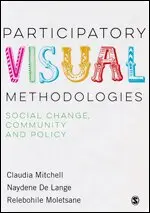
    Participatory Visual Methodologies

    Social Change, Community and Policy

    AvClaudia Mitchell,Naydene De Lange

    Inbunden, Engelska, 2017

    2 659 kr

    Beställningsvara. Skickas inom 3-6 vardagar. Fri frakt över 249 kr.

    Fler format och utgåvor

    Häftad

    1 429 kr

    Beskrivning

    This book demonstrates how data from participatory visual methods can take people and communities beyond ideological engagement, initiating new conversations and changing perspectives, policy debates, and policy development. These methods include, for example, photo-voice, participatory video, drawing/mapping, and digital storytelling.

    Organised around a series of tools that have been used across health, education, environmental, and sociological research, Participatory Visual Methodologies illustrates how to maintain participant engagement in decision-making, navigate critical issues around ethics, track policies, and maximize the potential of longitudinal studies. Tools discussed include:

    • Pedagogical screenings
    • Digital dialogue devices
    • Upcycling and ‘speaking back’ interventions
    • Participant-led policy briefs

    An authoritative and accessible guide to how participatory visual methods and arts-based methods can influence social change, this book will help any postgraduate researcher looking to contribute to policy dialogue.

    Produktinformation

    • Utgivningsdatum:2017-10-06
    • Mått:170 x 242 x 20 mm
    • Vikt:580 g
    • Format:Inbunden
    • Språk:Engelska
    • Antal sidor:248
    • Upplaga:1
    • Förlag:SAGE Publications
    • ISBN:9781473947306

    Utforska kategorier

    • Sociologi inom Samhälle och politik

    Mer om författaren

    Claudia Mitchell is a James McGill Professor in the Faculty of Education, McGill University where she is the Director of the McGill Institute for Human Development and Well-being and the founder and Director of the Participatory Cultures Lab. She is  an Honorary Professor in the School of Education, University of KwaZulu-Natal, South Africa. She was the 2016 recipient of the Social Sciences and Humanities Research Council Gold Medal awarded for the impact of her research which  cuts across a number of areas including girlhood studies, youth, sexuality, and HIV and AIDS, gender violence, and teacher identity, and in a number of countries including Canada, South Africa, Russia, Ethiopia, and Kenya . As a methodologist she is particularly interested in participatory visual research, memory work and material culture, and autoethnography. Naydene de Lange is Emeritus Professor in the Faculty of Education at the Nelson Mandela Metropolitan University, Port Elizabeth, South Africa. She previously held the HIV and AIDS Education Research Chair in the Faculty of Education at the same university. Her research focuses on using participatory visual methodologies in addressing gender and HIV&AIDS issues, and integrating HIV&AIDS into Higher Education curricula.   Relebohile Moletsane is Professor and the John Langalibalele Dube Chair in Rural Education in the School of Education, University of KwaZulu-Natal in Durban, South Africa. Her areas of research include curriculum studies, rural education, gender and education, sexual and reproductive health education, girlhood studies and girls education in Southern African contexts. She is the Co-PI (with Claudia Mitchell, McGill University) on the Networks for Change and Wellbeing project (Networks for Change and Well-being (www.networks4change.co.za/). The project uses participatory visual methodologies, including photo-voice, participatory video (cellphilm), digital storytelling and drawing to address sexual violence with girls in rural KwaZulu-Natal.

    Recensioner i media

    This powerful book brings together rich insights from participatory visual studies, reflexivity, and audience studies--a must for anyone wishing to engage in meaningful participatory research.

    Innehållsförteckning

    • Chapter 1: Introduction: A Framework for Social Change through Participatory Visual ResearchIntroductionPolicy, Policy, PolicyCommunity and Policy DialogueCritical Audience EngagementOverview of the BookKey Points of the ChapterChapter 2: Project Design: Beginning with the End in MindIntroductionResearch Design for Social ChangeParticipatory Visual MethodsA Case Study: Addressing Campus-based Sexual ViolenceConclusionKey Points of the ChapterChapter 3: Speaking Back as MethodIntroductionDefining Speaking BackOn Using Speaking Back as MethodFeatures of Speaking Back as MethodConclusionKey Points of the ChapterChapter 4: Pictures at an ExhibitionIntroductionCommunity-Based ExhibitionsProcesses in CuratingStudying ExhibitingOne Set of Photos, Multiple ShowingsMethod: Studying Audience EngagementStudying Audiences through ExhibitingExhibition CataloguesCreating an Exhibition CatalogueDrawings: Collections and CataloguesConclusionKey Points of the ChapterChapter 5: The Pedagogy of ScreeningsIntroductionWhy a Pedagogy of Screenings?Methodologies for ScreeningResearchers Screening their Own ProductionsResearchers Screening Videos Made by ParticipantsParticipants Screening their Own WorkOnline Platforms and ScreeningDiscussionConclusionKey Points of the ChapterChapter 6: Digital Artefacts: Researcher-Led Tools for DialogueIntroductionResearch-Produced Digital Artefacts: A Brief HistoryResearch-Produced Digital Dialogue Tools: Three CasesA Co-Production: Researchers and Teachers Working Together on a ‘Re-mix’ VideoDigital Artefacts: Issues to ConsiderResearcher Reflexivity/DiscussionConclusionKey Points of the ChapterChapter 7: Engaging Policy MakersIntroductionParticipant-led Tools for Engaging Policy makersTaking Research to PolicymakersUsing Participatory Video to Engage Policy MakersStudying Pathways to ImpactConclusionKey Points of the ChapterChapter 8: What Difference Does This Make?IntroductionTheories of ChangeTracking ChangeInterpretive and Ethnographic ApproachesConclusionKey Points of the Chapter