• Fri frakt över 249 kr
  • •
  • Snabba leveranser
  • •
  • Billiga böcker
Kundservice

Du är på sajten för privatpersoner.

Företag, bibliotek eller offentlig verksamhet?

Du handlar på classic.bokus.com, där alla dina funktioner finns intakta.
Till classic.bokus.com
Bokus logotyp. Gå till startsidan.
  • Erbjudanden
  • Student
  • Topplistor
  • Barn & ungdom
  • Bokus Play
  • E-böcker
  • Ljudböcker
  • Pocketböcker
  • Spel och pussel

Pocketfynda! Hundratals böcker för 49 kr/st →

Sidfot

Mina sidor

    Hjälp

    • Kundservice
    • Vanliga frågor och svar
    • Frakt och leverans
    • Retur vid ångerrätt
    • Reklamera vara
    • Betalning
    • Köpvillkor
    • Allmänna villkor
    • Information om webbplatsens tillgänglighet

    Om Bokus

    • Om oss
    • Pressrum
    • För studenter
    • För företag
    • För bibliotek och offentlig verksamhet
    • För leverantörer
    • Hållbarhet

    Populärt

    • Aktuella erbjudanden
    • Presentkort
    • Studentlitteratur
    • Nya böcker
    • Topplistor
    • Signerade böcker
    • Engelska böcker

    Inspiration

    • Boktips
    • BookTok
    • Barnbokskaraktärer
    • Populära författare
    Logotyp för Bokus
    Följ oss på Facebook (extern länk)Följ oss på Instagram (extern länk)Följ oss på YouTube (extern länk)Följ oss på TikTok (extern länk)
    bokus @ CookiesAnpassa cookiesIntegritetspolicyKöpvillkor
    Till Citymail hemsida (extern länk)Till Budbee hemsida (extern länk)Till Postnord hemsida (extern länk)Till Schenker hemsida (extern länk)Till Early Bird hemsida (extern länk)Till Walleys hemsida (extern länk)
    1. Kultur
    2. Arkitektur

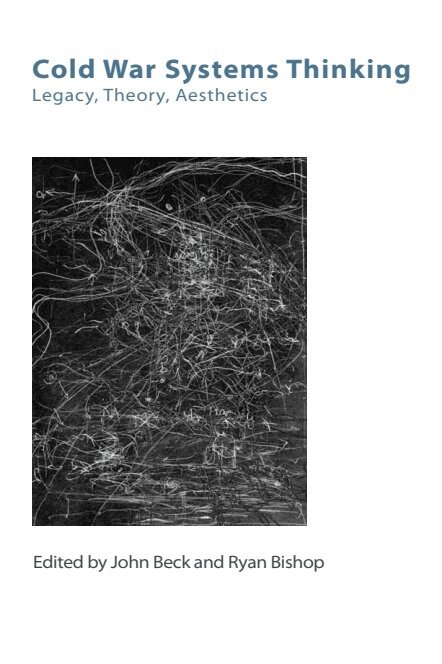
    Cold War Legacies

    Systems, Theory, Aesthetics

    AvJohn Beck,Ryan Bishop

    Inbunden, Engelska, 2016

    Del i serien Technicities

    2 174 kr

    Beställningsvara. Skickas inom 3-6 vardagar. Fri frakt över 249 kr.

    Beskrivning

    From futures research, pattern recognition algorithms, nuclear waste disposal and surveillance technologies, to smart weapons systems, contemporary fiction and art, this book shows that we are now living in a world imagined and engineered during the Cold War. Drawing on theorists such as Jean Baudrillard, Jacques Derrida, Michel Foucault, Luce Irigaray, Friedrich Kittler, Michel Serres, Peter Sloterdijk, Carl Schmitt, Bernard Stiegler and Paul Virilio this collection makes connections between Cold War material and conceptual technologies, as they relate to the arts, society and culture.

    Produktinformation

    • Utgivningsdatum:2016-09-11
    • Mått:156 x 234 x 23 mm
    • Vikt:840 g
    • Format:Inbunden
    • Språk:Engelska
    • Serie:Technicities
    • Antal sidor:320
    • Förlag:Edinburgh University Press
    • ISBN:9781474409483

    Utforska kategorier

    • Arkitektur inom Kultur
    • Konstteori inom Kultur
    • Filosofiska discipliner inom Filosofi och religion

    Mer om författaren

    John Beck is Professor of Modern Literature at the University of Westminster. He has published widely on American cultural politics and intellectual history in relation to literature, art and visual culture. Books include Landscape as Weapon: Cultures of Exhaustion and Refusal (2021), Technocrats of the Imagination: Art, Technology, and the Military-Industrial Avant-Garde (co-authored with Ryan Bishop, 2020), and Dirty Wars: Landscape, Power and Waste in Western American Literature (2009). Ryan Bishop is Professor of Global Art and Politics at the Winchester School of Art, University of Southampton (UK) and Research Associate at Witwatersrand University (South Africa). His most recent book projects are Cold War Imaginaries: Technology, Temporality, Culture (co-edited with John Beck forthcoming 2026 Edinburgh University Press) and Technocrats of the Imagination: Art, Technology and the Military-Industrial Avant-garde (co-authored with John Beck, Duke University Press 2020). Bishop is lead editor of the journal Cultural Politics (Duke UP) and the book series associated with the journal (Duke UP) and the series “Technicities” (co-edited with Jussi Parikka, Edinburgh University Press).

    Recensioner i media

    Examining the persistence of the Cold War’s massive restructuring of our lifeworld, this fascinating collection provides a series of incisive case studies that explores key sites of interaction between politics, technoscience and various modalities of cultural production since the mid-twentieth century. Taken together, these interlinked microhistories provide both a powerful demonstration of the book’s central thesis regarding the Cold War – the degree to which, even ‘after’, we continue to live within it – and an important resource for the challenge of thinking beyond its legacies.

    Innehållsförteckning

    • List of FiguresSeries Editors’ PrefaceAcknowledgementsNotes on ContributorsIntroduction: The Long Cold WarJohn Beck and Ryan BishopPart I: Pattern Recognition 1. The Future: RAND, Brand and Dangerous to KnowJohn Beck2. Simulate, Optimise, Partition: Algorithmic Diagrams of Pattern Recognition from 1953 OnwardsAdrian Mackenzie3. Impulsive Synchronisation: A Conversation on Military Technologies and Audiovisual ArtsAura Satz and Jussi ParikkaPart II: The Persistence of the Nuclear4. The Meaning of Monte BelloJames Purdon5. Deep Geological Disposal and Radioactive Time: Beckett, Bowen, Nirex and OnkaloAdam Piette6. Shifting the Nuclear Imaginary: Art and the Flight from Nuclear ModernityEle Carpenter7. Alchemical Transformations? Fictions of the Nuclear State after 1989Daniel GrausamPart III: Ubiquitous Surveillance8. ‘The Very Form of Perverse Artificial Societies’: The Unstable Emergence of the Network Family from its Cold War Nuclear BunkerKen Hollings9. The Signal-Haunted Cold War: Persistence of the SIGINT OntologyJussi Parikka10. ‘Bulk Surveillance’, or The Elegant Technicities of MetadataMark CotéPart IV: Pervasive Mediations11. Notes from the Underground: Microwaves, Backbones, Party Lines and the Post Office TowerJohn W. P. Phillips12. Insect Technics: War Vision MachinesFabienne Collignon13. Overt ResearchNeal White and John Beck14. Smart Dust and Remote Sensing: The Political Subject in Autonomous SystemsRyan BishopIndex