• Fri frakt över 249 kr
  • •
  • Snabba leveranser
  • •
  • Billiga böcker
Kundservice

Du är på sajten för privatpersoner.

Företag, bibliotek eller offentlig verksamhet?

Du handlar på classic.bokus.com, där alla dina funktioner finns intakta.
Till classic.bokus.com
Bokus logotyp. Gå till startsidan.
  • Erbjudanden
  • Nyheter
  • Student
  • Topplistor
  • Barn & ungdom
  • Bokus Play
  • E-böcker
  • Pocketböcker
  • Spel & pussel

10% rabatt på allt med kod NYSTART10 →

Sidfot

Mina sidor

    Hjälp

    • Kundservice
    • Vanliga frågor och svar
    • Frakt och leverans
    • Retur vid ångerrätt
    • Reklamera vara
    • Betalning
    • Köpvillkor
    • Allmänna villkor
    • Information om webbplatsens tillgänglighet

    Om Bokus

    • Om oss
    • Pressrum
    • För studenter
    • För företag
    • För bibliotek och offentlig verksamhet
    • För leverantörer
    • Hållbarhet

    Populärt

    • Aktuella erbjudanden
    • Presentkort
    • Studentlitteratur
    • Nya böcker
    • Topplistor
    • Signerade böcker
    • Engelska böcker

    Inspiration

    • Boktips
    • BookTok
    • Populära bokserier
    • Barnbokskaraktärer
    • Populära författare
    Logotyp för Bokus
    Följ oss på Facebook (extern länk)Följ oss på Instagram (extern länk)Följ oss på YouTube (extern länk)Följ oss på TikTok (extern länk)
    bokus @ CookiesAnpassa cookiesIntegritetspolicyKöpvillkor
    Till Citymail hemsida (extern länk)Till Budbee hemsida (extern länk)Till Postnord hemsida (extern länk)Till Schenker hemsida (extern länk)Till Early Bird hemsida (extern länk)Till Walleys hemsida (extern länk)
    1. Naturvetenskap och teknik
    2. Matematik och naturvetenskap
    3. Biologi
    4. Zoologi

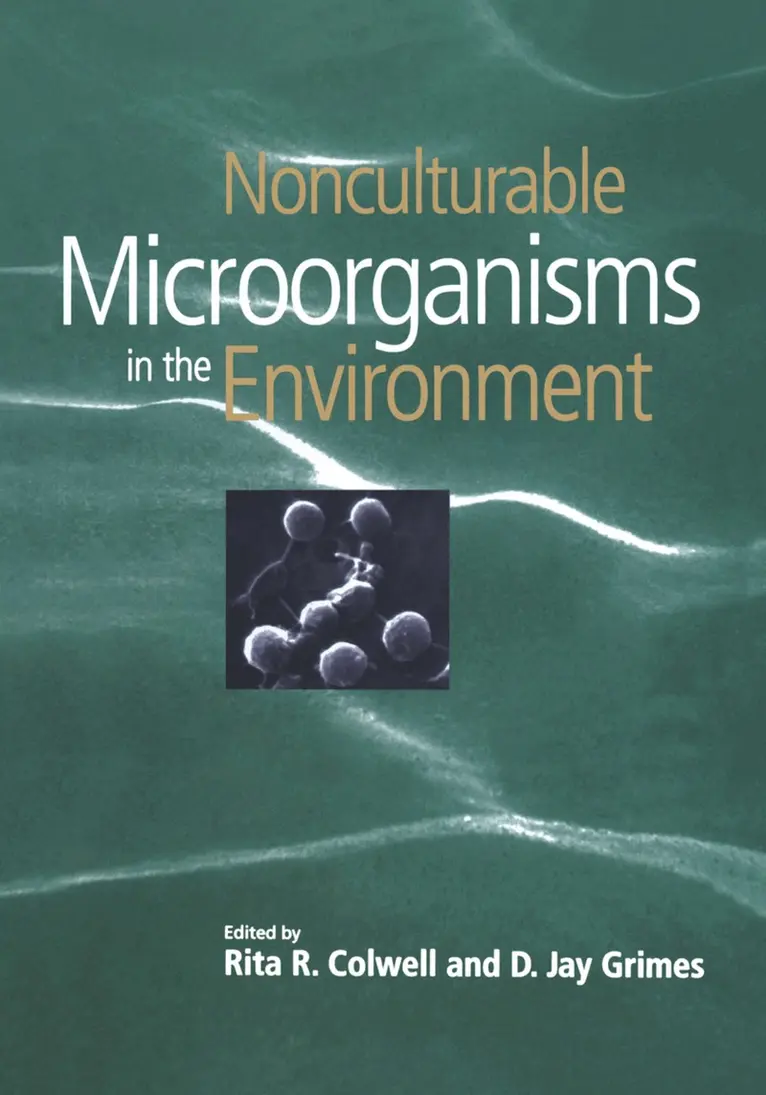
    Nonculturable Microorganisms in the Environment

    AvColwell

    Häftad, Engelska, 2012

    1 086 kr

    Beställningsvara. Skickas inom 10-15 vardagar. Fri frakt över 249 kr.

    Beskrivning

    Twenty years ago the discovery that Vibrio cholerae does not "die off" in the environment was made. We hypothesized that this gram-negative, rod-shaped bac- terium possessed the capacity to survive for very long periods of time, i. e. , months or years, under conditions adverse to active growth and reproduction. The term "somnicell" was proposed in 1987 to describe this state of being. Subsequently a series of experiments showed that this phenomenon was not unique to Vibrio chol- erae. Many other gram-negative bacteria were found to undergo the "viable but not culturable" state in response to adverse environmental conditions. Such bac- terial species included Escherichia coli, Salmonella enteriditis, Campylobacter je- juni, Legionella pneumophila, and Shigella sonnei, among others. Clearly, the ability to tolerate the vicissitudes of the environment, notably changes that accom- pany climate and season, is part of a strategy for survival that is pervasive among bacterial species that are both aquatic in natural habitat and opportunistic human pathogens.It raises a question as to whether the pathogenicity manifested by these bacteria is opportunism, or simply metabolic functions of bacteria that are naturally occurring in the environment and contributing to the stability and sustainability of the environment, with the inadvertent host, the human, suffering because of mis- placed consequences of those metabolic functions. It is an interesting question to ponder. Throughout the pages that follow, invited authors describe, from each of their perspectives, the significance and consequences of the viable but nonculturable state.

    Produktinformation

    • Utgivningsdatum:2012-05-27
    • Mått:178 x 254 x 20 mm
    • Vikt:692 g
    • Format:Häftad
    • Språk:Engelska
    • Antal sidor:354
    • Förlag:Springer-Verlag New York Inc.
    • ISBN:9781475702736

    Utforska kategorier

    • Zoologi inom Naturvetenskap och teknik
    • Djurböcker inom Djur och Natur

    Innehållsförteckning

    • 1. Semantics and Strategies.- 2. Morphological Changes Leading to the Nonculturable State.- 3. Size Matters: Dwarf Cells in Soil and Subsurface Terrestrial Environments.- 4. Membrane Bioenergetics in Reference to Marine Bacterial Culturability.- 5. Diversity of Uncultured Microorganisms in the Environment.- 6. Molecular Genetic Methods for Detection and Identification of Viable but Nonculturable Microorganisms.- 7. Environmental Parameters Associated with the Viable but Nonculturable State.- 8. Starved and Nonculturable Microorganisms in Biofilms.- 9. Phenotypic Plasticity in Bacterial Biofilms as It Affects Issues of Viability and Culturability.- 10. Survival, Dormancy, and Nonculturable Cells in Extreme Deep-Sea Environments.- 11. Bacterial Viruses and Hosts: Influence of Culturable State.- 12. The Importance of Viable but Nonculturable Bacteria in Biogeochemistry.- 13. Viable but Nonculturable Cells in Plant-Associated Bacterial Populations.- 14. Implications of the Viable but Nonculturable State in Risk Assessment Based on Field Testing of Genetically Engineered Microorganisms.- 15. Chemical Disinfection and Injury of Bacteria in Water.- 16. The Public Health Significance of Viable but Nonculturable Bacteria.- 17. Epidemiological Significance of Viable but Nonculturable Microorganisms.- 18. Bacterial Death Revisited.