E-bok, Engelska, 2013
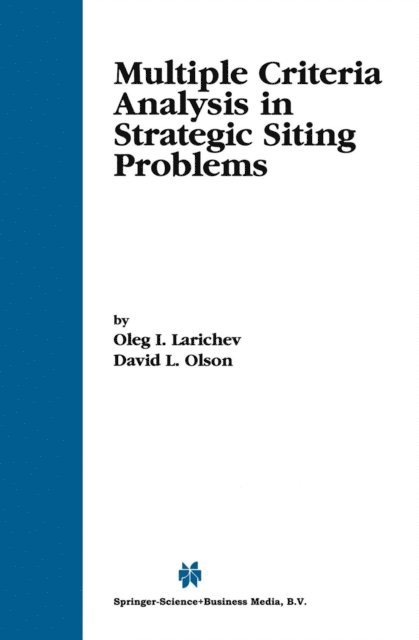
Multiple Criteria Analysis in Strategic Siting Problems
Av David L. Olson, Oleg I. Larichev
1502 kr
Skickas måndag 12/10
Beskrivning
1 Facility Location Problems The location problem has been with humans for all of their history. In the past, many rulers had the decision of locating their capital. Reasons for selecting various locations included central location,transportation benefits to foster trade, and defensibility. The development of industry involved location problems for production facilities and trade outlets. Obvious th criteria for location ofbusiness facilities includedprofit impact. In the 19 century, there seemed to be a focus on the cost of transporting raw materials versus the cost of transporting goods to consumers. Location decisions were made considering all potential gains and expenses. Some judgment was required, because while most benefits and costs could be measured accurately, not all could be. Successful business practice depended on the soundjudgment of the decision-maker in solvinglocation problems. Each of these enterprises produced some wastes. Finding a location to dispose of these wastes was not a difficult task. In less-enlightened times, governments resorted to fiat and land-condemnationto take the sites needed th for disposal. In the 19 century, industry grew rapidly in Great Britain and elsewhere as mass production served expanding populations of consumers. The by-products of mass-production were often simply discarded in the most expeditious manner. There are still mountains in the United States Introduction 2 with artificial facades created from the excess material discarded from mining activity. We have developed the ability to create waste of lethal toxicity.
Produktinformation
- Utgivningsdatum: 2013-11-11
- Format: E-bok
- Språk: Engelska
- Förlag: Springer US
- ISBN: 9781475732450
Utforska kategorier
Betyg & recensioner
0 recensioner
Inga recensioner tillgängliga.