Inbunden, Engelska, 2016
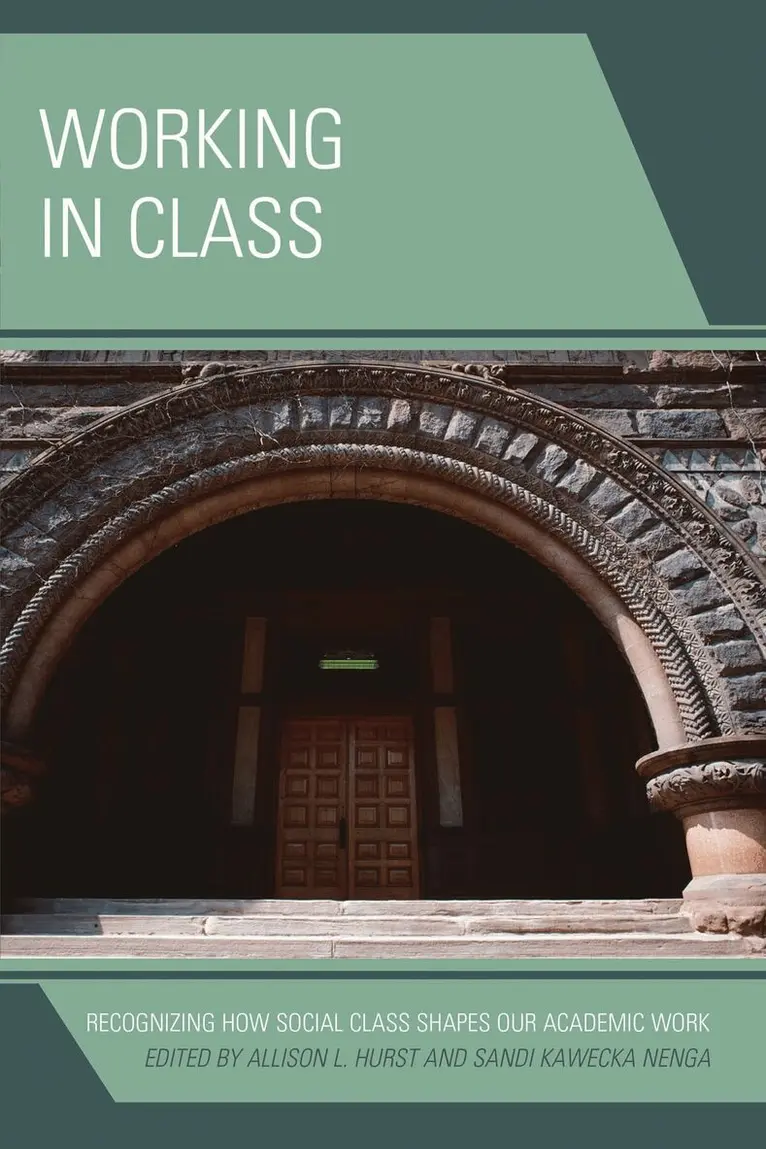
Working in Class
Recognizing How Social Class Shapes Our Academic Work
Av Allison L. Hurst, Sandi Kawecka Nenga
1033 kr
Beställningsvara. Skickas inom 10-15 vardagar. Fri frakt över 249 kr.
Beskrivning
Produktinformation
- Utgivningsdatum: 2016-01-22
- Mått: 159 x 239 x 22 mm
- Vikt: 508 g
- Format: Inbunden
- Språk: Engelska
- Antal sidor: 220
- Förlag: Bloomsbury Publishing Plc
- ISBN: 9781475822526
Utforska kategorier
Mer om författaren
Allison L. Hurst is an assistant professor of sociology at Oregon State University, where she teaches courses on the sociology of education and theory. She is also one of the founders and the current acting president of the Association of Working-Class Academics, an organization composed of college faculty and staff who were the first in their families to graduate from college. She has written two books on the experiences and identity reformations of working-class college students,The Burden of Academic Success: Loyalists, Renegades, and Double Agents(2010) andCollege and the Working Class(2012). Her current research focuses on the outcomes of college graduates, specifically the role of class and the impact of student debt.Sandi Kawecka Nenga is an Associate Professor of Sociology at Southwestern University in Georgetown, Texas. Her research interests include the sociology of youth, middle school peer cultures, youth engagement, social class as a lived experience, and the educational experiences of first-generation college students. Her research has been published in Journal of Contemporary Ethnography, Qualitative Sociology Review, Sociological Studies of Children and Youth, Journal of Youth Studies, and Childhood: A Global Journal of Child Research. Her current research interests are the experiences of first-generation Latino high school students in a college readiness program.
Recensioner i media
Students from working-class families struggle to succeed in universities run by individuals from more privileged backgrounds. Universities expand course offerings while reducing tenure track faculty positions, creating an underclass of highly educated, poorly paid adjunct instructors. Professors from working-class origins describe daunting barriers to career advancement, role rewards, and psychological well-being in the academy. And yet many faculty members and administrators minimize the significance of class in North American universities. This well-crafted volume offers fresh insights into the nature and consequences of socioeconomic class in higher education. Contributors draw on the work of sociologists C. W. Mills and Pierre Bourdieu to explore why class matters, examining the psychological and structural forces that have produced current conditions. The authors offer poignant narratives of their life experiences in the academy, describe research findings, and offer insightful syntheses of classic and more recent literature on how class dynamics affect teaching, research, and faculty service. The book includes a comprehensive, well-chosen, and timely reference list. It is essential reading for all who care about the future of higher education as a vehicle for upward mobility, including faculty members, graduate students, administrators, and educational policy makers.Summing Up: Essential. All readership levels.
Betyg & recensioner
0 recensioner
Inga recensioner tillgängliga.