• Fri frakt över 249 kr
  • •
  • Snabba leveranser
  • •
  • Billiga böcker
Kundservice

Du är på sajten för privatpersoner.

Företag, bibliotek eller offentlig verksamhet?

Du handlar på classic.bokus.com, där alla dina funktioner finns intakta.
Till classic.bokus.com
Bokus logotyp. Gå till startsidan.
  • Erbjudanden
  • Nyheter
  • Student
  • Topplistor
  • Barn & ungdom
  • Bokus Play
  • E-böcker
  • Pocketböcker
  • Spel & pussel

10% rabatt på allt med kod NYSTART10 →

Sidfot

Mina sidor

    Hjälp

    • Kundservice
    • Vanliga frågor och svar
    • Frakt och leverans
    • Retur vid ångerrätt
    • Reklamera vara
    • Betalning
    • Köpvillkor
    • Allmänna villkor
    • Information om webbplatsens tillgänglighet

    Om Bokus

    • Om oss
    • Pressrum
    • För studenter
    • För företag
    • För bibliotek och offentlig verksamhet
    • För leverantörer
    • Hållbarhet

    Populärt

    • Aktuella erbjudanden
    • Presentkort
    • Studentlitteratur
    • Nya böcker
    • Topplistor
    • Signerade böcker
    • Engelska böcker

    Inspiration

    • Boktips
    • BookTok
    • Populära bokserier
    • Barnbokskaraktärer
    • Populära författare
    Logotyp för Bokus
    Följ oss på Facebook (extern länk)Följ oss på Instagram (extern länk)Följ oss på YouTube (extern länk)Följ oss på TikTok (extern länk)
    bokus @ CookiesAnpassa cookiesIntegritetspolicyKöpvillkor
    Till Citymail hemsida (extern länk)Till Budbee hemsida (extern länk)Till Postnord hemsida (extern länk)Till Schenker hemsida (extern länk)Till Early Bird hemsida (extern länk)Till Walleys hemsida (extern länk)
    1. Psykologi och pedagogik
    2. Pedagogik
    3. Högskola och universitet

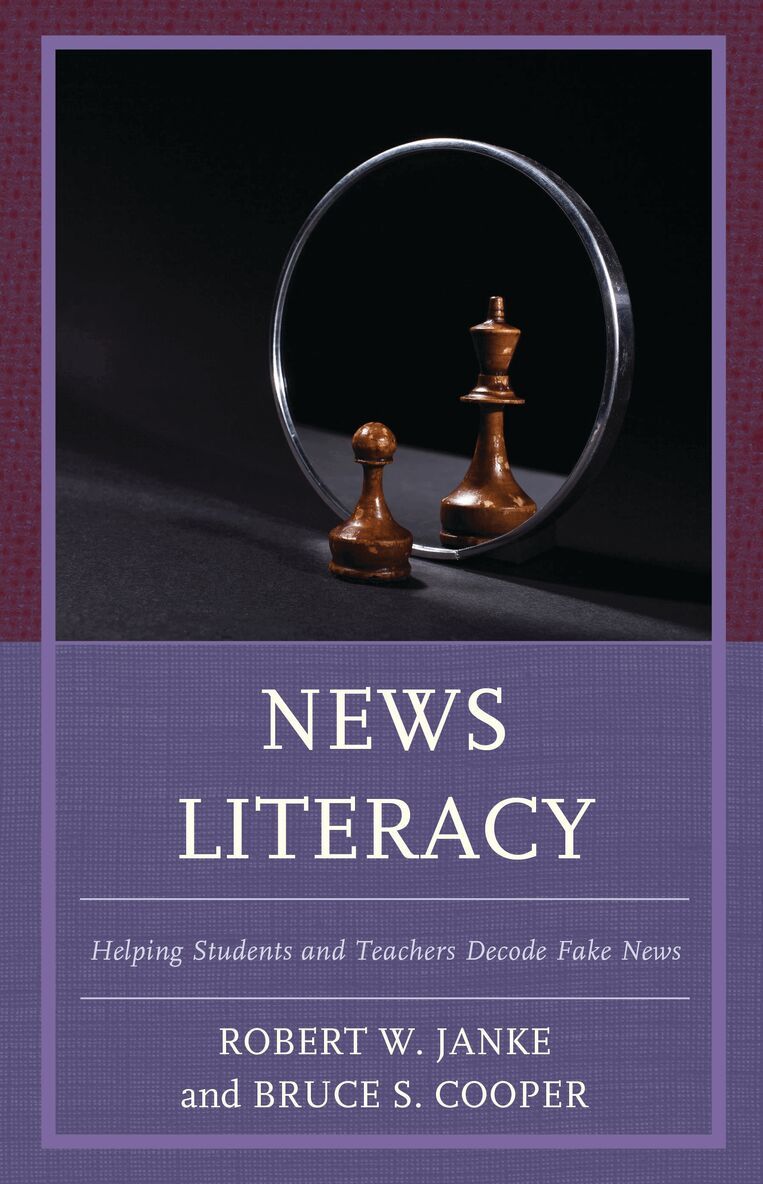
    News Literacy

    Helping Students and Teachers Decode Fake News

    AvRobert W. Janke,Bruce S. Cooper

    Inbunden, Engelska, 2017

    817 kr

    Beställningsvara. Skickas inom 10-15 vardagar. Fri frakt över 249 kr.

    Fler format och utgåvor

    Häftad

    439 kr

    Beskrivning

    Our society faces international challenges from cyber attacks and dissemination of fake news with a goal to destabilize our society. Fake news can be used as a weapon with destructive effects as powerful as any military attack. Fake news can spread as fast as a wildfire carried on the winds of social media. Students and all citizens need to be prepared and informed of ways to quickly understand and distinguish real and fake news. Preventing the potential destructive effects of fake news is the purpose of this book. The focus is upon providing a resource for educators to develop “news literacy” skills of students in objectively evaluating the news.
    Produktinformation

    • Utgivningsdatum:2017-10-18
    • Mått:160 x 237 x 17 mm
    • Vikt:395 g
    • Format:Inbunden
    • Språk:Engelska
    • Antal sidor:170
    • Förlag:Bloomsbury Publishing Plc
    • ISBN:9781475839296

    Utforska kategorier

    • Högskola och universitet inom Psykologi och pedagogik
    • Material och digital teknik i undervisningen inom Psykologi och pedagogik
    • Utbildningsstrategier och utbildningspolitik inom Psykologi och pedagogik

    Mer om författaren

    Robert W. Janke is professor of education at Baldwin Wallace University with almost 50 years of experience as a teacher, psychologist, and professor. He received a PhD from the University of Michigan.Bruce S. Cooper is professor emeritus in education leadership, administration, and policy at Fordham University. He receive a PhD from the University of Chicago and has published over forty books on policy, finance, leadership, and school improvement.

    Recensioner i media

    Is there a subject that we need to study as urgently as the matter of what is, and is not, fake news? Social media have provided a platform for the dissemination and absorption of untruths in a way our ancestors could not have dreamed of—with what now looks like grotesques implications for societal progress, citizenship, and the social contract. Janke and Cooper could not be writing at a better time and their excellent and very readable exploration of this topic should be on every teacher’s (and teacher trainer’s) reading list.

    Innehållsförteckning

    • Preface Acknowledgments PART I: Background and Hurdles for Evaluating the News 1. Background 2. Hurdles PART II: Sources and Terms of Accurate and Fake News 3. Sources 4. Terms and Vocabulary PART III: Collecting Information in Real and Fake News 5. Obtaining a Sample of Persons or Documents 6. Instruments Used to Collect Information 7. Types of Information 8. Analyzing Information 9. Interpreting Information 10. Promises or Recommendations PART IV: How Fake News Persuades11. Techniques of Fake News Communication 12. Fake News about Education PART V: Preventing Fake News from Spreading13. Protecting Against Fake News 14. Instructional Activities15. Recommendations ReferencesIndex