• Fri frakt över 249 kr
  • •
  • Snabba leveranser
  • •
  • Billiga böcker
Kundservice

Du är på sajten för privatpersoner.

Företag, bibliotek eller offentlig verksamhet?

Du handlar på classic.bokus.com, där alla dina funktioner finns intakta.
Till classic.bokus.com
Bokus logotyp. Gå till startsidan.
  • Erbjudanden
  • Student
  • Topplistor
  • Barn & ungdom
  • Bokus Play
  • E-böcker
  • Ljudböcker
  • Pocketböcker
  • Spel & pussel

Upp till 25% på utvalda nyheter →

Sidfot

Mina sidor

    Hjälp

    • Kundservice
    • Vanliga frågor och svar
    • Frakt och leverans
    • Retur vid ångerrätt
    • Reklamera vara
    • Betalning
    • Köpvillkor
    • Allmänna villkor
    • Information om webbplatsens tillgänglighet

    Om Bokus

    • Om oss
    • Pressrum
    • För studenter
    • För företag
    • För bibliotek och offentlig verksamhet
    • För leverantörer
    • Hållbarhet

    Populärt

    • Aktuella erbjudanden
    • Presentkort
    • Studentlitteratur
    • Nya böcker
    • Topplistor
    • Signerade böcker
    • Engelska böcker

    Inspiration

    • Boktips
    • BookTok
    • Populära bokserier
    • Barnbokskaraktärer
    • Populära författare
    Logotyp för Bokus
    Följ oss på Facebook (extern länk)Följ oss på Instagram (extern länk)Följ oss på YouTube (extern länk)Följ oss på TikTok (extern länk)
    bokus @ CookiesAnpassa cookiesIntegritetspolicyKöpvillkor
    Till Citymail hemsida (extern länk)Till Budbee hemsida (extern länk)Till Postnord hemsida (extern länk)Till Schenker hemsida (extern länk)Till Early Bird hemsida (extern länk)Till Walleys hemsida (extern länk)
    1. Psykologi och pedagogik
    2. Pedagogik
    3. Pedagogisk metodik

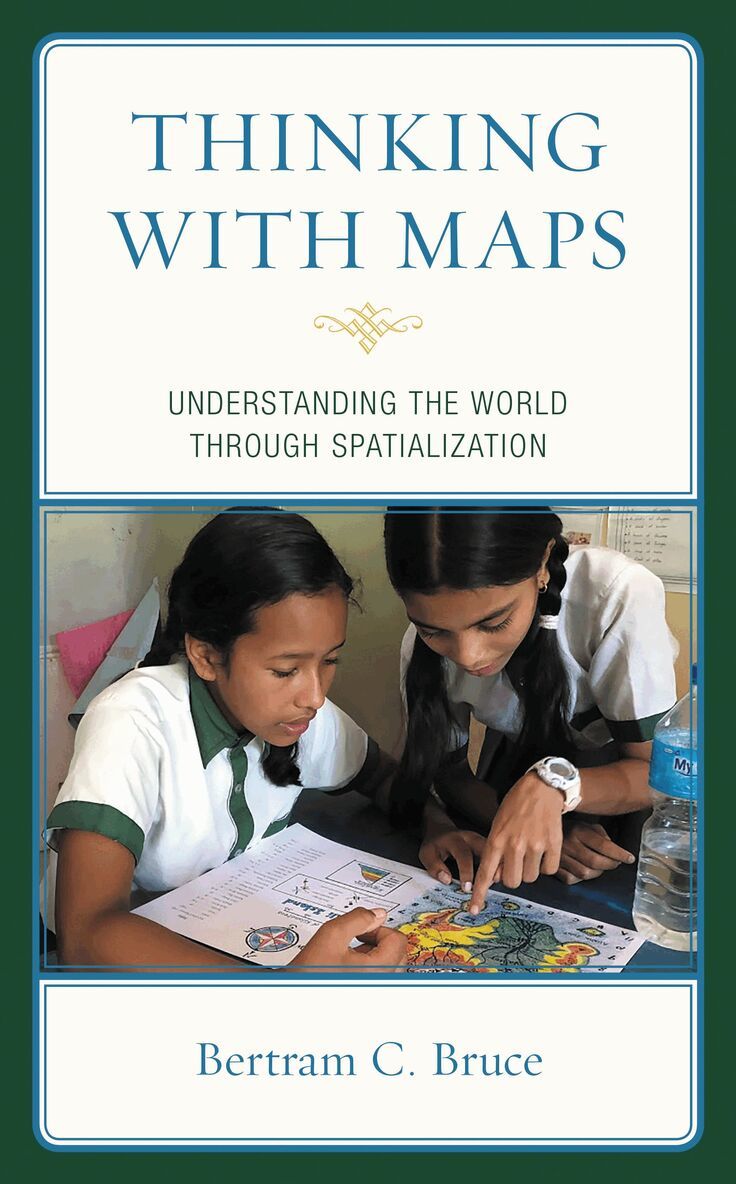
    Thinking with Maps

    Understanding the World through Spatialization

    AvBertram C. Bruce

    Inbunden, Engelska, 2021

    1 086 kr

    Beställningsvara. Skickas inom 10-15 vardagar. Fri frakt över 249 kr.

    Fler format och utgåvor

    Häftad

    492 kr

    Beskrivning

    A 2022 Choice Reviews Outstanding Academic TitleSpatial reasoning, which promises connection across wide areas, is itself ironically often not connected to other areas of knowledge. Thinking with Maps: Understanding the World through Spatialization addresses this problem, developing its argument through historical analysis and cross-disciplinary examples involving maps. The idea of maps here includes traditional cartographic representations of physical environments, but more broadly encompasses the wide variety of ways that visualizations are used across all disciplines to enable understanding, to generate new knowledge, and to effect change.The idea of thinking with maps is also used broadly. Maps become, not simply one among many items to learn about, but indispensable tools for thinking across every field of inquiry, in a way similar to that of textual and mathematical language. Effective use of maps becomes a way to make knowledge, much as writing or mathematical exploration not only displays ideas, but also creates them. The book shows that maps for thinking are not just a means to improve geographic knowledge, as valuable as that may be. Instead, they provide mechanisms for rejuvenating our engagement with the world, helping us to become more capable of facing our global challenges.This book has a broader aim: It is fundamentally about general principles of how we learn and know. It calls for a renewed focus on democratic education in which both the means and ends are democratic. Education, just as the political realm, should follow Dewey’s dictum that “democratic ends need democratic methods for their realization.” Maps and mapping are invaluable in that endeavor.

    Produktinformation

    • Utgivningsdatum:2021-05-15
    • Mått:162 x 240 x 22 mm
    • Vikt:494 g
    • Format:Inbunden
    • Språk:Engelska
    • Antal sidor:208
    • Förlag:Bloomsbury Publishing Plc
    • ISBN:9781475859287
    • Utmärkelser:Winner of Outstanding Academic Title 2022

    Utforska kategorier

    • Pedagogisk metodik inom Psykologi och pedagogik
    • Undervisning i specifika ämnen inom Psykologi och pedagogik

    Mer om författaren

    Bertram C. Bruce has a PhD in computer science and is professor emeritus in information science at the University of Illinois.He has worked on education in many countries, across grade levels, and in diverse areas of the curriculum. His work contributes to a tradition of democratic education, asking “How can we guide the educational enterprise by an ethical vision, not simply a technocratic one of transmitting isolated facts and skills?” His most recent book is Education’s Ecosystems: Learning through Life.

    Recensioner i media

    What value do maps have in the age of ubiquitous geographic information delivered digitally on mobile devices? Bruce directly addresses this question in eight conceptual chapters highlighting the importance of maps for developing thinking and learning in a variety of educational contexts. A computer scientist who taught in the UIUC Department of Information Science, Bruce demonstrates breadth of knowledge in teaching and learning through brief snapshots focused on educational applications of, e.g., maps, globes, global positioning system (GPS) technologies, and the freely available OpenStreetMap database. Although the examples presented include several familiar to most geographers, including Dr. John Snow’s London well (cholera spread) and geologist William Smith’s strata (biozones), Bruce also includes several unique illustrations of map use, e.g., Parisian street signs, humanitarian aid mapping in Nepal. He adopts a primarily theoretical perspective on maps as used for understanding the world, influenced by distinguished historical educators (Lucy Sprague Mitchell and John Dewey). Each chapter includes multiple illustrations of maps used as "thinking tools," reinforcing the general importance of spatial thinking alongside literacy and numeracy. Although brief, this text provides important insights for general readers and will also be welcomed by geographers, spatial humanities educators, and practitioners working in social studies, science, and early childhood education. Highly recommended. Lower- and upper-division undergraduates. Graduate students, faculty, and professionals. General readers.

    Innehållsförteckning

    • ForewordPrefaceAcknowledgmentsIntroductionChapter 1. WayfindingChapter 2. ConstructingChapter 3. LearningChapter 4. ExpressingChapter 5. SolvingChapter 6. ConnectingChapter 7. Entering the MapChapter 8. What is a Map?Conclusion: The Map AheadAbout the Author