Häftad, Engelska, 2021
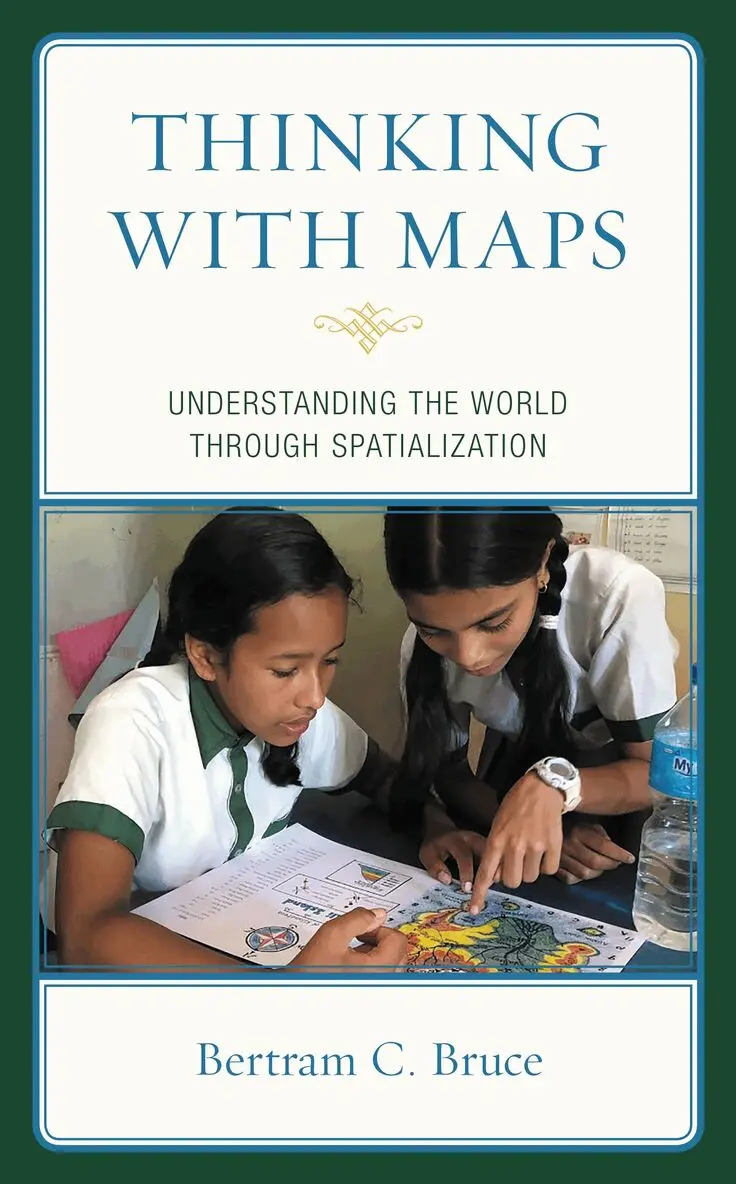
Thinking with Maps
Understanding the World through Spatialization
499 kr
Beställningsvara. Skickas inom 10-15 vardagar. Fri frakt över 249 kr.
Beskrivning
Produktinformation
- Utgivningsdatum: 2021-05-15
- Mått: 152 x 231 x 16 mm
- Vikt: 318 g
- Format: Häftad
- Språk: Engelska
- Antal sidor: 208
- Förlag: Bloomsbury Publishing Plc
- ISBN: 9781475859294
- Utmärkelser: Winner of Outstanding Academic Title 2022
Utforska kategorier
Mer om författaren
Bertram C. Bruce has a PhD in computer science and is professor emeritus in information science at the University of Illinois.He has worked on education in many countries, across grade levels, and in diverse areas of the curriculum. His work contributes to a tradition of democratic education, asking “How can we guide the educational enterprise by an ethical vision, not simply a technocratic one of transmitting isolated facts and skills?” His most recent book is Education’s Ecosystems: Learning through Life.
Recensioner i media
What value do maps have in the age of ubiquitous geographic information delivered digitally on mobile devices? Bruce directly addresses this question in eight conceptual chapters highlighting the importance of maps for developing thinking and learning in a variety of educational contexts. A computer scientist who taught in the UIUC Department of Information Science, Bruce demonstrates breadth of knowledge in teaching and learning through brief snapshots focused on educational applications of, e.g., maps, globes, global positioning system (GPS) technologies, and the freely available OpenStreetMap database. Although the examples presented include several familiar to most geographers, including Dr. John Snow’s London well (cholera spread) and geologist William Smith’s strata (biozones), Bruce also includes several unique illustrations of map use, e.g., Parisian street signs, humanitarian aid mapping in Nepal. He adopts a primarily theoretical perspective on maps as used for understanding the world, influenced by distinguished historical educators (Lucy Sprague Mitchell and John Dewey). Each chapter includes multiple illustrations of maps used as "thinking tools," reinforcing the general importance of spatial thinking alongside literacy and numeracy. Although brief, this text provides important insights for general readers and will also be welcomed by geographers, spatial humanities educators, and practitioners working in social studies, science, and early childhood education. Highly recommended. Lower- and upper-division undergraduates. Graduate students, faculty, and professionals. General readers.
Betyg & recensioner
0 recensioner
Inga recensioner tillgängliga.