• Fri frakt över 249 kr
  • •
  • Snabba leveranser
  • •
  • Billiga böcker
Kundservice

Du är på sajten för privatpersoner.

Företag, bibliotek eller offentlig verksamhet?

Du handlar på classic.bokus.com, där alla dina funktioner finns intakta.
Till classic.bokus.com
Bokus logotyp. Gå till startsidan.
  • Erbjudanden
  • Nyheter
  • Student
  • Topplistor
  • Barn & ungdom
  • Bokus Play
  • E-böcker
  • Pocketböcker
  • Spel & pussel

10% rabatt på allt med kod: NYSTART10 →

Sidfot

Mina sidor

    Hjälp

    • Kundservice
    • Vanliga frågor och svar
    • Frakt och leverans
    • Retur vid ångerrätt
    • Reklamera vara
    • Betalning
    • Köpvillkor
    • Allmänna villkor
    • Information om webbplatsens tillgänglighet

    Om Bokus

    • Om oss
    • Pressrum
    • För studenter
    • För företag
    • För bibliotek och offentlig verksamhet
    • För leverantörer
    • Hållbarhet

    Populärt

    • Aktuella erbjudanden
    • Presentkort
    • Studentlitteratur
    • Nya böcker
    • Topplistor
    • Signerade böcker
    • Engelska böcker

    Inspiration

    • Boktips
    • BookTok
    • Populära bokserier
    • Barnbokskaraktärer
    • Populära författare
    Logotyp för Bokus
    Följ oss på Facebook (extern länk)Följ oss på Instagram (extern länk)Följ oss på YouTube (extern länk)Följ oss på TikTok (extern länk)
    bokus @ CookiesAnpassa cookiesIntegritetspolicyKöpvillkor
    Till Citymail hemsida (extern länk)Till Budbee hemsida (extern länk)Till Postnord hemsida (extern länk)Till Schenker hemsida (extern länk)Till Early Bird hemsida (extern länk)Till Walleys hemsida (extern länk)
    1. Historia och arkeologi
    2. Arkeologi

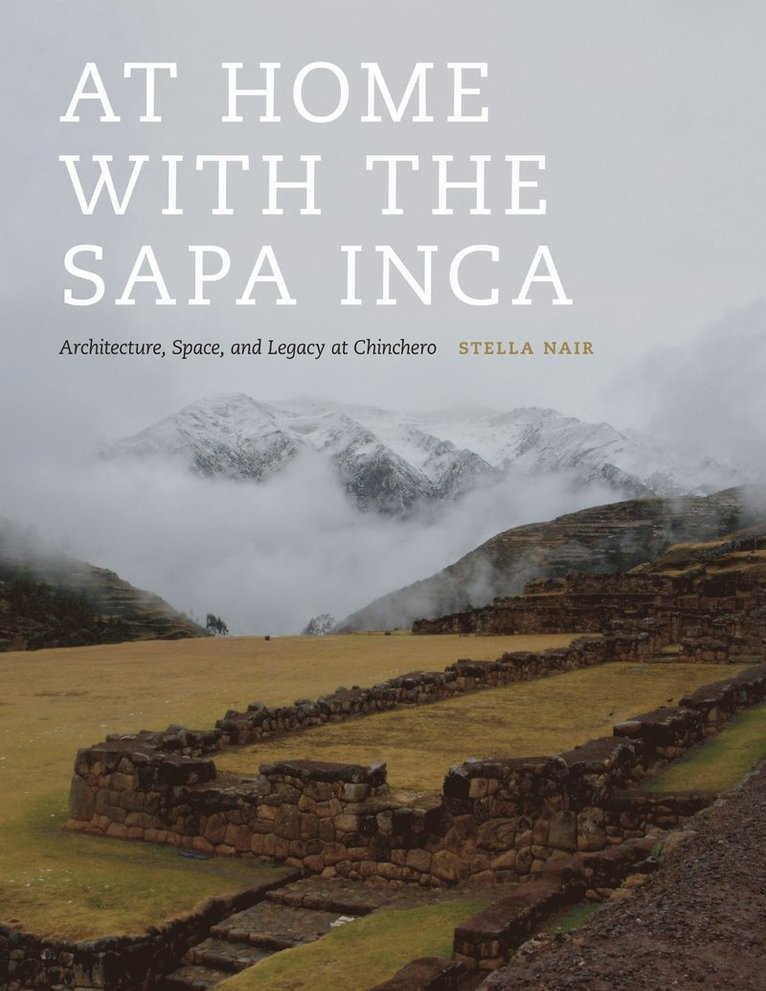
    At Home with the Sapa Inca

    Architecture, Space, and Legacy at Chinchero

    AvStella Nair

    Häftad, Engelska, 2015

    Del i serien Recovering Languages and Literacies of the Americas

    500 kr

    Beställningsvara. Skickas inom 5-8 vardagar. Fri frakt över 249 kr.

    Beskrivning

    By examining the stunning stone buildings and dynamic spaces of the royal estate of Chinchero, Nair brings to light the rich complexity of Inca architecture. This investigation ranges from the paradigms of Inca scholarship and a summary of Inca cultural practices to the key events of Topa Inca’s reign and the many individual elements of Chinchero’s extraordinary built environment.What emerges are the subtle, often sophisticated ways in which the Inca manipulated space and architecture in order to impose their authority, identity, and agenda. The remains of grand buildings, as well as a series of deft architectural gestures in the landscape, reveal the unique places that were created within the royal estate and how one space deeply informed the other. These dynamic settings created private places for an aging ruler to spend time with a preferred wife and son, while also providing impressive spaces for imperial theatrics that reiterated the power of Topa Inca, the choice of his preferred heir, and the ruler’s close relationship with sacred forces.This careful study of architectural details also exposes several false paradigms that have profoundly misguided how we understand Inca architecture, including the belief that it ended with the arrival of Spaniards in the Andes. Instead, Nair reveals how, amidst the entanglement and violence of the European encounter, an indigenous town emerged that was rooted in Inca ways of understanding space, place, and architecture and that paid homage to a landscape that defined home for Topa Inca.

    Produktinformation

    • Utgivningsdatum:2015-07-01
    • Mått:216 x 279 x 18 mm
    • Vikt:739 g
    • Format:Häftad
    • Språk:Engelska
    • Serie:Recovering Languages and Literacies of the Americas
    • Antal sidor:304
    • Förlag:University of Texas Press
    • ISBN:9781477302507

    Utforska kategorier

    • Arkeologi inom Historia och arkeologi
    • Arkeologiska perioder och områden inom Historia och arkeologi
    • Konsthistoria inom Kultur

    Mer om författaren

    Trained as an architect and architectural historian, Stella Nair is Associate Professor in the Department of Art History and Core Faculty in the Archaeology Interdepartmental Program at UCLA. She coauthored (with Jean-Pierre Protzen) The Stones of Tiahuanaco: A Study of Architecture and Construction.

    Recensioner i media

    "Nair's book is an important contribution to Andean scholarship, demonstrating that a nuanced appreciation of architectural space can result in surprising insights about an ancient culture." (Journal of Interdisciplinary History) "This is exactly the sort of book I wanted. This is exactly the sort of book you probably want, if you’re interested in the Inca and even possibly if you aren’t. Of all the Inca Imperial material I’ve read, this is the one I would recommend most highly." (marissalingen.com) "This is an impressive and important contribution to Andean studies and to the anthropological study of landscape and architecture. The volume is full of nuanced analyses of the construction and experience of Chinchero. Nair presents fascinating interpretations throughout the book and touches on a wide range of theoretical domains. . . . [A] wonderful and erudite book that will inform analyses of the Inca state for years to come." (American Anthropologist) "As eloquent and sure-footed as it is insightful and practical, both generalists and specialists will appreciate the volume’s detailed analysis of Inca architecture and landscape rooted in close observation and measurement, archaeology, ethnohistoric sources, and the acuity of a phenomenological methodology. . . In sum, At Home with the Sapa Inca is a critical addition to Andean studies." (College Art Association Reviews) "This engaging, meticulously researched, and clearly written monograph is well suited for course adaptation. It promises to become one of the classic studies of the Inca and their magnificent architectural legacy, and to serve as puncu, an opening from which future studies will follow." (Latin American Antiquity) "Insightful, evocative, and thoroughly researched, Stella Nair’s new book explores the distinctive architectural spaces and structures of the royal Inca palace…. This wonderful work will be of great interest to Andeanists of all disciplines. Its highly accessible nature makes it ideal for undergraduate and graduate courses in architectural history, art history, and archeology, anthropology, and the history of Latin America." (Hispanic American Historical Review) "[At Home with the Sapa Inca fosters] a deeper understanding of Inka culture, especially as it was borne out through elite practices and space…[It] would be useful for both casual and specialist readers interested in Inka and architectural history. It offers a real insights into Inka life and architectural style." (Ethnohistory) "This important book offers a superb study of Topa Inca’s palace complex at Chinchero, Peru, organizing its analysis around Inca concepts and architectural features, and through the spatial progression through which the site would have been experienced. Nair foregrounds how Inca architecture delineated and sacralized space while producing stages for performance, and she provides and excellent reading of the politics of place and movement." (The Americas) "El detallado anÁlisis arquitectÓnico efectuado por Stella Nair, a partir de sus observaciones en Chinchero y la atenta lectura de diversas fuentes etnohistÓricas coloniales, convierten a este libro en un importante referente para el estudio e interpretaciÓn de la arquitectura imperial incaica." (Cuadernos del Qhapaq Ñan) "Clearly written and beautifully illustrated, At Home with the Sapa Inca will be of great interest to scholars interested in learning about the production of space at the center of an ancient empire, and how the intended meanings and actions of these spaces changed relative to historical and political transformations." (Cambrige Journal of Archaeology) "Remarkable…The book's seven chapters expertly guide the reader trough the experience of space at Chinchero."(Sixteenth Century Journal)

    Innehållsförteckning

    • AcknowledgmentsQuechuaIntroduction1. Pirca – Wall2. Pacha – Place and Time3. Pampa – Plaza4. Puncu – Doorway5. Uasi – House6. Pata – Platform7. Llacta – CommunityEpilogueNotesBibliographyIndex