• Fri frakt över 249 kr
  • •
  • Snabba leveranser
  • •
  • Billiga böcker
Kundservice

Du är på sajten för privatpersoner.

Företag, bibliotek eller offentlig verksamhet?

Du handlar på classic.bokus.com, där alla dina funktioner finns intakta.
Till classic.bokus.com
Bokus logotyp. Gå till startsidan.
  • Erbjudanden
  • Nyheter
  • Student
  • Topplistor
  • Barn & ungdom
  • Bokus Play
  • E-böcker
  • Pocketböcker
  • Spel & pussel

10% rabatt på allt med kod: NYSTART10 →

Sidfot

Mina sidor

    Hjälp

    • Kundservice
    • Vanliga frågor och svar
    • Frakt och leverans
    • Retur vid ångerrätt
    • Reklamera vara
    • Betalning
    • Köpvillkor
    • Allmänna villkor
    • Information om webbplatsens tillgänglighet

    Om Bokus

    • Om oss
    • Pressrum
    • För studenter
    • För företag
    • För bibliotek och offentlig verksamhet
    • För leverantörer
    • Hållbarhet

    Populärt

    • Aktuella erbjudanden
    • Presentkort
    • Studentlitteratur
    • Nya böcker
    • Topplistor
    • Signerade böcker
    • Engelska böcker

    Inspiration

    • Boktips
    • BookTok
    • Populära bokserier
    • Barnbokskaraktärer
    • Populära författare
    Logotyp för Bokus
    Följ oss på Facebook (extern länk)Följ oss på Instagram (extern länk)Följ oss på YouTube (extern länk)Följ oss på TikTok (extern länk)
    bokus @ CookiesAnpassa cookiesIntegritetspolicyKöpvillkor
    Till Citymail hemsida (extern länk)Till Budbee hemsida (extern länk)Till Postnord hemsida (extern länk)Till Schenker hemsida (extern länk)Till Early Bird hemsida (extern länk)Till Walleys hemsida (extern länk)
    1. Samhälle och politik
    2. Samhälle och kultur
    3. Kultur och medier
    4. Medievetenskap

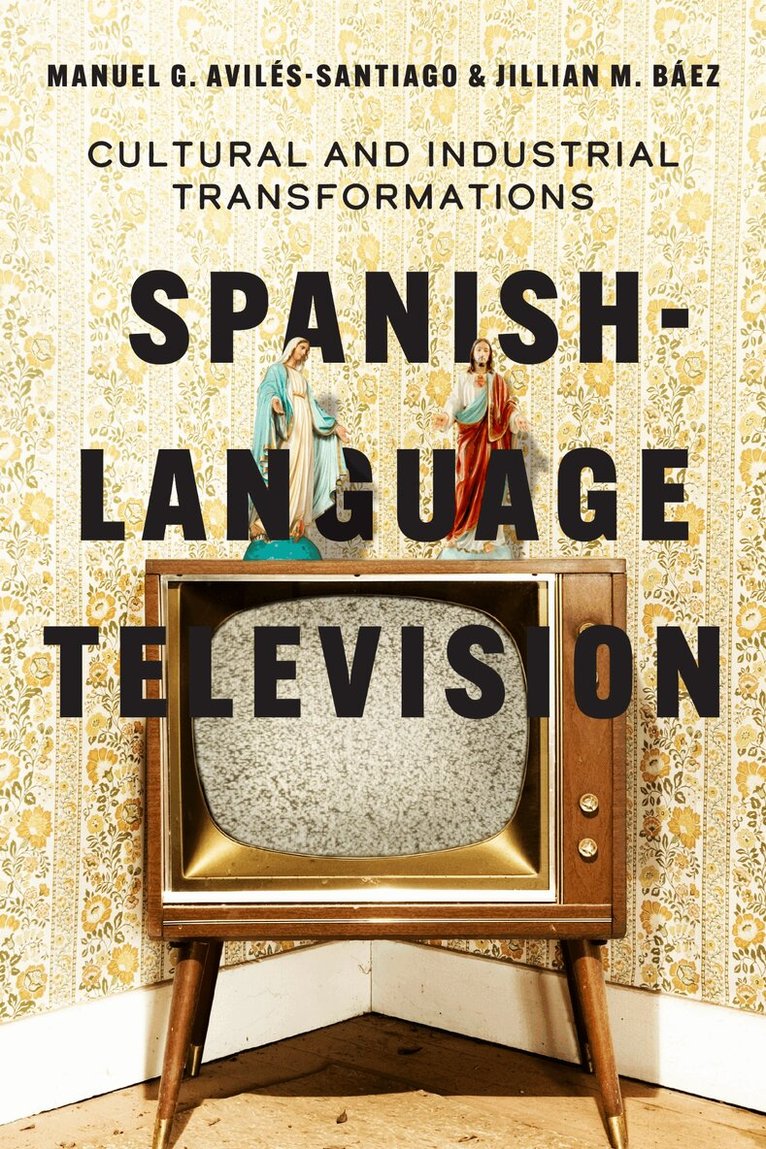
    Spanish-Language Television

    Cultural and Industrial Transformations

    AvManuel G. Avilés-Santiago,Jillian M. Báez

    Häftad, Engelska, 2025

    376 kr

    Beställningsvara. Skickas inom 5-8 vardagar. Fri frakt över 249 kr.

    Fler format och utgåvor

    Inbunden

    1 211 kr

    Beskrivning

    How Spanish-language television networks continue to thrive in a rapidly changing media landscape.The US television industry has suffered blow after blow amid media convergence and the rise of streaming. Those legacy broadcasters that survive are much diminished and highly dependent on live programming-the last redoubt of old media. There is an exception, though: Spanish-language television is thriving. Spanish-Language Television surveys the Latinx media landscape to better appreciate why Univision and Telemundo have flourished while others faltered. Manuel G. AvilÉs-Santiago and Jillian M. BÁez show that the major Spanish-language networks are unusually flexible and open to innovation in hopes of reaching new demographics. Univision and Telemundo were early to streaming. To appeal to “billennial” audiences-bilingual millennials-who threatened to stray from TV, they rebuilt the telenovela, which now features social commentary, diverse characters, and genre crossovers. Today’s reality programs defy old norms of linguistic correctness, and the airwaves are becoming less hospitable to racism and sexism, resulting in rising ratings and ad revenues. The first book-length treatment of reception patterns in Latinx TV, Spanish-Language Television deepens our understanding of new media in a moment of transformation and possibility.

    Produktinformation

    • Utgivningsdatum:2025-05-13
    • Mått:152 x 229 x 14 mm
    • Vikt:454 g
    • Format:Häftad
    • Språk:Engelska
    • Antal sidor:208
    • Förlag:University of Texas Press
    • ISBN:9781477331163

    Utforska kategorier

    • Medievetenskap inom Samhälle och politik
    • Television inom Kultur

    Mer om författaren

    Manuel G. AvilÉs-Santiago is a professor of Communication and Culture at Arizona State University. He also serves as the vice dean at the College of Integrative Sciences and Arts. He is the author of Puerto Rican Soldiers and Second-Class Citizenship: Representations in Media.Jillian M. BÁez is an associate professor in the Africana, Puerto Rican, and Latino Studies Department at Hunter College, City University of New York. She is also on the doctoral faculty in Women’s and Gender Studies at the CUNY Graduate Center. She is the author of In Search of Belonging: Latinas, Media, and Citizenship.

    Recensioner i media

    Jillian BÁez and Manuel AvilÉs-Santiago offer an authoritative and insightful lens for this pivotal work. Spanish-Language Television: Cultural and Industrial Transformations presents a powerful case for the creation of a distinct subfield within media studies and Latinx media studies focused on Spanish-language television. Readers gain a deep understanding of how Spanish was central to the foundation of Spanish-language television, while also tracing the ways in which the language has evolved in tandem with technological advancements, demographic changes, and more. In the end, BÁez and AvilÉs-Santiago reveal how television and its Latinx audience have mutually influenced each other, undergoing a dynamic and reciprocal transformation. - Dolores Inés Casillas, University of California, Santa Barbara, author of Sounds of Belonging: U.S. Spanish-language Radio and Public Advocacy Spanish-Language Television: Cultural and Industrial Transformations offers insights into pressing challenges within the industry, such as advocating for a more critical examination of Spanish-language television’s approach to race. In this ever-changing panorama, nothing is set in stone. Therefore, Jillian BÁez and Manuel AvilÉs-Santiago provide an outstanding contribution to how we rethink our notions of what television is, who it serves, and how content should be circulated. - Jessica Retis, University of Arizona, coeditor of Reporting on Latino/a/x Communities: A Guide for Journalists

    Innehållsförteckning

    • Introduction Chapter 1. Speaking To Billennials: Linguistic Flexibility in Reality Television Chapter 2. Framing Race in Spanish-Language Television Chapter 3. Latin(¿quÉ?): Let the Audiences Speak! Chapter 4. Streaming Media, Nostalgia, and the Future of Spanish-Language Television Conclusion Acknowledgments Notes References Index