• Fri frakt över 249 kr
  • •
  • Snabba leveranser
  • •
  • Billiga böcker
Kundservice

Du är på sajten för privatpersoner.

Företag, bibliotek eller offentlig verksamhet?

Du handlar på classic.bokus.com, där alla dina funktioner finns intakta.
Till classic.bokus.com
Bokus logotyp. Gå till startsidan.
  • Erbjudanden
  • Nyheter
  • Student
  • Topplistor
  • Barn & ungdom
  • Bokus Play
  • E-böcker
  • Pocketböcker
  • Spel & pussel

10% rabatt på allt med kod NYSTART10 →

Sidfot

Mina sidor

    Hjälp

    • Kundservice
    • Vanliga frågor och svar
    • Frakt och leverans
    • Retur vid ångerrätt
    • Reklamera vara
    • Betalning
    • Köpvillkor
    • Allmänna villkor
    • Information om webbplatsens tillgänglighet

    Om Bokus

    • Om oss
    • Pressrum
    • För studenter
    • För företag
    • För bibliotek och offentlig verksamhet
    • För leverantörer
    • Hållbarhet

    Populärt

    • Aktuella erbjudanden
    • Presentkort
    • Studentlitteratur
    • Nya böcker
    • Topplistor
    • Signerade böcker
    • Engelska böcker

    Inspiration

    • Boktips
    • BookTok
    • Populära bokserier
    • Barnbokskaraktärer
    • Populära författare
    Logotyp för Bokus
    Följ oss på Facebook (extern länk)Följ oss på Instagram (extern länk)Följ oss på YouTube (extern länk)Följ oss på TikTok (extern länk)
    bokus @ CookiesAnpassa cookiesIntegritetspolicyKöpvillkor
    Till Citymail hemsida (extern länk)Till Budbee hemsida (extern länk)Till Postnord hemsida (extern länk)Till Schenker hemsida (extern länk)Till Early Bird hemsida (extern länk)Till Walleys hemsida (extern länk)
    1. Samhälle och politik
    2. Samhälle och kultur
    3. Kultur och medier
    4. Medievetenskap

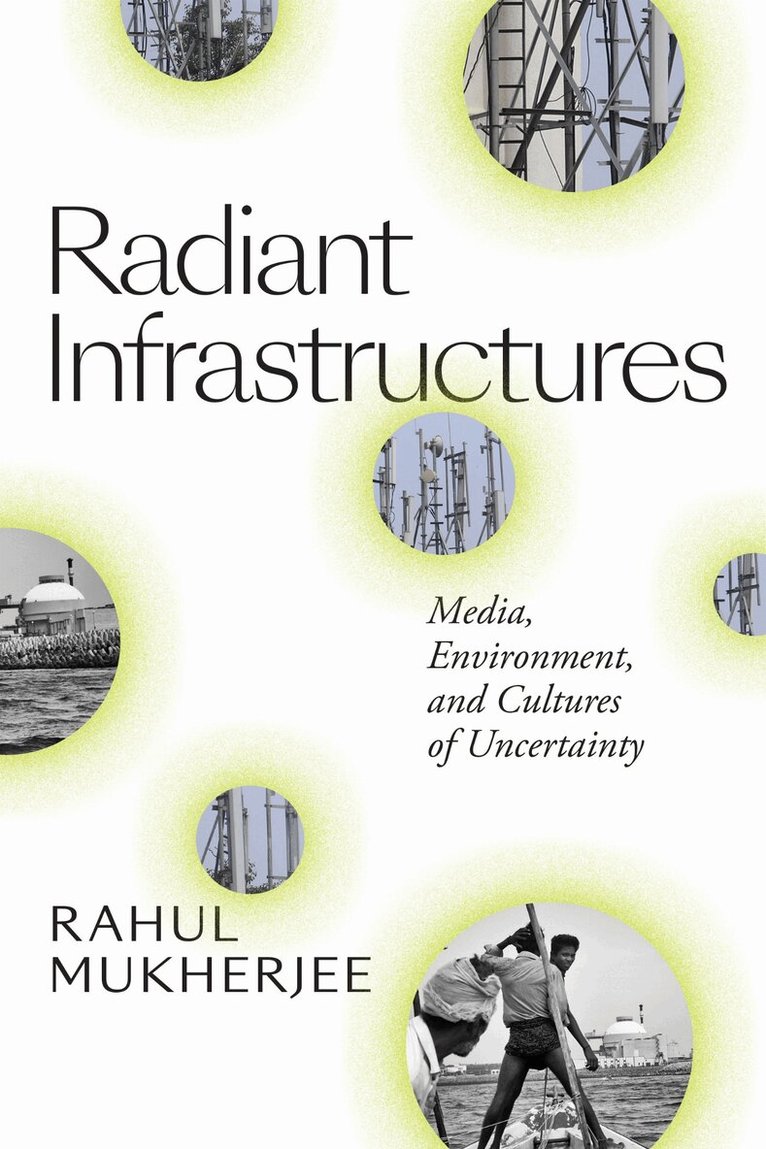
    Radiant Infrastructures

    Media, Environment, and Cultures of Uncertainty

    AvRahul Mukherjee

    Inbunden, Engelska, 2020

    Del i serien Sign, Storage, Transmission

    1 540 kr

    Beställningsvara. Skickas inom 5-8 vardagar. Fri frakt över 249 kr.

    Fler format och utgåvor

    Häftad

    377 kr

    E-bok

    552 kr

    Beskrivning

    In Radiant Infrastructures Rahul Mukherjee explores how the media coverage of nuclear power plants and cellular phone antennas in India-what he calls radiant infrastructures-creates environmental publics: groups of activists, scientists, and policy makers who use media to influence public opinion. In documentaries, lifestyle television shows, newspapers, and Bollywood films, and through other forms of media (including radiation-sensing technologies), these publics articulate contesting views about the relationships between modernity, wireless signals, and nuclear power. From testimonies of cancer patients who live close to cell towers to power plant operators working to contain information about radiation leaks and health risks, discussions in the media show how radiant infrastructures are at once harbingers of optimism about India's development and emitters of potentially carcinogenic radiation. In tracing these dynamics, Mukherjee expands understandings of the relationship between media and infrastructure and how people make sense of their everyday encounters with technology and the environment.


    Produktinformation

    • Utgivningsdatum:2020-03-27
    • Mått:152 x 229 x 20 mm
    • Vikt:522 g
    • Format:Inbunden
    • Språk:Engelska
    • Serie:Sign, Storage, Transmission
    • Antal sidor:288
    • Förlag:Duke University Press
    • ISBN:9781478007623

    Utforska kategorier

    • Medievetenskap inom Samhälle och politik
    • Miljövetenskap och miljöpolitik inom Naturvetenskap och teknik

    Mer om författaren

    Rahul Mukherjee is Dick Wolf Assistant Professor of Television and New Media Studies at the University of Pennsylvania.

    Recensioner i media

    “With an inventive interdisciplinary approach and engaging literary style, Rahul Mukherjee presents the new concept and analytical device of radiant infrastructures. His book makes an important contribution to media and infrastructure studies by providing new understandings of infrastructure as a radiant system.” - Jennifer Gabrys, author of (Program Earth: Environmental Sensing Technology and the Making of a Computational Planet) “Drawing on wide-ranging ethnographic and media research, Rahul Mukherjee has crafted an insightful account of what ‘radiant infrastructures’ like cell phone towers and nuclear reactors tell us about India's media ecology. Tracking environmental controversies surrounding new technologies, Mukherjee does a superb job of analyzing the role of media in shaping new cultures of uncertainty in countries like India. A major contribution to media studies, environmental studies, and critical infrastructure studies, this book is sure to inspire scholars interested in media technologies and politics in South Asia and beyond.” - Aswin Punathambekar, author of (From Bombay to Bollywood: The Making of a Global Media Industry) "Written in a lively and polemic style, the book is a compelling read. . . . Radiant Infrastructures skillfully cuts across and contributes to key debates on infrastructure, global media, postcolonialism, materiality, and global publics within media and communication studies, as well as to science and technology studies by outlining the role of media-broadly defined-in shaping scientific controversies, and it will be a compelling reading for a broad range of readers." - Julia Velkova (Television & New Media) "The book is sophisticated in theory and thorough in fieldwork.… In a world of (post) COVID-19 where the cultures of uncertainty pervade, this book offers a timely intervention diving into the diffusive radiant infrastructures where the power dynamics emerge among the discourses."- Yandong Li (Studies in South Asian Film & Media) "This extensive survey of media ecologies… opens up many more questions and possible avenues of future research endeavours that can investigate the larger international contexts within which these media narratives operate.… Building on this book, future researchers may seek to understand the reasons behind these international investments in the development of radiant infrastructures the ways in which global forces inform the local production of knowledge and uncertainty."  - Suryansu Guha (Journal of Environmental Media) "Because of its ambitious scope, the book will be useful to scholars and students interested in media and mediation, the environment and the Anthropocene, cinema and image politics, global development, and capitalist modernity, particularly the South Asian version of it. By eschewing easy answers and soft targets, Mukherjee boldly lines up the stakes in taking radiation-emitting infrastructures seriously. Modern South Asian life is directly enabled and affected by them. Radiant Infrastructures gives us a different starting point to work towards a more equitable experience with modernity in this and other parts of the world." - Nusrat S. Chowdhury (BioScope) "The book’s energizing conceptualization of radiance puts it in conversation with the recent body of interdisciplinary scholarship around mediating energies, such as rare earth minerals, solar power, wind, carbon, and the sociotechnical relations generated by these energies. . . . This book will be compelling for a wide range of readers, as it offers an invaluable framework for thinking about environmental justice and critical infrastructure in Asia, from post-Fukushima Japan to China’s accelerated adoption of 5G cellular infrastructures and Southeast Asia’s energy crisis." - Weixian Pan (Journal of Cinema and Media Studies)

    Innehållsförteckning

    • Acknowledgements  viiIntroduction. Radiant Energies and Environmental Controversies  I1. Debating Cell Towers  392. Contested Nuclear Imaginaries  703. Emissions  1064. Exposures  1385. Styling Advocacy: Activism and Citizenship  163Conclusion  192Notes  219References  241Index  259