• Fri frakt över 249 kr
  • •
  • Snabba leveranser
  • •
  • Billiga böcker
Kundservice

Du är på sajten för privatpersoner.

Företag, bibliotek eller offentlig verksamhet?

Du handlar på classic.bokus.com, där alla dina funktioner finns intakta.
Till classic.bokus.com
Bokus logotyp. Gå till startsidan.
  • Erbjudanden
  • Student
  • Topplistor
  • Barn & ungdom
  • Bokus Play
  • E-böcker
  • Ljudböcker
  • Pocketböcker
  • Spel och pussel

Pocketfynda! Hundratals böcker för 49 kr/st →

Sidfot

Mina sidor

    Hjälp

    • Kundservice
    • Vanliga frågor och svar
    • Frakt och leverans
    • Retur vid ångerrätt
    • Reklamera vara
    • Betalning
    • Köpvillkor
    • Allmänna villkor
    • Information om webbplatsens tillgänglighet

    Om Bokus

    • Om oss
    • Pressrum
    • För studenter
    • För företag
    • För bibliotek och offentlig verksamhet
    • För leverantörer
    • Hållbarhet

    Populärt

    • Aktuella erbjudanden
    • Presentkort
    • Studentlitteratur
    • Nya böcker
    • Topplistor
    • Signerade böcker
    • Engelska böcker

    Inspiration

    • Boktips
    • BookTok
    • Barnbokskaraktärer
    • Populära författare
    Logotyp för Bokus
    Följ oss på Facebook (extern länk)Följ oss på Instagram (extern länk)Följ oss på YouTube (extern länk)Följ oss på TikTok (extern länk)
    bokus @ CookiesAnpassa cookiesIntegritetspolicyKöpvillkor
    Till Citymail hemsida (extern länk)Till Budbee hemsida (extern länk)Till Postnord hemsida (extern länk)Till Schenker hemsida (extern länk)Till Early Bird hemsida (extern länk)Till Walleys hemsida (extern länk)
    1. Samhälle och politik
    2. Samhälle och kultur
    3. Kultur och medier
    4. Medievetenskap

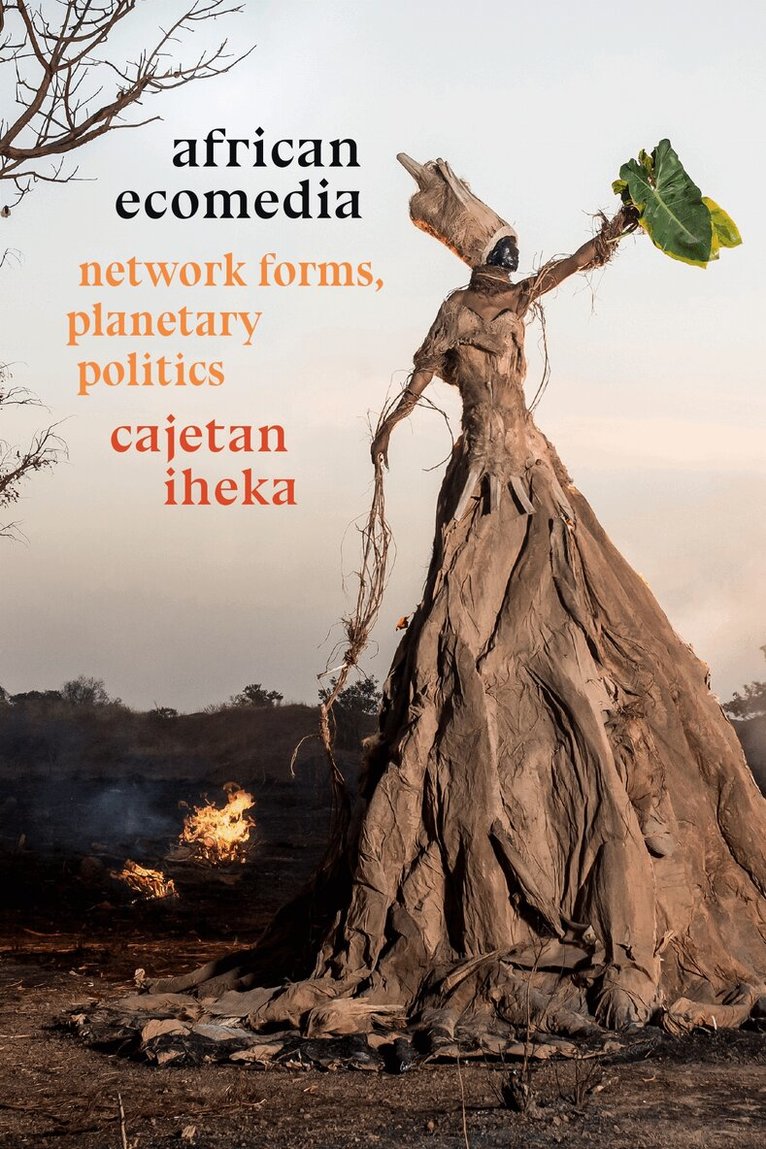
    African Ecomedia

    Network Forms, Planetary Politics

    AvCajetan Iheka

    Inbunden, Engelska, 2021

    1 213 kr

    Beställningsvara. Skickas inom 5-8 vardagar. Fri frakt över 249 kr.

    Fler format och utgåvor

    Häftad

    298 kr

    E-bok

    471 kr

    Beskrivning

    In African Ecomedia, Cajetan Iheka examines the ecological footprint of media in Africa alongside the representation of environmental issues in visual culture. Iheka shows how, through visual media such as film, photography, and sculpture, African artists deliver a unique perspective on the socioecological costs of media production, from mineral and oil extraction to the politics of animal conservation. Among other works, he examines Pieter Hugo's photography of electronic waste recycling in Ghana and Idrissou Mora-Kpai's documentary on the deleterious consequences of uranium mining in Niger. These works highlight not only the exploitation of African workers and the vast scope of environmental degradation but also the resourcefulness and creativity of African media makers. They point to the unsustainability of current practices while acknowledging our planet's finite natural resources. In foregrounding Africa's centrality to the production and disposal of media technology, Iheka shows the important place visual media has in raising awareness of and documenting ecological disaster even as it remains complicit in it.

    Produktinformation

    • Utgivningsdatum:2021-12-10
    • Mått:152 x 229 x 26 mm
    • Vikt:771 g
    • Format:Inbunden
    • Språk:Engelska
    • Antal sidor:336
    • Förlag:Duke University Press
    • ISBN:9781478013815

    Utforska kategorier

    • Medievetenskap inom Samhälle och politik
    • Afrikas historia inom Historia och arkeologi

    Mer om författaren

    Cajetan Iheka is Associate Professor of English at Yale University, author of Naturalizing Africa: Ecological Violence, Agency, and Postcolonial Resistance in African Literature, editor of Teaching Postcolonial Environmental Literature and Media, and coeditor of African Migration Narratives: Politics, Race, and Space.

    Recensioner i media

    “Cajetan Iheka writes of the most pressing and complicated issues with clear-sightedness. This major contribution will undoubtedly reach beyond the academy to become a stirring call to anyone interested in the interconnectedness engendered by globalization and the attendant toxicity and suffering that have been unleashed on various populations across Africa and elsewhere. This is truly a joy to read.” - Ato Quayson, author of (Tragedy and Postcolonial Literature) “This outstanding book powerfully reorients ecocritical studies. Cajetan Iheka has taken on three of the most pressing issues of our times: the aftermath of colonialism and globalization; the social intensification of communications media; and the environmental impact of human societies. His scholarship is impressive in its scope and depth, his thinking original and significant. African Ecomedia will reverberate with students and researchers in media and communications, environmental humanities, ecocritical studies, anthropology, and social sciences.” - Sean Cubitt, author of (Finite Media: Environmental Implications of Digital Technologies) "A provocative account of how contemporary works of African visual culture embody the 'infinite resourcefulness' needed to survive an anthropogenic planet defined by the 'limitedness of resources.'" - Michael Dango (ASAP/Journal) “Iheka provides piercing analyses of the ecological footprints of media technologies in Africa and the representation in media of ecological issues affecting Africa. [He] challenges all media forms to remind humanity of the environmental crisis and climate change, African lessons on sustainable ways of consuming energy, and the opportunities to improve quality of life. Recommended. All readers.”- Z. N. Nchinda (Choice) “[Iheka] makes a resounding case for the centrality of African ecomedia in confronting the most critical issues of our time, which makes this book equally as indispensable.” - Dustin Crowley (ISLE: Interdisciplinary Studies in Literature and Environment) "Iheka’s work demonstrates the centrality of pollution to media infrastructure, foregrounding the toxicity that is produced both at the point of extraction of resources and at the end point of disposal, following the planned obsolescence of media devices. . . . African Ecomedia’s analysis of diverse African contexts carries out vital work to counteract the dynamics of invisibility that they depend upon." - Rebecca Macklin (Year's Work in Ecocriticism) “The arguments in Cajetan Iheka’s [African Ecomedia] are clever and exciting, and the book as artefact is a thing of great beauty.” - Carli Coetzee (Journal of the African Literature Association) “Iheka offers a meticulous historical contextualization of Africa’s present economic demise while beautifully answering the question, ‘Why can’t we be seen?’ . . . A recuperative postcolonial project, African Ecomedia centralizes Africa ‘as the ground zero of the energy humanities.’” - Gugu Hlongwane (Cambridge Journal of Postcolonial Literary Inquiry) “Cajetan Iheka’s outstanding book on environmental issues in African visual culture and screen media paves the way for scholarship in African ecocritical studies. . . . The main strength of African Ecomedia lies in how Iheka builds on previous Anthropocene scholarship by focusing on the Global South, specifically the dependence and complicity in the ecological footprint of visual media in Africa. The volume essentially advocates for media practices arising from the African continent that are innovatively and ecologically framed.” - Sheila Petty (Journal of Cinema and Media Studies) "Part of what makes African Ecomedia truly ambitious is that the book brings together a range of often siloed fields, from African studies, environmental humanities, and energy humanities, to literary studies and media studies. Iheka makes the case for why Africa needs to be seen as more than a place of environmental crisis." - Jacob Dlamini (H-Environment, H-Net Reviews)

    Innehållsförteckning

    • List of Illustrations  ixAcknowledgments  xiIntroduction  11. Waste Reconsidered: Afrofuturism, Technologies of the Past, and the History of the Future  252. Spatial Networks, Toxic Ecoscapes, and (In)visible Labor  643. Ecologies of Oil and Uranium: Extractive Energy and the Trauma of the Future  1084. Human Meets Animal, Africa Meets Diaspora: The Conjunctions of Cecil the Lion and Black Lives Matter  1525. African Urban Ecologies: Transcriptions of Precarity, Creativity, and Futurity  186Epilogue. Toward Imperfect Media  221Notes  231Bibliography  273Index  305