• Fri frakt över 249 kr
  • •
  • Snabba leveranser
  • •
  • Billiga böcker
Kundservice

Du är på sajten för privatpersoner.

Företag, bibliotek eller offentlig verksamhet?

Du handlar på classic.bokus.com, där alla dina funktioner finns intakta.
Till classic.bokus.com
Bokus logotyp. Gå till startsidan.
  • Erbjudanden
  • Nyheter
  • Student
  • Topplistor
  • Barn & ungdom
  • Bokus Play
  • E-böcker
  • Pocketböcker
  • Spel & pussel

10% rabatt på allt med kod: NYSTART10 →

Sidfot

Mina sidor

    Hjälp

    • Kundservice
    • Vanliga frågor och svar
    • Frakt och leverans
    • Retur vid ångerrätt
    • Reklamera vara
    • Betalning
    • Köpvillkor
    • Allmänna villkor
    • Information om webbplatsens tillgänglighet

    Om Bokus

    • Om oss
    • Pressrum
    • För studenter
    • För företag
    • För bibliotek och offentlig verksamhet
    • För leverantörer
    • Hållbarhet

    Populärt

    • Aktuella erbjudanden
    • Presentkort
    • Studentlitteratur
    • Nya böcker
    • Topplistor
    • Signerade böcker
    • Engelska böcker

    Inspiration

    • Boktips
    • BookTok
    • Populära bokserier
    • Barnbokskaraktärer
    • Populära författare
    Logotyp för Bokus
    Följ oss på Facebook (extern länk)Följ oss på Instagram (extern länk)Följ oss på YouTube (extern länk)Följ oss på TikTok (extern länk)
    bokus @ CookiesAnpassa cookiesIntegritetspolicyKöpvillkor
    Till Citymail hemsida (extern länk)Till Budbee hemsida (extern länk)Till Postnord hemsida (extern länk)Till Schenker hemsida (extern länk)Till Early Bird hemsida (extern länk)Till Walleys hemsida (extern länk)
    1. Samhälle och politik
    2. Samhälle och kultur
    3. Sociala och etiska frågor

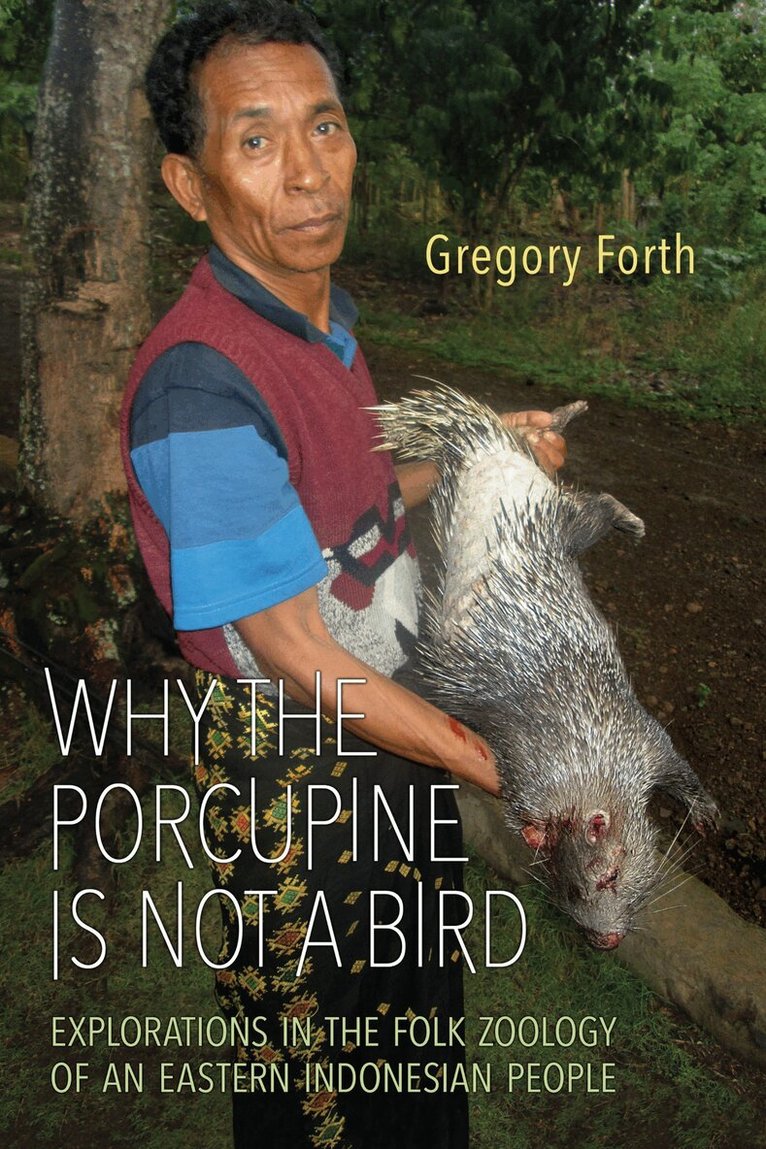
    Why the Porcupine Is not a Bird

    Explorations in the Folk Zoology of an Eastern Indonesian People

    AvGregory Forth

    E-bok
    PDF, Engelska, 2016

    Del i serien Anthropological Horizons

    537 kr

    Läs direkt i Bokus Reader – eller ladda ned till din enhet (PDF kräver ofta zoom och scroll på små skärmar).

    Fler format och utgåvor

    Inbunden

    883 kr

    E-bok

    537 kr

    Häftad

    437 kr

    Beskrivning

    Why the Porcupine Is Not a Bird is a comprehensive analysis of knowledge of animals among the Nage people of central Flores in Indonesia. Gregory Forth sheds light on the ongoing anthropological debate surrounding the categorization of animals in small-scale non-Western societies.

    Forth’s detailed discussion of how the Nage people conceptualize their relationship to the animal world covers the naming and classification of animals, their symbolic and practical use, and the ecology of central Flores and its change over the years. His study reveals the empirical basis of Nage classifications, which align surprisingly well with the taxonomies of modern biologists. It also shows how the Nage employ systems of symbolic and utilitarian classification distinct from their general taxonomy. A tremendous source of ethnographic detail, Why the Porcupine Is Not a Bird is an important contribution to the fields of ethnobiology and cognitive anthropology.

    Produktinformation

    • Utgivningsdatum:2016-02-29
    • Språk:Engelska
    • Antal sidor:400
    • Filformat:PDF
    • Kopieringsskydd:LCP
    • ISBN:9781487510053
    • Förlag:University of Toronto Press
    • Serie:Anthropological Horizons

    Utforska kategorier

    • Sociala och etiska frågor inom Samhälle och politik
    • Antropologi inom Samhälle och politik

    Mer om författaren

    Gregory Forth is a professor in the Department of Anthropology at the University of Alberta and a fellow of the Royal Society of Canada.

    Recensioner i media

    ‘This book is valuable for specialists in Indonesia and in folk classification systems.’- E.N, Anderson (Choice Magazine vol 54:02:2016) ‘A thought provoking monograph based on authors’ thirty years of field research. It is a good book to think with.’- Nathan Porath (Journal of the Humanities & Social Sciences of Southeast Asia. Vol 172:04:2016)

    Innehållsförteckning

    • PrefaceNote on OrthographyChapter 1. IntroductionChapter 2. Investigating Folk Knowledge: A Methodological ProspectusChapter 3. Animals, Humans, and Other MammalsPart 1: MammalsChapter 4. Animals of the Village: Domestic and Partly Domestic MammalsChapter 5. The Giant Rat of Flores and Other Never Domesticated MammalsChapter 6. Symbolic and Utilitarian Dimensions of Mammal Categories: Varieties of Special Purpose ClassificationPart 2: Non-mammalsChapter 7. Birds, or “Creatures that Fly High in the Sky”Chapter 8. Snakes: The Life-form NipaChapter 9. Neither Fish nor Fowl: A Non-mammalian MiscellanyChapter 10. Things with Tails but without Backbones: Invertebrates in Nage Folk ZoologyPart 3: Comparisons and CuriositiesChapter 11. What’s in an Animal Name: Comparative Observations on Animal Nomenclature, Classification, and SymbolismChapter 12. When Birds Turn Into Mammals and Mammals into Fish: Nage “Beliefs” about Animal TransformationChapter 13. Animal Mysteries and Disappearing AnimalsChapter 14. Concluding RemarksAppendix 1. Terms for Human and Animal Body PartsAppendix 2. Growth Stages in Several Wild AnimalsAppendix 3. Nage Invertebrate CategoriesAppendix 4. Animal Names Used as Personal Names in Central Nage