• Fri frakt över 249 kr
  • •
  • Snabba leveranser
  • •
  • Billiga böcker
Kundservice

Du är på sajten för privatpersoner.

Företag, bibliotek eller offentlig verksamhet?

Du handlar på classic.bokus.com, där alla dina funktioner finns intakta.
Till classic.bokus.com
Bokus logotyp. Gå till startsidan.
  • Erbjudanden
  • Nyheter
  • Student
  • Topplistor
  • Barn & ungdom
  • Bokus Play
  • E-böcker
  • Pocketböcker
  • Spel & pussel

10% rabatt på allt med kod: NYSTART10 →

Sidfot

Mina sidor

    Hjälp

    • Kundservice
    • Vanliga frågor och svar
    • Frakt och leverans
    • Retur vid ångerrätt
    • Reklamera vara
    • Betalning
    • Köpvillkor
    • Allmänna villkor
    • Information om webbplatsens tillgänglighet

    Om Bokus

    • Om oss
    • Pressrum
    • För studenter
    • För företag
    • För bibliotek och offentlig verksamhet
    • För leverantörer
    • Hållbarhet

    Populärt

    • Aktuella erbjudanden
    • Presentkort
    • Studentlitteratur
    • Nya böcker
    • Topplistor
    • Signerade böcker
    • Engelska böcker

    Inspiration

    • Boktips
    • BookTok
    • Populära bokserier
    • Barnbokskaraktärer
    • Populära författare
    Logotyp för Bokus
    Följ oss på Facebook (extern länk)Följ oss på Instagram (extern länk)Följ oss på YouTube (extern länk)Följ oss på TikTok (extern länk)
    bokus @ CookiesAnpassa cookiesIntegritetspolicyKöpvillkor
    Till Citymail hemsida (extern länk)Till Budbee hemsida (extern länk)Till Postnord hemsida (extern länk)Till Schenker hemsida (extern länk)Till Early Bird hemsida (extern länk)Till Walleys hemsida (extern länk)
    1. Historia och arkeologi
    2. Historia
    3. Militärhistoria
    4. Andra världskriget

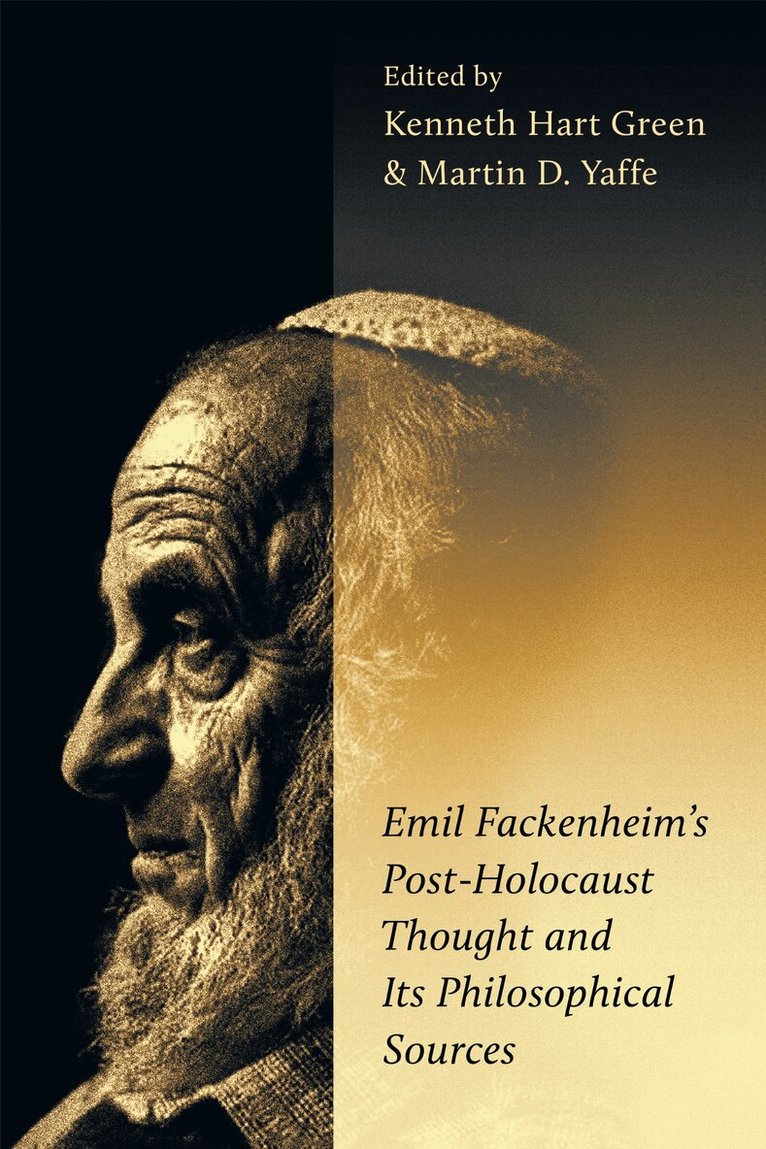
    Emil Fackenheim's Post-Holocaust Thought and Its Philosophical Sources

    AvKenneth Hart Green,Martin D. Yaffe

    Häftad, Engelska, 2021

    Del i serien Kenneth Michael Tanenbaum Series in Jewish Studies

    335 kr

    Beställningsvara. Skickas inom 5-8 vardagar. Fri frakt över 249 kr.

    Beskrivning

    Recognized as one of the leading philosophers and Jewish thinkers of the twentieth century, Emil Ludwig Fackenheim has been widely praised for his boldness, originality, and profundity. As is well-known, a striking feature of Fackenheim’s thought is his unwavering contention that the Holocaust brought about a radical shift in human history, so monumental and unprecedented that nothing can ever be the same again. Fackenheim regarded it as the specific duty of thinkers and scholars to assume responsibility to probe this historical event for its impact on the human future and to make its immense ramifications evident.In Emil Fackenheim’s Post-Holocaust Thought and Its Philosophical Sources, scholars consider important figures in the history of philosophy – including Kant, Hegel, Heidegger, and Strauss – and trace how Fackenheim's philosophical confrontations with each of them shaped his overall thought. This collection details which philosophers exercised the greatest influence on Fackenheim, and how he diverged from them.Incorporating widely varying approaches, the contributors in the volume wrestle with this challenge historically, politically, and philosophically in order to illuminate the depths of Fackenheim’s own thought.

    Produktinformation

    • Utgivningsdatum:2021-11-17
    • Mått:152 x 229 x 18 mm
    • Vikt:440 g
    • Format:Häftad
    • Språk:Engelska
    • Serie:Kenneth Michael Tanenbaum Series in Jewish Studies
    • Antal sidor:316
    • Förlag:University of Toronto Press
    • ISBN:9781487529659

    Utforska kategorier

    • Andra världskriget inom Historia och arkeologi
    • Religion: allmänt inom Filosofi och religion
    • Filosofiska discipliner inom Filosofi och religion

    Mer om författaren

    Kenneth Hart Green is a professor in the Department for the Study of Religion at the University of Toronto.Martin D. Yaffe is a professor in the Department of Philosophy and Religion at the University of North Texas.

    Innehållsförteckning

    • IntroductionAbbreviations1. Emil Fackenheim on Moses Maimonides and the "One Great Difference between the Medievals and the Moderns"Benjamin Lorch, Michigan State University2. Emil Fackenheim’s Jewish Correction of Kant’s Quasi-Christian EschatologyMartin D. Yaffe, University of North Texas3. The Meaning of History: Knowledge of Good and Evil in Hegel and FackenheimPaul Wilford, Boston College4. Strategies of Jewish Hegelianism: Emil Fackenheim and Samuel HirschMartin Kavka, Florida State University 5. Can Philosophy Be Positive? The Place of Schelling in the Thought of Emil FackenheimJeffrey A. Bernstein, College of the Holy Cross6. Emil Fackenheim’s Way from Presence to History: Its Grounding in a Critique of Rosenzweig on RevelationKenneth Hart Green, University of Toronto7. Fackenheim and Buber on Revelation: Re-evaluating the Existential and Historical Turn Away from PhilosophySteven Kepnes, Colgate University8. To Captivate the Jewish Thinker: Fackenheim’s Ontological Encounter with HeideggerWaller R. Newell, Carleton University9. Philosophy in the Age of Auschwitz: Emil Fackenheim and Leo StraussKenneth C. Blanchard, Jr., Northern University10. Wiesel and Fackenheim: Philosophy and the Problem of PersecutionSharon Portnoff, Connecticut CollegeContributorsIndex