• Fri frakt över 249 kr
  • •
  • Snabba leveranser
  • •
  • Billiga böcker
Kundservice

Du är på sajten för privatpersoner.

Företag, bibliotek eller offentlig verksamhet?

Du handlar på classic.bokus.com, där alla dina funktioner finns intakta.
Till classic.bokus.com
Bokus logotyp. Gå till startsidan.
  • Erbjudanden
  • Nyheter
  • Student
  • Topplistor
  • Barn & ungdom
  • Bokus Play
  • E-böcker
  • Pocketböcker
  • Spel & pussel

Må bättre, för mindre! Upp till 50% rabatt på hälsoböcker

Sidfot

Mina sidor

    Hjälp

    • Kundservice
    • Vanliga frågor och svar
    • Frakt och leverans
    • Retur vid ångerrätt
    • Reklamera vara
    • Betalning
    • Köpvillkor
    • Allmänna villkor
    • Information om webbplatsens tillgänglighet

    Om Bokus

    • Om oss
    • Pressrum
    • För studenter
    • För företag
    • För bibliotek och offentlig verksamhet
    • För leverantörer
    • Hållbarhet

    Populärt

    • Aktuella erbjudanden
    • Presentkort
    • Studentlitteratur
    • Nya böcker
    • Topplistor
    • Signerade böcker
    • Engelska böcker

    Inspiration

    • Boktips
    • BookTok
    • Populära bokserier
    • Barnbokskaraktärer
    • Populära författare
    Logotyp för Bokus
    Följ oss på Facebook (extern länk)Följ oss på Instagram (extern länk)Följ oss på YouTube (extern länk)Följ oss på TikTok (extern länk)
    bokus @ CookiesAnpassa cookiesIntegritetspolicyKöpvillkor
    Till Citymail hemsida (extern länk)Till Budbee hemsida (extern länk)Till Postnord hemsida (extern länk)Till Schenker hemsida (extern länk)Till Early Bird hemsida (extern länk)Till Walleys hemsida (extern länk)
    1. Historia och arkeologi
    2. Historia
    3. Historia: särskilda händelser och ämnen
    4. Socialhistoria och kulturhistoria

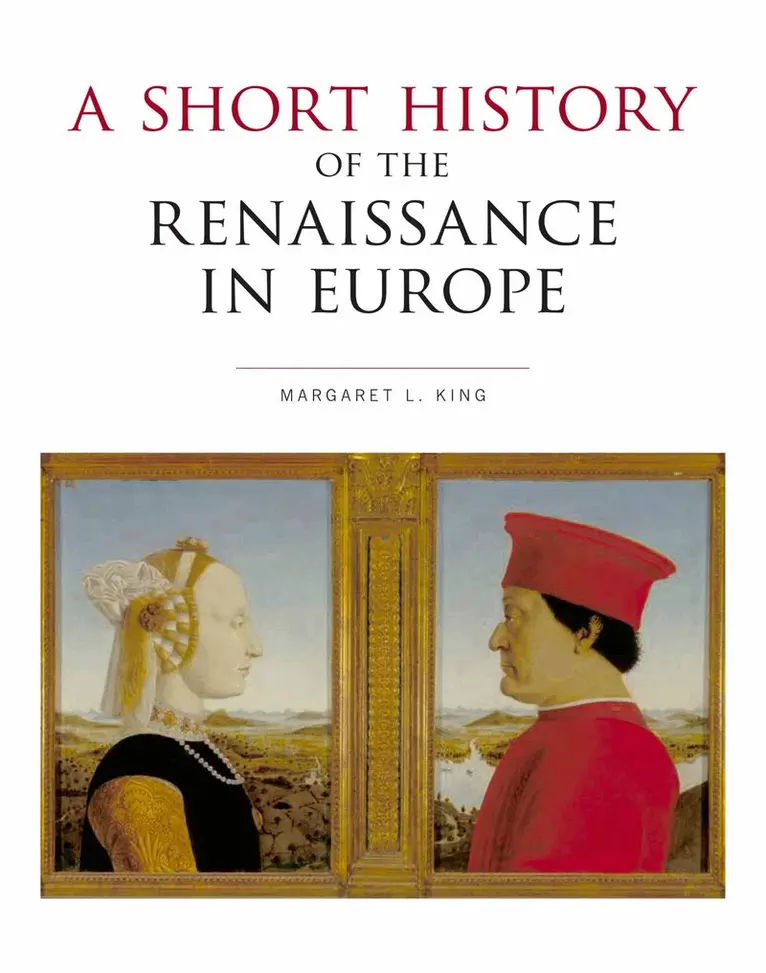
    Short History of the Renaissance in Europe

    AvMargaret L. King

    Häftad, Engelska, 2016

    698 kr

    Beställningsvara. Skickas inom 5-8 vardagar. Fri frakt över 249 kr.

    Beskrivning

    Writing about the Renaissance can be a daunting task. Not only do scholars disagree on what the Renaissance is, but they also disagree on whether or not it even took place. Margaret L. King's richly illustrated social history of the Renaissance succeeds as a trusted resource, introducing readers to Europe between 1300–1700, as well as to the problems of cultural renewal. A Short History of the Renaissance in Europe includes a detailed discussion of Burckhardt as well as new content on European contact with the Islamic world. This new edition also provides improved coverage of the Protestant and Catholic Reformations. "Focus" features provide fascinating insights into the Renaissance era, and "Voices" sections introduce a wealth of primary sources.King's engaging narrative is enhanced by over 100 images, statistical tables, timelines, a glossary, and suggested readings.

    Produktinformation

    • Utgivningsdatum:2016-09-22
    • Mått:204 x 254 x 22 mm
    • Vikt:1 260 g
    • Format:Häftad
    • Språk:Engelska
    • Antal sidor:480
    • Förlag:University of Toronto Press
    • ISBN:9781487593087

    Utforska kategorier

    • Socialhistoria och kulturhistoria inom Historia och arkeologi
    • Konsthistoria inom Kultur
    • Medeltiden inom Historia och arkeologi

    Mer om författaren

    Margaret L. King is Professor Emerita of History, Brooklyn College, City University of New York, and has published widely on Venice, women, and humanism in the Renaissance. She is currently Editor in Chief of Oxford Bibliographies Renaissance and Reformation and co-editor of the series The Other Voice in Early Modern Europe.

    Innehållsförteckning

    • List of MapsList of IllustrationsList of Figures, Graphs, and Tables Acknowledgments Introduction: The Idea of the Renaissance  Chapter One: Italy and Rome: From Roman Republic to Secondo Popolo (c. 500 BCE–1300 CE)  The Romanization of Italy  Invasion and Destruction Early Migrations Focus: Monte Cassino Germanic Incursions  Cathedral and Monastery The Authority of the Bishops The Origins of Monastic Life  Emperor and Pope The Development of the Holy Roman Empire Gregory VII and the Drive for Papal Supremacy  Commerce and ReurbanizationDecline of the Roman EconomyVoices: How to Succeed in Business The Flourishing of Maritime Trade The Expansion of Trading Networks The Communal Revolution Alliance of the Magnates Triumph of the Lombard League  The Coming of the Popolo Merchant GuildsFocus: The Battle of Legnano, 1176 Conflict between Pope and Emperor The Rebellion of the Popolo  Conclusion Suggested Readings  Chapter Two: An Age of Republics (c. 1250–c. 1350) Florence: Banking and WoolBanking Focus: Florence Wool and the Wool Guilds The Guilds and Civic LifeRevolt of the Ciompi Focus: Venice  Venice: Shipbuilding and Trade The Growth of VeniceShipbuilding and the State The Venetian Nobility  Urban Renewal: Walls, Buildings, and SpacesWalls Buildings Vita Civile: Urban Culture in a Republican AgeThe Jurists The Secretaries Voices: Yearning to Be Free Dante and Giotto: Innovators before the Dawn of the Renaissance Dante Alighieri Giotto di Bondone Voices: Petrarch’s Letter "To Posterity"  Boccaccio and Petrarch: Inaugurators of Renaissance Thought Boccaccio Petrarch Republics and Principalities  The Black Death  Conclusion Suggested Readings  Chapter Three: Human Dignity and Humanist Studies: The Career of Humanism (c. 1350–c. 1530) The Recovery of Classical Antiquity Focus: Personal Space Roman Works Greek Works  The "Studies of Humanity" The Idea of Humanist Education Humanist Educational Treatises  The Dignity of Man Giannozzo Manetti Pico della Mirandola Civic Humanism Voices: Barbaro and Pico Proposing New Values: Poggio and Valla Praising the City: Bruni Voices: Valla’s Logic  Women and Humanism Early Female Humanists Later Female Humanists: Nogarola, Cereta, Fedele Voices: Women and Humanism in Renaissance Italy Humanism, Philosophy, and Scholarship Philosophy: Aristotle and Plato Other SchoolsPrinting Textual Scholarship  The Sociology of Humanism Focus: Aldine Editions Conclusion Suggested Readings Chapter Four: New Visions (c. 1350–c. 1530)  Breakthroughs in Style Perspective: The Artful Construction of Reality Patronage and Patrons Types of Patronage Focus: New Visions Florence and Milan Ferrara, Mantua, and Urbino Music  Architecture and Urbanism The Rediscovery of Classical Architecture Churches Secular Buildings Focus: Brunelleschi’s DomeVoices: Artists and Patrons in Urbino and Venice City Planning  Portraits and Personality Portraits and Self-Portraits Voices: Isabella d’Este Equestrian Portraits and Tombs  Art and the Everyday City and Country Settings Interiors  From Artisan to Genius: The Evolution of the Artist Vasari Alberti Leonardo Women Artists  The High Renaissance (c. 1500–1530) Rome Venice  Conclusion Suggested Readings  Chapter Five: At Home and in the Piazza (c. 1350–c. 1530)  Public Life Social Structure Focus: Prostitutes and Courtesans Associations Social Control Voices: Riot, Plague, and Punishment Focus: The Jewish Community in the Italian Renaissance  Private Life The Household Voices: Death and Consolation Patriarchy, Property, and Marriage Voices: The Duties of a Wife Women and Children Focus: Childbirth and Childrearing in Renaissance Italy  ConclusionSuggested Readings  Chapter Six: The Church and the People (c. 1350–c. 1530) Papacy and the Papal State The Rise of the Papacy Focus: Popes and Cardinals Challenges to the Papacy  Popular Religion Paganism and Heresy The Mendicant Movements Confraternities Voices: Brothers (Sisters) in Christ  Holy Women Saints and Martyrs Focus: Holy Women and Unwilling Nuns Catherine of Siena Francesca of Rome Catherine of Bologna Catherine of GenoaAngela Merici Pastors of the Flock Archbishops and Bishops Preachers and Visionaries Bernardino of Siena Girolamo Savonarola  Conclusion Suggested Readings  Chapter Seven: Statecraft and Warcraft (c. 1350–c. 1530) The Tide of Despotism The Organization of Violence Focus: Warriors for Hire Padua and Verona The Visconti in Milan Ferrara, Mantua, and Urbino The Papal States and the Two SiciliesVoices: A Despot’s Advice and a Republican’s Lament Freedom versus Tyranny Balance of Power Councils and Commissions Focus: The Machinery of Government in Venice The Trend toward Oligarchy Administering Justice Raising Revenues Focus: The Medici Diplomacy Venice and Florence ExpandMilitary Organization War and Peace  Invasion and Conquest The French Invasion to the Battle of Fornovo The Great Captain and the Conquest of Naples Julius II and the Battle of Agnadello The Holy League and the Battle of Marignano Habsburg versus Valois to the Battle of Pavia • 247The Sack of RomeThe Return of the Medici Voices: The Republican Spirit in Florence  Conclusion Suggested Readings  Chapter Eight: The Crisis and Beyond (c. 1500–c. 1650) The Machiavellian Moment Machiavelli’s Career Machiavelli’s Thought Machiavelli’s Political Vision  Courts and Princes: Castiglione’s The CourtierBook One Book Two Book ThreeBook Four Influence  The States of Italy after c. 1530 Ideas and the Arts in Late Renaissance Italy The Visual Arts Focus: Womanly Perspective The Performing ArtsLiterature and Literary Trends Focus: The Origins of Opera Voices: Pietro Aretino, "Scourge of Princes" Science, Medicine, and Philosophy Voices: Women and Love  Conclusion Suggested Readings  Chapter Nine: The Renaissance and the Two Reformations (c. 1500–c. 1650)  Visitors and Emissaries  Printing, Humanism, and Reform The Manuscript BookThe Printed Book: Early Years The Printed Book: Later Developments Focus: The English Century Erasmus, More, and Vives Erasmus Focus: The Enchantments of NowhereMore and Utopia Vives and the Erasmian Mission  The Reformations and the Humanist Tradition Protestants Voices: Luther and Calvin on Liberty and Free Will The Catholic ResponseVoices: The Catholic Response: The Council of Trent, Ignatius of Loyola, and Teresa of Ávila Intersections Conclusion Suggested Readings  Chapter Ten: The Renaissance beyond the Alps: Cities, Courts, and Kings (c. 1500–c. 1700)  Contexts: Kingdoms, Courts, and Cities Kingdoms Courts Cities Focus: Early Modern Cities  Centers of the Renaissance beyond the Alps Spain and Portugal Voices: Spanish Sketches The Low Countries Focus: The Low Countries: Interiors and Exteriors France The British Isles Voices: In Search of Authenticity The German Lands Northern and Eastern Europe  Conclusion Suggested Readings  Chapter Eleven: The Renaissance and New Worlds (c. 1500–c. 1700)  The New World in the Ocean Sea The Mediterranean Focus: The Renaissance and Globalization Portuguese VenturesSpanish Exploration and ConquestIndigenous Peoples, Africans, and the Slave Trade North America and the Triangle Trade The Impact on European Consciousness  New Heavens, New Earth Cosmographical RevisionsVoices: Scientific Observers Other Scientific Advances Voices: Discerning Truth New Ways to Reason Focus: Educating the Few—and the Many  Toward Enlightenment Readers and LearnersWomen and the World of Learning Focus: The Worth of Women ConclusionSuggested Readings  GlossaryCredits Index