• Fri frakt över 249 kr
  • •
  • Snabba leveranser
  • •
  • Billiga böcker
Kundservice

Du är på sajten för privatpersoner.

Företag, bibliotek eller offentlig verksamhet?

Du handlar på classic.bokus.com, där alla dina funktioner finns intakta.
Till classic.bokus.com
Bokus logotyp. Gå till startsidan.
  • Erbjudanden
  • Nyheter
  • Student
  • Topplistor
  • Barn & ungdom
  • Bokus Play
  • E-böcker
  • Pocketböcker
  • Spel & pussel

10% rabatt på allt med kod: NYSTART10 →

Sidfot

Mina sidor

    Hjälp

    • Kundservice
    • Vanliga frågor och svar
    • Frakt och leverans
    • Retur vid ångerrätt
    • Reklamera vara
    • Betalning
    • Köpvillkor
    • Allmänna villkor
    • Information om webbplatsens tillgänglighet

    Om Bokus

    • Om oss
    • Pressrum
    • För studenter
    • För företag
    • För bibliotek och offentlig verksamhet
    • För leverantörer
    • Hållbarhet

    Populärt

    • Aktuella erbjudanden
    • Presentkort
    • Studentlitteratur
    • Nya böcker
    • Topplistor
    • Signerade böcker
    • Engelska böcker

    Inspiration

    • Boktips
    • BookTok
    • Populära bokserier
    • Barnbokskaraktärer
    • Populära författare
    Logotyp för Bokus
    Följ oss på Facebook (extern länk)Följ oss på Instagram (extern länk)Följ oss på YouTube (extern länk)Följ oss på TikTok (extern länk)
    bokus @ CookiesAnpassa cookiesIntegritetspolicyKöpvillkor
    Till Citymail hemsida (extern länk)Till Budbee hemsida (extern länk)Till Postnord hemsida (extern länk)Till Schenker hemsida (extern länk)Till Early Bird hemsida (extern länk)Till Walleys hemsida (extern länk)
    1. Psykologi och pedagogik
    2. Pedagogik
    3. Skolväsen och utbildningssystem
    4. Examination och betygsättning

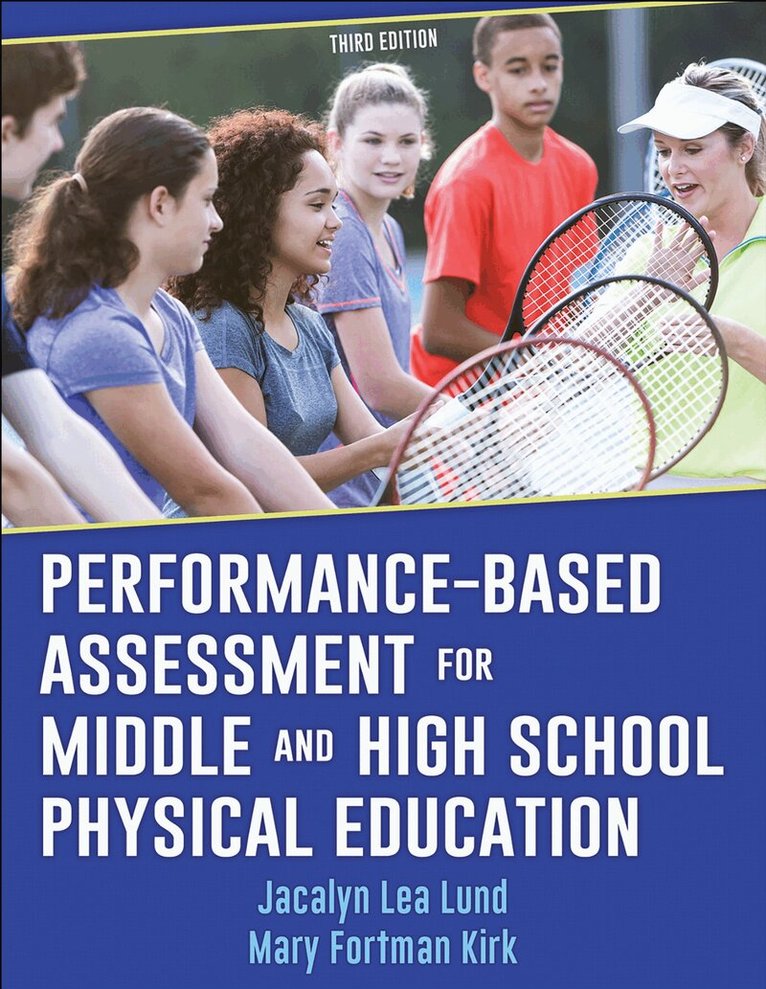
    Performance-Based Assessment for Middle and High School Physical Education

    AvJacalyn Lea Lund,Mary Fortman Kirk

    Häftad, Engelska, 2019

    858 kr

    Beställningsvara. Skickas inom 5-8 vardagar. Fri frakt över 249 kr.

    Beskrivning

    Performance-Based Assessment for Middle and High School Physical Education is a cutting-edge book that teachers trust for assessing middle school and high school physical education students. Also a highly popular undergraduate text for courses that focus on performance-based assessment, this new third edition features significant additions, enhancements, and updates: New chapters on effective management and instruction delivery, which make it appropriate for PETE instructors using the book for secondary methods coursesA new chapter on assessments with various instructional models, including Sport Education, Teaching Games for Understanding, Cooperative Learning, Personalized System of Instruction, and Teaching Personal and Social ResponsibilityA new chapter on assessing dance (with sample dance units in the web resource)A new sample unit on ultimate Frisbee in the chapter on invasion gamesAn expanded section on cognitive assessments, with suggestions for writing testsUpdated content on rubricsPerformance-Based Assessment shows readers how to use portfolios to assess fitness, and it offers an example of a portfolio assessment for a high school fitness course. It also guides readers in using skill tests in physical education.Written by two authors with a combined 26 years of experience teaching physical education in public schools, the text discusses various assessment formats, helping PETE students and in-service teachers know both what to assess and how to assess it. Readers learn how to develop culminating and progressive assessments, as well as plan for continuous performance-based assessments and acquire effective teaching strategies for standards-based instruction. All content is aligned with current SHAPE America national standards and is supported by research from educational assessment giants such as Tom Guskey, Richard Stiggins, Dylan William, Robert Marzano, and James Popham.The book is organized into four parts, with part I introducing readers to performance-based assessment issues such as the need for change in the assessment process, how assessments can be used to enhance learning, the various assessment domains and methods, and the use of rubrics in assessments. Part II explores aspects of managing and implementing physical education lessons. In part III, readers learn about the components of performance-based assessment, and in part IV, they delve into issues affecting grading and implementing continuous performance-based assessment.This groundbreaking text explains the theory behind assessment and, through its numerous models, shows how to apply that theory in practice. The text is filled with practical examples, much more so than the typical assessment book. And it is supplemented by a web resource that houses forms, charts, and other material for instructors to use in their performance-based assessments.Class size, skill levels, and time factors can make assessments difficult-but far from impossible. The examples in the book are meant to be modified as needed, with the ideas in the book used as starting points.Teachers can use the material, examples, and tools in this book to create assessments that enhance student learning, providing them feedback to let them know what they have accomplished and how they can work toward goals of greater competence.

    Produktinformation

    • Utgivningsdatum:2019-03-25
    • Mått:216 x 279 x 27 mm
    • Vikt:1 043 g
    • Format:Häftad
    • Språk:Engelska
    • Antal sidor:376
    • Upplaga:3
    • Förlag:Human Kinetics Publishers
    • ISBN:9781492570172

    Utforska kategorier

    • Examination och betygsättning inom Psykologi och pedagogik
    • Undervisning i specifika ämnen inom Psykologi och pedagogik

    Mer om författaren

    Jacalyn Lea Lund, PhD, is a professor and the chair of the department of kinesiology and health at Georgia State University in Atlanta. She began her teacher educator career in 1990 following graduation from Ohio State University and had 16 years of teaching experience in public schools prior to that. She has presented on assessment at conferences and numerous workshops and has taught many classes on assessment in physical education.Dr. Lund has been a member of SHAPE America for over 40 years, most recently serving as the association’s president. She was on the committee that developed the organization’s 1995 content standards for physical education. In 2013 she was inducted into the SHAPE America Hall of Fame. She is a fellow of the National Academy of Kinesiology. Dr. Lund loves spending time with her family, dancing, reading, and, as she puts it, “having her dogs take her for a walk.”Mary Fortman Kirk, PhD, is a professor of physical education at Northern Kentucky University (NKU). She was an NKU department chair for eight years and is a former coordinator of the health and physical education programs. She also taught physical education at the high school level for 10 years. Dr. Kirk has given many presentations on portfolios and alternative assessment at conferences, including those of SHAPE America and the National Association for Physical Education in Higher Education. She was appointed by the Kentucky commissioner of education to serve on the state task force for the development of physical education assessment and performance assessment of new teachers.Dr. Kirk earned an MA in motor learning and physical education from Michigan State University in 1973 and a PhD in motor development and teacher preparation from Ohio State University in 1989. She is the author of two books on pre-sport development programs for the National Alliance for Youth Sports and for the Girl Scouts of the USA.

    Innehållsförteckning

    • Part I. Introduction to Performance-Based AssessmentChapter 1. The Need for ChangeThe Call for Change in EducationStandards-Based InstructionTypes of Assessment in Standards-Based InstructionEffect on Teaching When Standards Are UsedRole of Assessment in Physical Education ProgramsChanging the Assessment Culture in Physical EducationConclusionChapter 2. Assessing the Psychomotor Domain to Enhance Student LearningPurpose of AssessmentWhat Are Performance-Based Assessments?Characteristics of Performance-Based AssessmentTypes of Performance-Based AssessmentsAdvantages of Using Performance-Based AssessmentsConcerns When Using Performance-Based AssessmentsConclusionChapter 3. Using Cognitive and Affective Learning Domain Assessments Effectively in Physical EducationTraditional Test Questions Used for Cognitive and Affective-Domain AssessmentsSelected-Response QuestionsPerformance-Based Assessments for Cognitive and Affective-Domain LearningProjectsJournalsRole PlaysWhat Are Open-Response Questions?Comparing Open-Response and Essay QuestionsCharacteristics of Open-Response QuestionsTypes of Open-Response QuestionsHow to Write Open-Response QuestionsSuggestions for Using Open-Response QuestionsConclusionChapter 4. RubricsWhat Is a Rubric?Benefits of Using RubricsCriteria for RubricsChoosing the Most Appropriate RubricHow to Create Quantitative RubricsHow to Create Qualitative RubricsSpecial Considerations in Creating RubricsRubric Hints and GuidelinesConclusionPart II. Managing and Implementing Physical Education LessonsChapter 5. Creating a Classroom Climate That Supports Standards-Based InstructionCreating a Positive Learning EnvironmentTeacher ExpectationsThe Importance of Having a Good Learning ClimateStructuring the Classroom EnvironmentWorking With EquipmentManaging SpaceManaging TimeDeveloping Rules for Physical Education ClassesReinforcing BehaviorsRewarding Positive BehaviorsDisciplining StudentsConclusionChapter 6. Effective Teaching Strategies for Standards-Based InstructionThe Complexity of Games and Physical ActivitiesHow Much to Include in Your Unit of InstructionApplication TasksPresenting Learning TasksMonitoring Student LearningAsking Questions in Physical EducationResources During InstructionPacing and Opportunity to RespondApplying Motor Learning Concepts While TeachingConclusionChapter 7. Assessing With Instructional ModelsDirect InstructionSport Education Instructional Model (IM)Tactical Games or Teaching Games for Understanding Instructional Model (IM)Cooperative LearningPersonalized System of InstructionTeaching Personal and Social ResponsibilityConclusionPart III. Components of Performance-Based AssessmentChapter 8. Developing Culminating and Progressive AssessmentsCulminating (Summative) AssessmentsProgressive Learning Activities and AssessmentsTumbling UnitTarget Archery UnitGolf UnitSoccer UnitConclusionChapter 9. Planning for Continuous Performance-Based AssessmentMajor Unit FocusCulminating (Summative) Assessment and Evaluation RubricEssential Knowledge, Skills, and AbilitiesProgressive Learning Activities and Formative AssessmentsCritical ResourcesPlanning Lessons From the Unit PlanConclusionChapter 10. Developing Standards-Based Units of Instruction for Invasion SportsMajor Soccer Unit FocusCulminating (Summative) Assessment and Evaluation RubricEssential Soccer Knowledge, Skills, and AbilitiesProgressive Learning Activities and Formative AssessmentsCritical ResourcesHow to Use the Student Soccer PortfolioUltimate: Standards-Based Unit of InstructionMajor Ultimate Unit FocusCulminating or Summative Assessment and the Evaluation RubricEssential Ultimate Knowledge, Skills, and AbilitiesProgressive Learning Activities and Formative AssessmentsCritical ResourcesConclusionChapter 11. Using Portfolios to Assess Physical Activities and FitnessTypes of PortfoliosAdvantages of Using Portfolio AssessmentDisadvantages of Using PortfoliosPortfolio Guidelines in Performance-Based AssessmentEvaluating PortfoliosIntegrating Fitness Education and Assessment Into the Physical Education CurriculumResources for Fitness Education Curriculum, Instructions, and AssessmentUsing Technology to Assess Physical Activity Participation LevelsHigh School Fitness PortfolioConclusionChapter 12. Using Standards-Based Instruction to Teach DanceWhy Include Dance in Physical Education?Planning a Dance UnitTeaching Structured DanceTeaching Creative DanceTeaching Social DanceUsing Portfolios to Assess DanceConclusionPart IV. Grading and Implementing Continuous Performance-Based AssessmentChapter 13. Effective Grading in Physical EducationPurposes of Grading and Grade ReportingDeveloping a Meaningful Grading SystemProblems With Traditional Grading PracticesGrade Formats in Physical EducationEffective Grading in Physical EducationGrading Before You Have a Rubric DevelopedChallenges in Using Effective Grading PracticesGrading Practices for Students With Special NeedsHints and Suggestions for More Effective Grading PracticesConclusionChapter 14. Acquiring Assessment SavvyPlanning the Assessment ProcessLund and Kirk’s Tips for Acquiring Assessment SavvyConclusion