• Fri frakt över 249 kr
  • •
  • Snabba leveranser
  • •
  • Billiga böcker
Kundservice

Du är på sajten för privatpersoner.

Företag, bibliotek eller offentlig verksamhet?

Du handlar på classic.bokus.com, där alla dina funktioner finns intakta.
Till classic.bokus.com
Bokus logotyp. Gå till startsidan.
  • Erbjudanden
  • Nyheter
  • Student
  • Topplistor
  • Barn & ungdom
  • Bokus Play
  • E-böcker
  • Pocketböcker
  • Spel & pussel

10% rabatt på allt med kod: NYSTART10 →

Sidfot

Mina sidor

    Hjälp

    • Kundservice
    • Vanliga frågor och svar
    • Frakt och leverans
    • Retur vid ångerrätt
    • Reklamera vara
    • Betalning
    • Köpvillkor
    • Allmänna villkor
    • Information om webbplatsens tillgänglighet

    Om Bokus

    • Om oss
    • Pressrum
    • För studenter
    • För företag
    • För bibliotek och offentlig verksamhet
    • För leverantörer
    • Hållbarhet

    Populärt

    • Aktuella erbjudanden
    • Presentkort
    • Studentlitteratur
    • Nya böcker
    • Topplistor
    • Signerade böcker
    • Engelska böcker

    Inspiration

    • Boktips
    • BookTok
    • Populära bokserier
    • Barnbokskaraktärer
    • Populära författare
    Logotyp för Bokus
    Följ oss på Facebook (extern länk)Följ oss på Instagram (extern länk)Följ oss på YouTube (extern länk)Följ oss på TikTok (extern länk)
    bokus @ CookiesAnpassa cookiesIntegritetspolicyKöpvillkor
    Till Citymail hemsida (extern länk)Till Budbee hemsida (extern länk)Till Postnord hemsida (extern länk)Till Schenker hemsida (extern länk)Till Early Bird hemsida (extern länk)Till Walleys hemsida (extern länk)
    1. Sport, fritid och hobby
    2. Sportböcker
    3. Idrottsträning och coachning

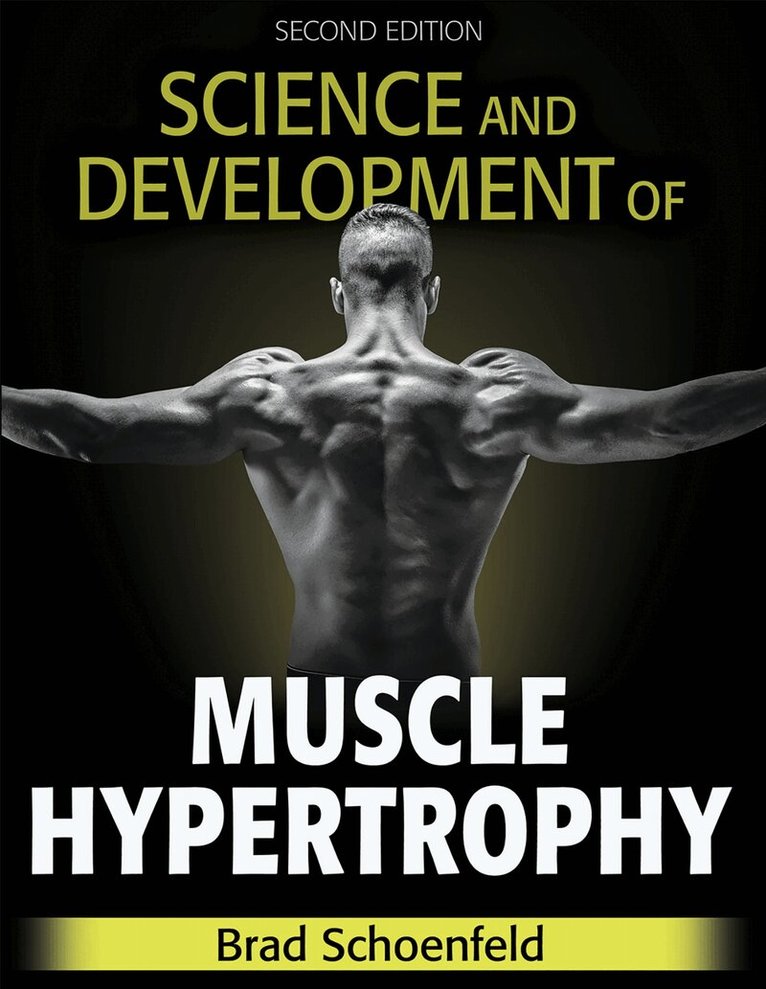
    Science and Development of Muscle Hypertrophy

    AvBrad J. Schoenfeld

    Inbunden, Engelska, 2020

    777 kr

    Beställningsvara. Skickas inom 5-8 vardagar. Fri frakt över 249 kr.

    Beskrivning

    Science and Development of Muscle Hypertrophy, Second Edition, is the most comprehensive resource on muscle hypertrophy in the world. Written by Brad Schoenfeld, PhD, an internationally renowned expert on muscle hypertrophy, this book is the definitive resource for strength and conditioning professionals, personal trainers, sport scientists, researchers, and exercise science instructors who are seeking information regarding muscle hypertrophy, including the mechanism of its development, how the body structurally and hormonally changes when exposed to stress, ways to most effectively design training programs, and nutritional guidelines for eliciting hypertrophic changes.This new edition offers more than 1,000 references and applied guidelines. Two all-new chapters deliver practical content on the measurement of muscle hypertrophy and advanced training practices. Readers will learn various methods by which hypertrophy is measured, including site-specific measures (circumference measures, MRI, CT, and ultrasound), indirect measures (underwater weighing, DXA, BIA, ADP, and skinfolds), and histological measures (biopsy), as well as the strengths and limitations of each modality. The new edition also provides guidance for achieving greater training volumes with training practices that maximize the individual’s genetic potential to gain muscle.No other resource offers a comparable amount of content solely focused on the science of muscle hypertrophy and its application to designing training programs. The full-color book offers several features to make the content accessible to readers:Research Findings sidebars highlight the aspects of muscle hypertrophy currently being examined to encourage readers to re-evaluate their knowledge and ensure their training practices are up to date.Practical Applications sidebars outline how to apply the research conclusions for maximal hypertrophic development.Comprehensive subject and author indexes optimize the book’s use as a reference tool.Although muscle hypertrophy can be attained through a range of training programs, this book allows readers to understand and apply the specific responses and mechanisms that promote optimal muscle hypertrophy. It explores how genetic background, age, sex, and other factors have been shown to mediate the hypertrophic response to exercise, affecting both the rate and the total gain in lean muscle mass. Sample programs show how to design a three- or four-day-per-week undulating periodized program and a modified linear periodized program for maximizing muscular development.Science and Development of Muscle Hypertrophy is an invaluable resource for those seeking to maximize hypertrophic gains for themselves or their athletes or clients and for those searching for the most comprehensive and authoritative research in the field.Earn continuing education credits/units! A continuing education course and exam that uses this book is also available. It may be purchased separately or as part of a package that includes all the course materials and exam.

    Produktinformation

    • Utgivningsdatum:2020-04-20
    • Mått:221 x 282 x 23 mm
    • Vikt:1 271 g
    • Format:Inbunden
    • Språk:Engelska
    • Antal sidor:312
    • Upplaga:2
    • Förlag:Human Kinetics Publishers
    • ISBN:9781492597674

    Utforska kategorier

    • Idrottsträning och coachning inom Sport, fritid och hobby
    • Friidrott och gymnastik inom Sport, fritid och hobby
    • Övrig sport och idrott inom Sport, fritid och hobby

    Mer om författaren

    Brad Schoenfeld, PhD, CSCS,*D, CSPS,*D, NSCA-CPT,*D, FNSCA, is internationally regarded as one of the foremost authorities on muscle hypertrophy. The 2011 National Strength and Conditioning Association (NSCA) Personal Trainer of the Year is a lifetime drug-free bodybuilder who has won multiple natural bodybuilding titles. As a personal trainer, he has worked with numerous elite-level physique athletes, including many top pros.Schoenfeld is the recipient of the 2016 Dwight D. Eisenhower Fitness Award, which is presented by the United States Sports Academy for outstanding achievement in fitness and contributions to the growth and development of sport fitness through outstanding leadership activity. He was also the 2018 cowinner of the NSCA Outstanding Young Investigator award. He is the author of multiple fitness books, including The M.A.X. Muscle Plan and Strong & Sculpted. He has been published or featured in virtually every major fitness magazine and has appeared on hundreds of television shows and radio programs across the United States. Currently, he writes the “Ask the Muscle Doc” column for Bodybuilding.com.Schoenfeld earned his PhD in health promotion and wellness at Rocky Mountain University, where his research focused on elucidating the mechanisms of muscle hypertrophy and their application to resistance training. He has published more than 200 peer-reviewed scientific papers and serves on the editorial advisory boards for several journals, including the Journal of Strength and Conditioning Research and the Journal of the International Society of Sports Nutrition.Schoenfeld is an associate professor of exercise science at Lehman College in the Bronx, New York, and is director of the graduate program in human performance and fitness. He also serves as a sports nutrition consultant for the New Jersey Devils hockey organization.

    Innehållsförteckning

    • Chapter 1. Hypertrophy-Related Responses and Adaptations to Exercise StressNeuromuscular SystemEndocrine, Paracrine, and Autocrine SystemsChapter 2. Mechanisms of HypertrophyMechanical TensionMetabolic StressMuscle DamageChapter 3. The Measurement of Muscle HypertrophyIndirect MeasuresSite-Specific MeasuresChapter 4. Role of Resistance Training Variables in HypertrophyVolumeFrequencyLoadExercise SelectionType of Muscle ActionRest Interval LengthRepetition DurationExercise OrderRange of MotionIntensity of EffortChapter 5. Advanced Training PracticesLoaded Stretch TrainingIntraset Rest TrainingDrop SetsSupersets and Pre-exhaustion    Eccentric Overload TrainingChapter 6. Role of Aerobic Training in HypertrophyHypertrophic Effects From Aerobic-Only TrainingConcurrent Training    Chapter 7. Factors in Maximal Hypertrophic DevelopmentGeneticsAgeSexTraining StatusChapter 8. Program Design for Maximal HypertrophyBiomechanicsExercise Selection StrategiesPeriodizationChapter 9. Nutrition for HypertrophyEnergy BalanceMacronutrient IntakeFeeding FrequencyNutrient Timing