• Fri frakt över 249 kr
  • •
  • Snabba leveranser
  • •
  • Billiga böcker
Kundservice

Du är på sajten för privatpersoner.

Företag, bibliotek eller offentlig verksamhet?

Du handlar på classic.bokus.com, där alla dina funktioner finns intakta.
Till classic.bokus.com
Bokus logotyp. Gå till startsidan.
  • Erbjudanden
  • Nyheter
  • Student
  • Topplistor
  • Barn & ungdom
  • Bokus Play
  • E-böcker
  • Pocketböcker
  • Spel & pussel

10% rabatt på allt med kod: NYSTART10 →

Sidfot

Mina sidor

    Hjälp

    • Kundservice
    • Vanliga frågor och svar
    • Frakt och leverans
    • Retur vid ångerrätt
    • Reklamera vara
    • Betalning
    • Köpvillkor
    • Allmänna villkor
    • Information om webbplatsens tillgänglighet

    Om Bokus

    • Om oss
    • Pressrum
    • För studenter
    • För företag
    • För bibliotek och offentlig verksamhet
    • För leverantörer
    • Hållbarhet

    Populärt

    • Aktuella erbjudanden
    • Presentkort
    • Studentlitteratur
    • Nya böcker
    • Topplistor
    • Signerade böcker
    • Engelska böcker

    Inspiration

    • Boktips
    • BookTok
    • Populära bokserier
    • Barnbokskaraktärer
    • Populära författare
    Logotyp för Bokus
    Följ oss på Facebook (extern länk)Följ oss på Instagram (extern länk)Följ oss på YouTube (extern länk)Följ oss på TikTok (extern länk)
    bokus @ CookiesAnpassa cookiesIntegritetspolicyKöpvillkor
    Till Citymail hemsida (extern länk)Till Budbee hemsida (extern länk)Till Postnord hemsida (extern länk)Till Schenker hemsida (extern länk)Till Early Bird hemsida (extern länk)Till Walleys hemsida (extern länk)
    1. Psykologi och pedagogik
    2. Psykologi
    3. Biologisk psykologi och neuropsykologi

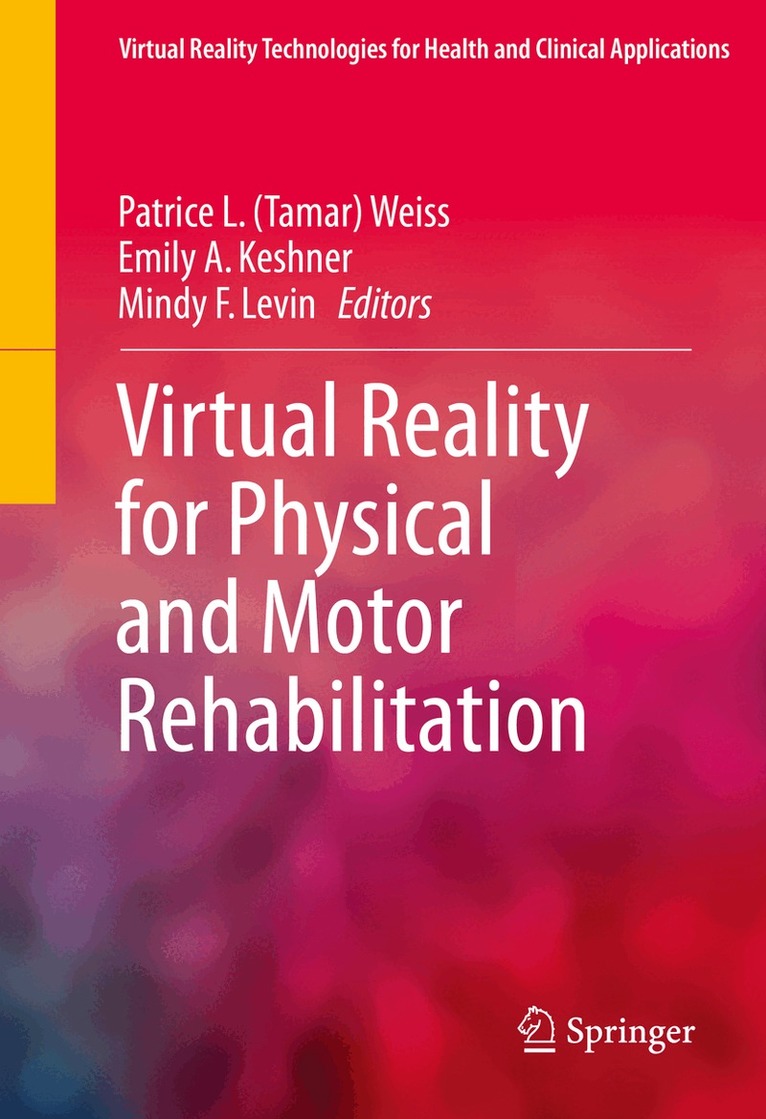
    Virtual Reality for Physical and Motor Rehabilitation

    AvPatrice L. (Tamar) Weiss,Emily A. Keshner

    Inbunden, Engelska, 2014

    Del i serien Virtual Reality Technologies for Health and Clinical Applications

    1 563 kr

    Beställningsvara. Skickas inom 10-15 vardagar. Fri frakt över 249 kr.

    Beskrivning

    While virtual reality (VR) has influenced fields as varied as gaming, archaeology and the visual arts, some of its most promising applications come from the health sector. Particularly encouraging are the many uses of VR in supporting the recovery of motor skills following accident or illness.Virtual Reality for Physical and Motor Rehabilitation reviews two decades of progress and anticipates advances to come. It offers current research on the capacity of VR to evaluate, address, and reduce motor skill limitations and the use of VR to support motor and sensorimotor function, from the most basic to the most sophisticated skill levels. Expert scientists and clinicians explain how the brain organizes motor behavior, relate therapeutic objectives to client goals and differentiate among VR platforms in engaging the production of movement and balance. On the practical side, contributors demonstrate that VR complements existing therapies across various conditions such as neurodegenerative diseases, traumatic brain injury and stroke. Included among the topics:Neuroplasticity and virtual reality.Vision and perception in virtual reality.Sensorimotor recalibration in virtual environments.Rehabilitative applications using VR for residual impairments following stroke.VR reveals mechanisms of balance and locomotor impairments.Applications of VR technologies for childhood disabilities.A resource of great immediate and future utility, Virtual Reality for Physical and Motor Rehabilitation distills a dynamic field to aid the work of neuropsychologists, rehabilitation specialists (including physical, speech, vocational and occupational therapists), and neurologists.

    Produktinformation

    • Utgivningsdatum:2014-07-24
    • Mått:155 x 235 x 19 mm
    • Vikt:535 g
    • Format:Inbunden
    • Språk:Engelska
    • Serie:Virtual Reality Technologies for Health and Clinical Applications
    • Antal sidor:232
    • Upplaga:2014
    • Förlag:Springer-Verlag New York Inc.
    • ISBN:9781493909674

    Utforska kategorier

    • Biologisk psykologi och neuropsykologi inom Psykologi och pedagogik
    • Rehabilitering inom Medicin
    • Neurologi och klinisk neurofysiologi inom Medicin

    Mer om författaren

    Patrice L. (Tamar) Weiss, Ph.D., is an occupational therapist with a M.Sc. degree in kinesiology and a Ph.D. degree in physiology and biomedical engineering. In 2001, she founded the Laboratory for Innovations in Rehabilitation Technology (LIRT) at the University of Haifa where she and her team develop and evaluate novel virtual environments, haptic interfaces and co-located technologies to explore the effect of individual and collaborative rehabilitation. Dr. Weiss’ responsibilities include supervision of all aspects related to technology development and implementation. She has authored more than 100 peer-reviewed journal articles.

    Recensioner i media

    From the book reviews: "This comprehensive book adds virtual reality to the toolkit of technologies that support patients' motor recovery and rehabilitation after a neurological or orthopedic injury. ... The audience includes not only students, but also experienced physical and occupational therapists, rehabilitation neuroscientists, neurologists, and physical medicine rehabilitation physicians. ... This is a well-conceived and well-organized book. It is a must for those involved in technology-enhanced recovery or rehabilitation work with patients." (Deborah J. Gaebler-Spira, Doody's Book Reviews, January, 2015)

    Innehållsförteckning

    • Volume Introduction and Overview.- Neuroplasticity and Virtual Reality.- Motor Learning and Virtual Reality.- Vision, Perception and Object Manipulation in Virtual Environments.- Sensorimotor Recalibration in Virtual Environments.- Validity of virtual reality environments for sensorimotor rehabilitation.- Rehabilitation Applications using Virtual Reality for Persons with Residual Impairments following Stroke.- Virtual reality augmented training for improving walking and reducing fall risk in  patients with neurodegenerative disease.- Virtual Reality Reveals Mechanisms of Balance and Locomotor Impairments.