• Fri frakt över 249 kr
  • •
  • Snabba leveranser
  • •
  • Billiga böcker
Kundservice

Du är på sajten för privatpersoner.

Företag, bibliotek eller offentlig verksamhet?

Du handlar på classic.bokus.com, där alla dina funktioner finns intakta.
Till classic.bokus.com
Bokus logotyp. Gå till startsidan.
  • Erbjudanden
  • Nyheter
  • Student
  • Topplistor
  • Barn & ungdom
  • Bokus Play
  • E-böcker
  • Pocketböcker
  • Spel & pussel

10% rabatt på allt med kod: NYSTART10 →

Sidfot

Mina sidor

    Hjälp

    • Kundservice
    • Vanliga frågor och svar
    • Frakt och leverans
    • Retur vid ångerrätt
    • Reklamera vara
    • Betalning
    • Köpvillkor
    • Allmänna villkor
    • Information om webbplatsens tillgänglighet

    Om Bokus

    • Om oss
    • Pressrum
    • För studenter
    • För företag
    • För bibliotek och offentlig verksamhet
    • För leverantörer
    • Hållbarhet

    Populärt

    • Aktuella erbjudanden
    • Presentkort
    • Studentlitteratur
    • Nya böcker
    • Topplistor
    • Signerade böcker
    • Engelska böcker

    Inspiration

    • Boktips
    • BookTok
    • Populära bokserier
    • Barnbokskaraktärer
    • Populära författare
    Logotyp för Bokus
    Följ oss på Facebook (extern länk)Följ oss på Instagram (extern länk)Följ oss på YouTube (extern länk)Följ oss på TikTok (extern länk)
    bokus @ CookiesAnpassa cookiesIntegritetspolicyKöpvillkor
    Till Citymail hemsida (extern länk)Till Budbee hemsida (extern länk)Till Postnord hemsida (extern länk)Till Schenker hemsida (extern länk)Till Early Bird hemsida (extern länk)Till Walleys hemsida (extern länk)
    1. Historia och arkeologi
    2. Arkeologi

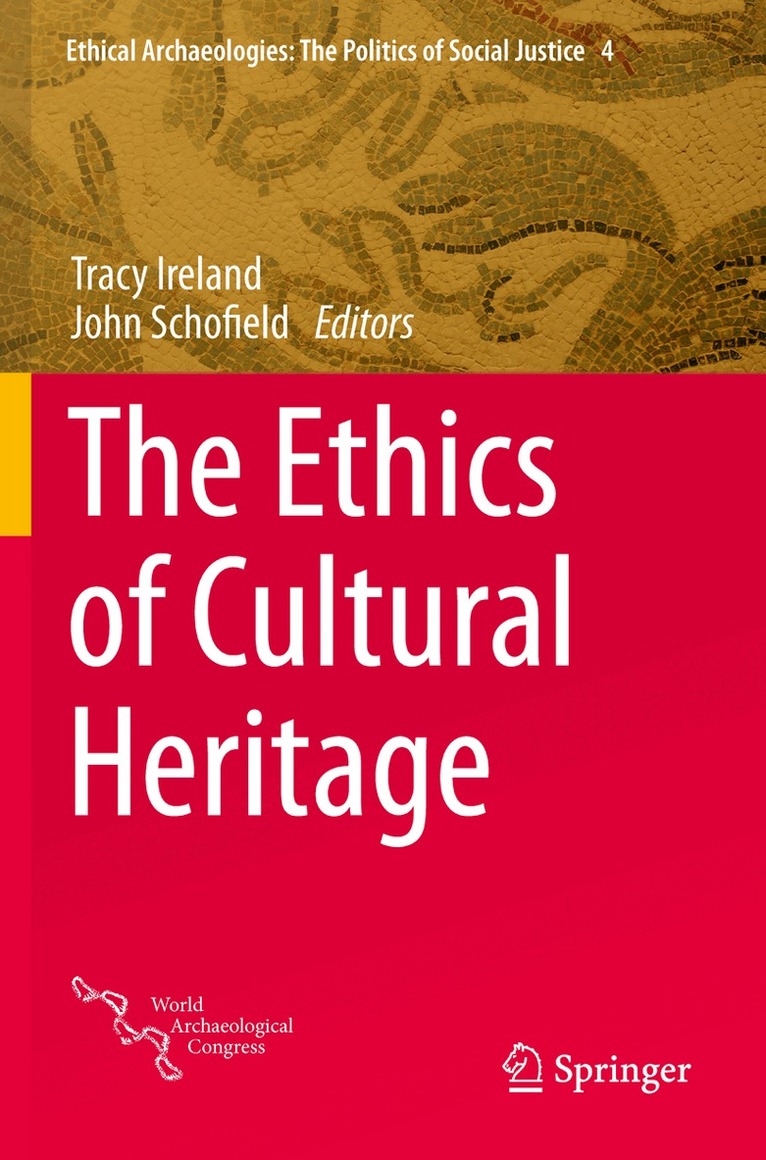
    Ethics of Cultural Heritage

    AvTracy Ireland,John Schofield

    Häftad, Engelska, 2016

    Del 4 i serien Ethical Archaeologies: The Politics of Social Justice

    708 kr

    Beställningsvara. Skickas inom 10-15 vardagar. Fri frakt över 249 kr.

    Beskrivning

    It is widely acknowledged that all archaeological research is embedded within cultural, political and economic contexts, and that all archaeological research falls under the heading ‘heritage’. Most archaeologists now work in museums and other cultural institutions, government agencies, non-government organisations and private sector companies, and this diversity ensures that debates continue to proliferate about what constitutes appropriate professional ethics within these related and relevant contexts.Discussions about the ethics of cultural heritage in the 20th century focused on standards of professionalism, stewardship, responsibilities to stakeholders and on establishing public trust in the authenticity of the outcomes of the heritage process. This volume builds on recent approaches that move away from treating ethics as responsibilities to external domains and to the discipline, and which seek to ensure ethics are integral to all heritage theory, practice and methods. The chapters in this collection chart a departure from the tradition of external heritage ethics towards a broader approach underpinned by the turn to human rights, issues of social justice and the political economy of heritage, conceptualising ethical responsibilities not as pertaining to the past, but to a future-focused domain of social action.

    Produktinformation

    • Utgivningsdatum:2016-03-12
    • Mått:155 x 235 x 13 mm
    • Vikt:414 g
    • Format:Häftad
    • Språk:Engelska
    • Serie:Ethical Archaeologies: The Politics of Social Justice
    • Antal sidor:219
    • Förlag:Springer-Verlag New York Inc.
    • ISBN:9781493937622

    Utforska kategorier

    • Arkeologi inom Historia och arkeologi
    • Kulturvetenskap inom Samhälle och politik
    • Referensverk och tvärvetenskap inom Samhälle och politik

    Mer om författaren

    Tracy Ireland is an archaeologist and heritage practitioner who joined the University of Canberra in 2009 and is currently Head of the Discipline of Humanities. She previously led the Canberra office of Godden Mackay Logan, Heritage Consultants, lectured at the University Sydney and worked as the Senior Archaeologist for the NSW Heritage Council. Tracy publishes on historical and landscape archaeology, heritage conservation and the cultural politics of the past. Tracy’s current work focuses on the Material Memories Project examining the conservation of archaeological remains and heritage place making in settler societies.John Schofield is Head of the Department of Archaeology at the University of York and Director of Studies in Cultural Heritage Management. John was previously an archaeologist with English Heritage, an organisation he joined following the completion of his PhD research in 1989 and where he remained until 2010. He had numerous roles in that time, within heritage protection and policy, taking on the role of Head of Military Programmes in 2000. During his last ten years with English Heritage his outreach responsibilities included regular teaching commitments in the UK and overseas, not least at the universities of Southampton and Bristol. John is a Fellow of the Society of Antiquaries of London, a Member of the Institute for Archaeologists and a Docent in Cultural Heritage, Landscape and Contemporary Archaeology at the University of Turku (Finland). He has published extensively in the fields of cultural heritage, archaeology of the recent and contemporary pasts, and the archaeology of conflict.

    Recensioner i media

    "The 12 wide-ranging, eclectic chapters in this collection attempt to realign heritage ethics, placing discussions in terms of human rights and social justice and offering pathways toward social action. ... As a collection, the work raises significant points for discussion. Summing Up: Highly recommended. Upper-division undergraduates and above." (G. R. Campbell, Choice, Vol. 54 (3), November, 2016)

    Innehållsförteckning

    • Chapter 1: The ethics of cultural heritage.- Section 1: Ethical domains.- Chapter 2: Ethics and digital heritage.- Chapter 3: Ethics and heritage tourism.- Chapter 4: Heritage and community engagement.- Chapter 5: Ethics, conservation and climate change.- Chapter 6: Repatriating human remains: searching for an acceptable ethics.- Chapter 7: The ethics of visibility: archaeology, conservation and memories of settler colonialism.- Chapter 8: The normative foundations of stewardship: care and respect.- Section 2: Ethics in practice.- Chapter 9: Ethics and collecting in the ‘post modern’ museum: a Papua New Guinea example.- Chapter 10: Tourism, World Heritage and local communities: an ethical framework in practice at Angkor.- Chapter 11:  A matter of trust: the organisational design of the Museo de la Libertad y la Democracia, Panama.- Chapter 12: Let’s forget about ‘Heritage’: place, ethics and the Faro Convention.