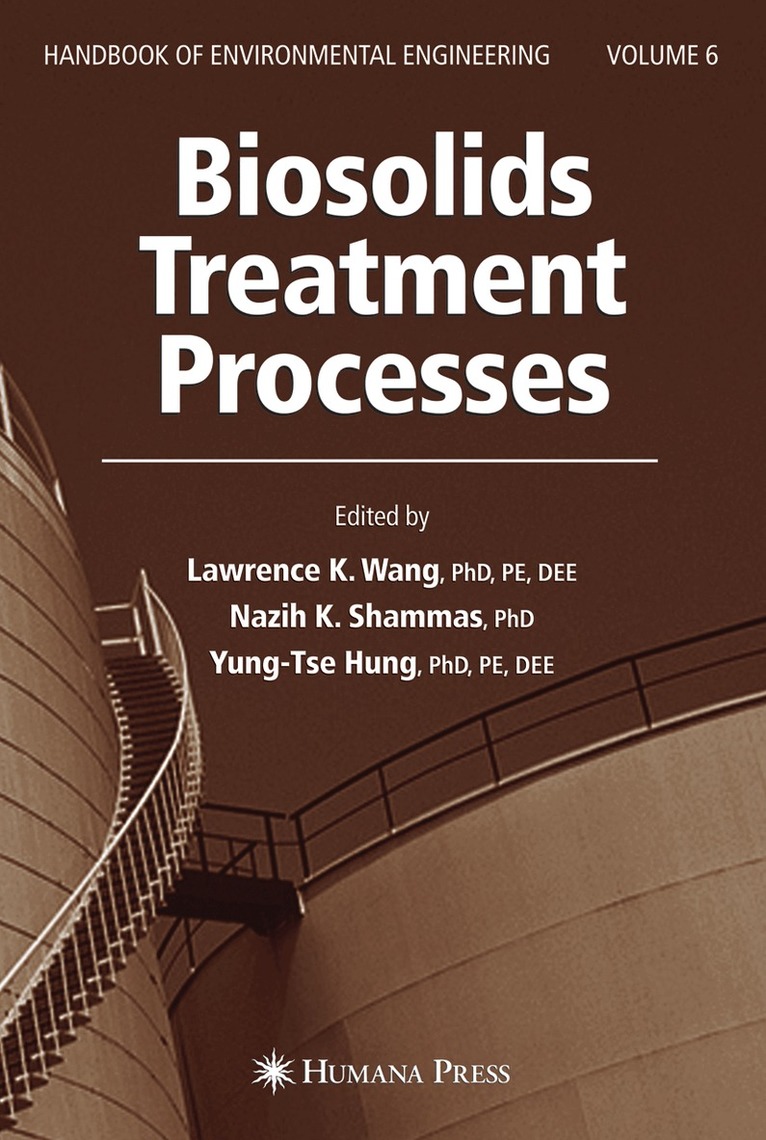
Häftad, Engelska, 2016
Biosolids Treatment Processes
Av Lawrence K. Wang, Nazih K. Shammas, Yung-Tse Hung
2390 kr
Beställningsvara. Skickas inom 11-20 vardagar. Fri frakt över 249 kr.
Beskrivning
The aim of Biosolids Treatment Processes, is to cover entire environmental fields. These include air and noise pollution control, solid waste processing and resource recovery, physicochemical treatment processes, biological treatment processes, biosolids management, water resources, natural control processes, radioactive waste disposal and thermal pollution control. It also aims to employ a multimedia approach to environmental pollution control.
Produktinformation
- Utgivningsdatum: 2016-08-23
- Mått: 178 x 254 x undefined mm
- Format: Häftad
- Språk: Engelska
- Serie: Handbook of Environmental Engineering
- Antal sidor: 820
- Förlag: Humana Press Inc.
- ISBN: 9781493956838
Utforska kategorier
Betyg & recensioner
0 recensioner
Inga recensioner tillgängliga.