• Fri frakt över 249 kr
  • •
  • Snabba leveranser
  • •
  • Billiga böcker
Kundservice

Du är på sajten för privatpersoner.

Företag, bibliotek eller offentlig verksamhet?

Du handlar på classic.bokus.com, där alla dina funktioner finns intakta.
Till classic.bokus.com
Bokus logotyp. Gå till startsidan.
  • Erbjudanden
  • Nyheter
  • Student
  • Topplistor
  • Barn & ungdom
  • Bokus Play
  • E-böcker
  • Pocketböcker
  • Spel & pussel

10% rabatt på allt med kod: NYSTART10 →

Sidfot

Mina sidor

    Hjälp

    • Kundservice
    • Vanliga frågor och svar
    • Frakt och leverans
    • Retur vid ångerrätt
    • Reklamera vara
    • Betalning
    • Köpvillkor
    • Allmänna villkor
    • Information om webbplatsens tillgänglighet

    Om Bokus

    • Om oss
    • Pressrum
    • För studenter
    • För företag
    • För bibliotek och offentlig verksamhet
    • För leverantörer
    • Hållbarhet

    Populärt

    • Aktuella erbjudanden
    • Presentkort
    • Studentlitteratur
    • Nya böcker
    • Topplistor
    • Signerade böcker
    • Engelska böcker

    Inspiration

    • Boktips
    • BookTok
    • Populära bokserier
    • Barnbokskaraktärer
    • Populära författare
    Logotyp för Bokus
    Följ oss på Facebook (extern länk)Följ oss på Instagram (extern länk)Följ oss på YouTube (extern länk)Följ oss på TikTok (extern länk)
    bokus @ CookiesAnpassa cookiesIntegritetspolicyKöpvillkor
    Till Citymail hemsida (extern länk)Till Budbee hemsida (extern länk)Till Postnord hemsida (extern länk)Till Schenker hemsida (extern länk)Till Early Bird hemsida (extern länk)Till Walleys hemsida (extern länk)
    1. Medicin
    2. Medicin: icke kliniska discipliner
    3. Fysiologi

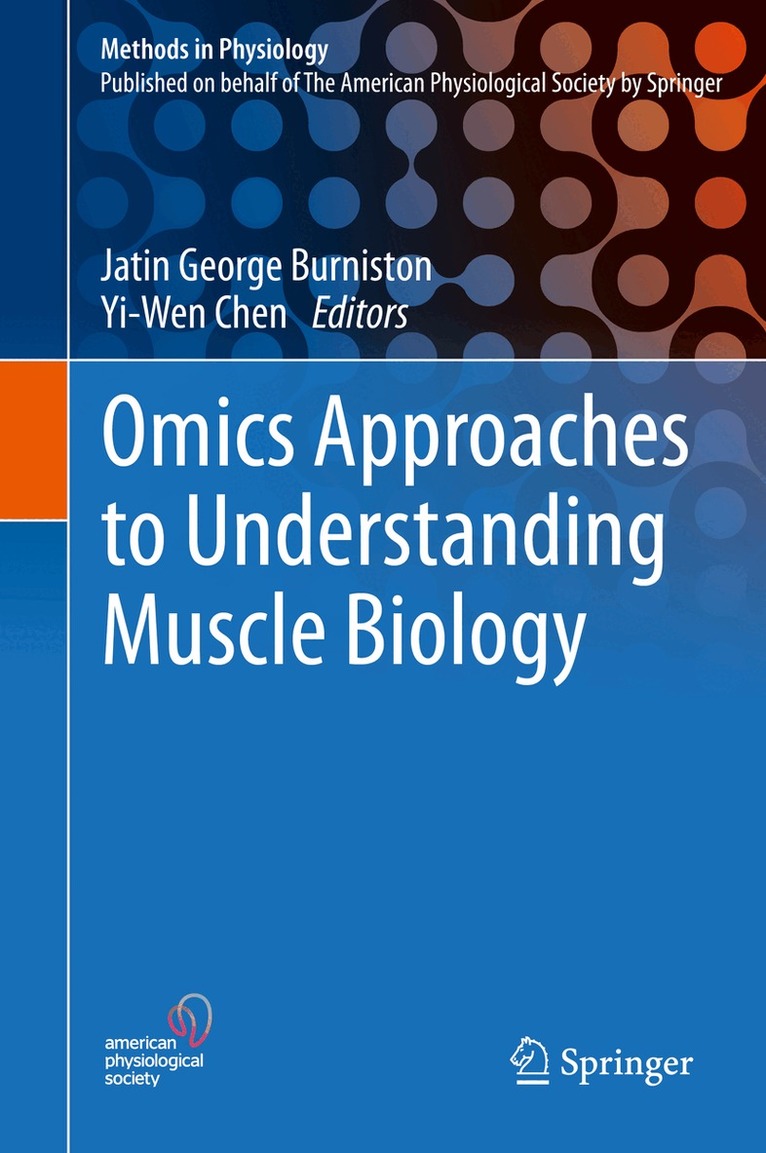
    Omics Approaches to Understanding Muscle Biology

    AvJatin George Burniston,Yi-Wen Chen

    Inbunden, Engelska, 2019

    Del i serien Methods in Physiology

    1 563 kr

    Beställningsvara. Skickas inom 10-15 vardagar. Fri frakt över 249 kr.

    Beskrivning

    This book is a collection of principles and current practices in omics research, applied to skeletal muscle physiology and disorders. The various sections are categorized according to the level of biological organization, namely, genomics (DNA), transcriptomics (RNA), proteomics (protein), and metabolomics (metabolite). With skeletal muscle as the unifying theme, and featuring contributions from leading experts in this traditional field of research, it highlights the importance of skeletal muscle tissue in human development, health and successful ageing. It also discusses other fascinating topics like developmental biology, muscular dystrophies, exercise, insulin resistance and atrophy due to disuse, ageing or other muscle diseases, conveying the vast opportunities for generating new hypotheses as well as testing existing hypotheses by combining high-throughput techniques with proper experiment designs, bioinformatics and statistical analyses.Presenting the latest researchtechniques, this book is a valuable resource for the physiology community, particularly researchers and grad students who want to explore the new opportunities for omics technologies in basic physiology research.

    Produktinformation

    • Utgivningsdatum:2019-11-06
    • Mått:155 x 235 x 14 mm
    • Vikt:499 g
    • Format:Inbunden
    • Språk:Engelska
    • Serie:Methods in Physiology
    • Antal sidor:217
    • Upplaga:2019
    • Förlag:Springer-Verlag New York Inc.
    • ISBN:9781493998012

    Utforska kategorier

    • Fysiologi inom Medicin
    • Biokemi inom Naturvetenskap och teknik
    • Biovetenskap inom Naturvetenskap och teknik

    Mer om författaren

    Jatin Burniston is a Professor of Muscle Proteomics at the Research Institute for Sport & Exercise Sciences, Liverpool John Moores University, UK. He established the first proteomics facility with a specific focus on exercise physiology and published the first works reporting proteomic analysis of striated muscle responses to exercise training. Jatin strives to continue pioneering the field of exercise proteomics and is a proud champion of the application of non-targeted '-omic' research in exercise physiology. He recently combined his expertise in mass spectrometry and proteomics with new metabolic labelling methods using deuterated/ ‘heavy’ water to establish the unique ‘Dynamic Proteome Profiling’ method. Jatin serves on the Editorial Board of the American Physiological Society (APS) journal, Physiological Genomics, and is a Fellow of the European College of Sports Sciences (ECSS) and a member of the ECSS Scientific Committee. He also leads the MSc Exercise Physiology programmeat Liverpool John Moores and particularly enjoys delivering his module on Molecular Exercise Physiology.Yi-Wen Chen is an Associate Professor of Genomics and Precision Medicine at the George Washington University and Principal Investigator at the Center for Genetic Medicine Research, Children’s National Health System, DC, USA. Her research uses transcriptomic approaches to study molecular pathways in muscles in response to physiological stimuli and pathological conditions. Yi-Wen uses genome-wide RNA profiling to dissect the disease mechanisms of various muscle disorders and to identify molecular mechanisms of adaptive remodelling. In addition, her group uses next-generation sequencing and long-read sequencing to study genetic, epigenetic and transcriptomic changes in muscles using physiological and disease models. Currently she is part of the Human Cell Atlas consortium, with a focus on single-cell profiles and spatial characterization of gene expression in skeletal muscles at different developmental stages.

    Innehållsförteckning

    • Part I: Genomic and Epi-genomic.- 1) GWAS/muscle function and diseases (by Eric Hoffman).- 2) Whole genome and whole exon sequencing/muscle disorders (by Silvère van der Maarel and Richard Lemmers).- 3)  Epi-genome approaches/muscle regeneration (by Vittorio Sartorelli).- Part II: Transcriptomic.- 4) RNA profiling (by Yi-Wen Chen, confirmed).- 5) miRNA profiling (by Alyson Fiorillo).- 6) Single cell profiling in muscle (byPier Lorenzo Puri).- 7) Statistics and bioinformatics (by Heather Gordish).- Part III: Proteomic.- 8). Proteome profiling of human/ clinical samples – i.e. necessarily label-free techniques (by Lawrence Mandarino).-  9) Proteome profiling of cell and animal models – i.e. label techniques such as SILAC (by Matthias Mann OR SILAM with JR Yates III).- 10) Global analysis of post-translational modifications (by David E James).- 11) Proteome dynamics – synthesis and degradation on a proteome wide scale (by Jatin Burniston, confirmed).- Part IV: Metabolomic.- 12) Non-targeted metabolomics using mass spectrometry (by Charles Burant).