• Fri frakt över 249 kr
  • •
  • Snabba leveranser
  • •
  • Billiga böcker
Kundservice

Du är på sajten för privatpersoner.

Företag, bibliotek eller offentlig verksamhet?

Du handlar på classic.bokus.com, där alla dina funktioner finns intakta.
Till classic.bokus.com
Bokus logotyp. Gå till startsidan.
  • Erbjudanden
  • Nyheter
  • Student
  • Topplistor
  • Barn & ungdom
  • Bokus Play
  • E-böcker
  • Pocketböcker
  • Spel & pussel

10% studentrabatt med kod TERM26

Sidfot

Mina sidor

    Hjälp

    • Kundservice
    • Vanliga frågor och svar
    • Frakt och leverans
    • Retur vid ångerrätt
    • Reklamera vara
    • Betalning
    • Köpvillkor
    • Allmänna villkor
    • Information om webbplatsens tillgänglighet

    Om Bokus

    • Om oss
    • Pressrum
    • För studenter
    • För företag
    • För bibliotek och offentlig verksamhet
    • För leverantörer
    • Hållbarhet

    Populärt

    • Aktuella erbjudanden
    • Presentkort
    • Studentlitteratur
    • Nya böcker
    • Topplistor
    • Signerade böcker
    • Engelska böcker

    Inspiration

    • Boktips
    • BookTok
    • Populära bokserier
    • Barnbokskaraktärer
    • Populära författare
    Logotyp för Bokus
    Följ oss på Facebook (extern länk)Följ oss på Instagram (extern länk)Följ oss på YouTube (extern länk)Följ oss på TikTok (extern länk)
    bokus @ CookiesAnpassa cookiesIntegritetspolicyKöpvillkor
    Till Citymail hemsida (extern länk)Till Budbee hemsida (extern länk)Till Postnord hemsida (extern länk)Till Schenker hemsida (extern länk)Till Early Bird hemsida (extern länk)Till Walleys hemsida (extern länk)
    1. Historia och arkeologi
    2. Historia
    3. Europas historia

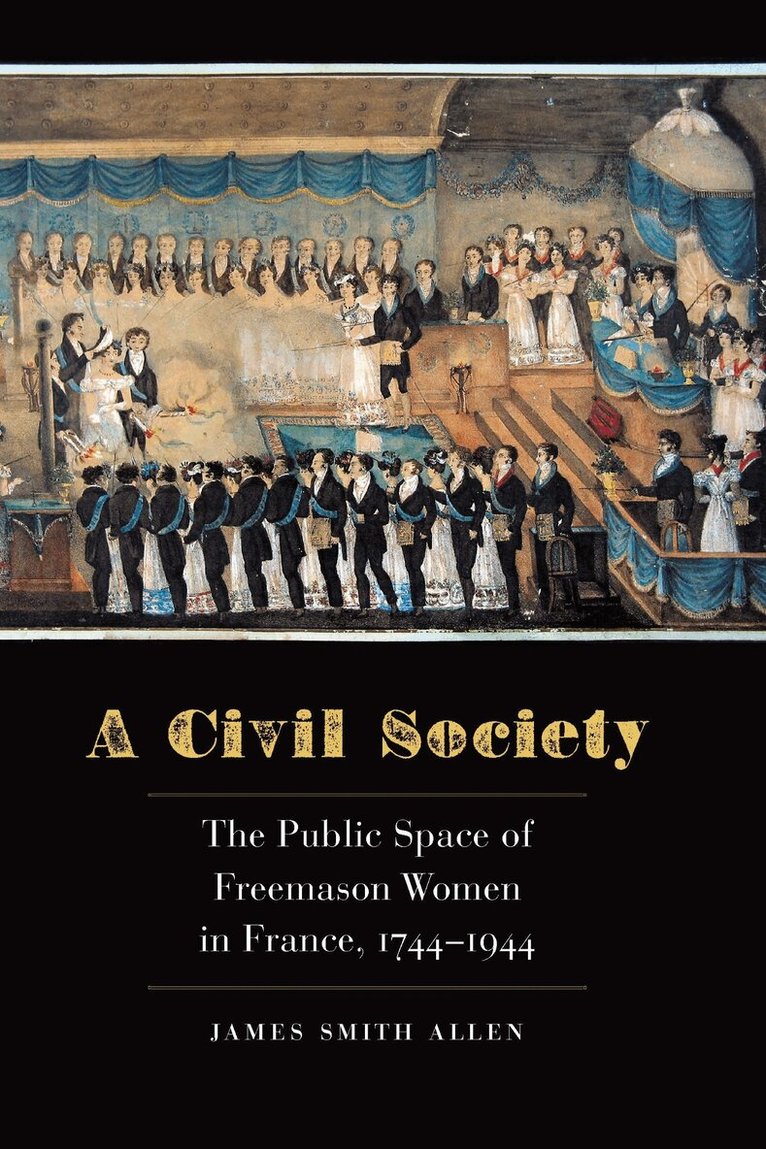
    Civil Society

    The Public Space of Freemason Women in France, 1744–1944

    AvJames Smith Allen

    Inbunden, Engelska, 2022

    808 kr

    Beställningsvara. Skickas inom 10-15 vardagar. Fri frakt över 249 kr.

    Beskrivning

    A Civil Society explores the struggle to initiate women as full participants in the masonic brotherhood that shared in the rise of France’s civil society and its “civic morality” on behalf of women’s rights. As a vital component of the third sector during France’s modernization, freemasonry empowered women in complex social networks, contributing to a more liberal republic, a more open society, and a more engaged public culture.James Smith Allen shows that although women initially met with stiff resistance, their induction into the brotherhood was a significant step in the development of French civil society, including the promotion of women’s rights in the late nineteenth century. Pulling together the many gendered facets of masonry, Allen draws from periodicals, memoirs, and archival material to account for the rise of women within the masonic brotherhood in the context of rapid historical change.  Thanks to women’s social networks and their attendant social capital, masonry came to play a leading role in French civil society and the rethinking of gender relations in the public sphere.

    Produktinformation

    • Utgivningsdatum:2022-05-01
    • Mått:152 x 229 x undefined mm
    • Format:Inbunden
    • Språk:Engelska
    • Antal sidor:374
    • Förlag:University of Nebraska Press
    • ISBN:9781496227782

    Utforska kategorier

    • Europas historia inom Historia och arkeologi
    • Genusvetenskap inom Samhälle och politik

    Mer om författaren

    James Smith Allen is professor emeritus of history at Southern Illinois University Carbondale. He is the author of several books, including Poignant Relations: Three Modern French Women and In The Public Eye: A History of Reading in Modern France, 1800–1940, and the editor of In the Solitude of My Soul: The Diary of GeneviÈve BrÉton, 1867–1871.

    Recensioner i media

    “James Smith Allen presents readers with an engaging, kaleidoscopic account of the uphill and contentious struggle to include select women as full participants in the arcane brotherhood of French freemasonry.”-Karen Offen, author of Debating the Woman Question in the French Third Republic, 1870–1920 “A Civil Society is important because it connects the activism and writing of major figures in French women’s history with masonic networks and impulses. It accomplishes all of this by providing copious evidence presented with clarity.”-Bonnie G. Smith, author of Women in World History: 1450 to the Present “In this ambitious new study, James Smith Allen seeks to understand how masonic sisters and their fellow travelers contributed to a more liberal republic and open society and engaged civic culture in the Old Regime and modern France. A Civil Society is a welcome addition to all those interested in the history of sociability, progressive politics, and civil society.”-Kenneth Loiselle, author of Brotherly Love: Freemasonry and Male Friendship in Enlightenment France

    Innehållsförteckning

    • List of Figures List of Illustrations  List of Abbreviations List of French Masonic Orders / Obediences Introduction:  French Women in Public Space Freemasonry Writ Large  How Else Civil Society – and Freemason Women – Matter  Chapter 1:  Masonry’s Gendered Variations Before and After 1789 The Eighteenth Century’s Mixed Orders and Adoption Lodges  Freemason Women’s Social Networks in the Old Regime  Revolution: The Communities of Freemason Women Transformed Chapter 2:  The Craft’s Long March to Mixed Orders, 1799-1901 Variations on Mixed Orders and Adoption Lodges Freemason Women’s Changing Social Networks in the Nineteenth Century Revolution(s): The Successive Redefinitions of Women’s Masonic Communities Chapter 3:  Women’s Freemasonry and the Women’s Movement, 1901-1944 Renewed Mixed Orders and Adoption Lodges at Home and Abroad The Feminist Networks of Freemason Women The Communities of Freemason Women During Two World Wars Chapter 4:  Contestatory Imaginaries: The Representations of Freemason Women Serafina, Comtesse de Cagliostro  Pamina and Balkis Consuelo, Comtesse de Rudolstadt  Diana Vaughan and Others Conclusion:  Civic Morality in Modern France Themes  Between Theory and History  A Social Conscience Appendices Endnotes Bibliography Acknowledgments Index