Häftad, Engelska, 2014
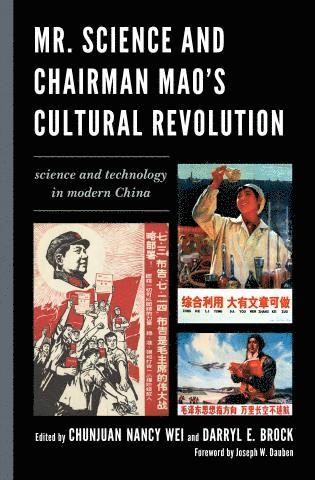
Mr. Science and Chairman Mao's Cultural Revolution
Science and Technology in Modern China
Av Chunjuan Nancy Wei, Darryl E. Brock
877 kr
Beställningsvara. Skickas inom 10-15 vardagar. Fri frakt över 249 kr.
Beskrivning
Produktinformation
- Utgivningsdatum: 2014-09-25
- Mått: 156 x 225 x 26 mm
- Vikt: 680 g
- Format: Häftad
- Språk: Engelska
- Antal sidor: 426
- Förlag: Bloomsbury Publishing Plc
- Medarbetare: Joseph W. Dauben
- ISBN: 9781498503884
Utforska kategorier
Mer om författaren
Chunjuan Nancy Wei is associate professor and chair of the International Political Economy & Diplomacy program at the University of Bridgeport in Connecticut, with a Ph.D. from Claremont Graduate University, and her work appears in New Dynamics in East Asian Politics (2012).Darryl E. Brockis a Ph.D. candidate in modern history at Fordham University in New York City, with an M.A. in history from Claremont Graduate University, and is author of the book China and Darwinian Evolution: Influence on Intellectual and Social Development (2010).
Recensioner i media
This volume corrals the efforts of 12 scholars in the history of science to challenge the narrative of intellectual stagnation during the Cultural Revolution. Contributors use case studies to reveal that scientists who could apply their work to the needs of the common people aligned their intellectual endeavors with communist ideology and secured state funding. Chapters explore the intricacies of work in fields as diverse as calculus, physics, aerospace engineering, health care, agricultural engineering, demography, and social science to illustrate significant advances despite political setbacks. Scholars featured here acknowledge that bending academic pursuits to the desires of the state restricted intellectual life, but move beyond this assessment to explore the areas in which notable strides occurred. Moreover, contributors note that certain projects, including the creation of China's first satellite in 1970, the barefoot doctor movement of 1968 to 1981, and the nationwide implementation of the one-child policy were communist initiatives. This book puts to rest any claim that the communist state was anything but thoroughly committed to the promotion of science and technology, and continues the assessment of this work on its own terms without reference to foreign standards. Summing Up: Recommended. Upper-division undergraduates, graduate students, researchers/faculty, and professionals.
Betyg & recensioner
0 recensioner
Inga recensioner tillgängliga.