• Fri frakt över 249 kr
  • •
  • Snabba leveranser
  • •
  • Billiga böcker
Kundservice

Du är på sajten för privatpersoner.

Företag, bibliotek eller offentlig verksamhet?

Du handlar på classic.bokus.com, där alla dina funktioner finns intakta.
Till classic.bokus.com
Bokus logotyp. Gå till startsidan.
  • Erbjudanden
  • Nyheter
  • Student
  • Topplistor
  • Barn & ungdom
  • Bokus Play
  • E-böcker
  • Pocketböcker
  • Spel & pussel

Må bättre, för mindre! Upp till 50% rabatt på hälsoböcker

Sidfot

Mina sidor

    Hjälp

    • Kundservice
    • Vanliga frågor och svar
    • Frakt och leverans
    • Retur vid ångerrätt
    • Reklamera vara
    • Betalning
    • Köpvillkor
    • Allmänna villkor
    • Information om webbplatsens tillgänglighet

    Om Bokus

    • Om oss
    • Pressrum
    • För studenter
    • För företag
    • För bibliotek och offentlig verksamhet
    • För leverantörer
    • Hållbarhet

    Populärt

    • Aktuella erbjudanden
    • Presentkort
    • Studentlitteratur
    • Nya böcker
    • Topplistor
    • Signerade böcker
    • Engelska böcker

    Inspiration

    • Boktips
    • BookTok
    • Populära bokserier
    • Barnbokskaraktärer
    • Populära författare
    Logotyp för Bokus
    Följ oss på Facebook (extern länk)Följ oss på Instagram (extern länk)Följ oss på YouTube (extern länk)Följ oss på TikTok (extern länk)
    bokus @ CookiesAnpassa cookiesIntegritetspolicyKöpvillkor
    Till Citymail hemsida (extern länk)Till Budbee hemsida (extern länk)Till Postnord hemsida (extern länk)Till Schenker hemsida (extern länk)Till Early Bird hemsida (extern länk)Till Walleys hemsida (extern länk)
    1. Filosofi och religion
    2. Religion och tro
    3. Islam

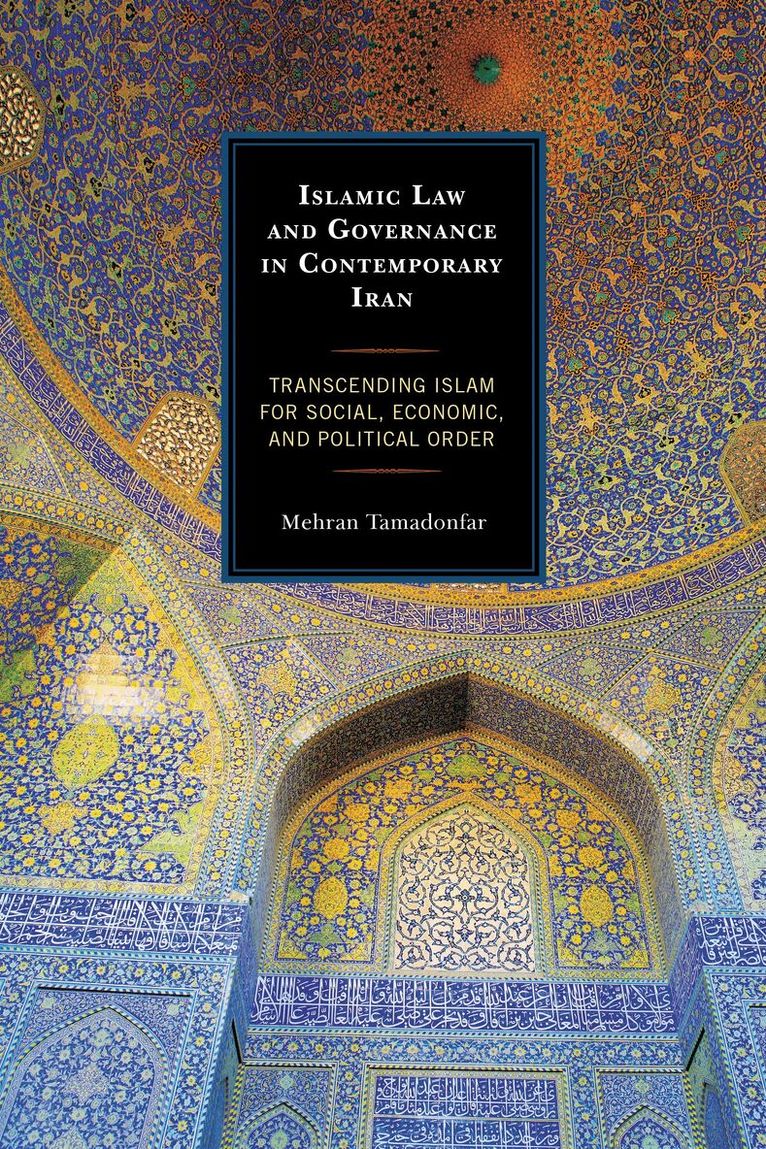
    Islamic Law and Governance in Contemporary Iran

    Transcending Islam for Social, Economic, and Political Order

    AvMehran Tamadonfar

    Häftad, Engelska, 2017

    770 kr

    Beställningsvara. Skickas inom 10-15 vardagar. Fri frakt över 249 kr.

    Beskrivning

    The current rise of Islamism throughout the Muslim world, Islamists’ demand for the establishment of Islamic states, and their destabilizing impact on regional and global orders have raised important questions about the origins of Islamism and the nature of an Islamic state. Beginning with the Iranian revolution of the late 1970s and the establishment of the Islamic Republic to today’s rise of ISIS to prominence, it has become increasingly apparent that Islamism is a major global force in the twenty-first century that demands acknowledgment and answers.As a highly-integrated belief system, the Islamic worldview rejects secularism and accounts for a prominent role for religion in the politics and laws of Muslim societies. Islam is primarily a legal framework that covers all aspects of Muslims’ individual and communal lives. In this sense, the Islamic state is a logical instrument for managing Muslim societies. Even moderate Muslims who genuinely, but not necessarily vociferously, challenge the extremists’ strategies are not dismissive of the political role of Islam and the viability of an Islamic state. However, sectarian and scholastic schisms within Islam that date back to the prophet’s demise do undermine any possibility of consensus about the legal, institutional, and policy parameters of the Islamic state. Within its Shi’a sectarian limitations, this book attempts to offer some answers to questions about the nature of the Islamic state. Nearly four decades of experience with the Islamic Republic of Iran offers us some insights into such a state’s accomplishments, potentials, and challenges. While the Islamic worldview offers a general framework for governance, this framework is in dire need of modification to be applicable to modern societies. As Iranians have learned, in the realm of practical politics, transcending the restrictive precepts of Islam is the most viable strategy for building a functional Islamic state. Indeed, Islam does provide both doctrinal and practical instruments for transcending these restrictions. This pursuit of pragmatism could potentially offer impressive strategies for governance as long as sectarian, scholastic, and autocratic proclivities of authorities do not derail the rights of the public and their demand for an orderly management of their societies.

    Produktinformation

    • Utgivningsdatum:2017-05-23
    • Mått:153 x 227 x 28 mm
    • Vikt:558 g
    • Format:Häftad
    • Språk:Engelska
    • Antal sidor:410
    • Förlag:Bloomsbury Publishing Plc
    • ISBN:9781498507585

    Utforska kategorier

    • Islam inom Filosofi och religion
    • Religion: allmänt inom Filosofi och religion
    • Rättssystem inom Juridik

    Mer om författaren

    Mehran Tamadonfar is associate professor of political science at the University of Nevada, Las Vegas.

    Recensioner i media

    The apparent durability of the Islamic Republic of Iran has surprised and dismayed most Western observers. Tamadonfar’s comprehensive study of the nation’s recent history, politics, and law reveals a surprisingly dynamic and complicated struggle for dominance between sharply divergent conceptions of the meaning of Islamic law and its role in the exercise of power. Though at its core a theocratic-military regime, actual power has shifted among competing factions in the military, parliament, the presidency, the courts, economic and social elites, and the Ayatollah-led governing councils. Religion has served as much as a political artifact for these competing factions as it has been a defining goal. Tamadonfar argues that 'growing marginalization of Islamic precepts and republican dimensions of the constitution, along with government failures to meet the needs of the public, could conceivably undermine the legitimacy of the Islamic Republic.' And the effects of the recent attenuation of Western sanctions are difficult to predict. But for anyone seriously trying to unravel these complicated issues, this book provides a necessary starting point. It should also serve properly to warn all students of Islam how complicated the idea of an 'Islamic state' actually is. Summing Up: Recommended. Upper-division undergraduate, graduate, and research collections.

    Innehållsförteckning

    • IntroductionPart I: The Islamic WorldviewChapter One: Islam, Politics, and the LawPart II: The Legal Framework of the Islamic Republic of IranChapter Two: Constitutionalism Chapter Three: Islamization of the LawPart III: The Polity in the Islamic Republic of IranChapter Four: Civil Society in Iranian Political LifeChapter Five: The Supreme Leader (Vali-e Faqih or Rahbar)Chapter Six: The Governmental System: Power Imbalances and Extraordinary Checks Chapter Seven: Nuclear and Missile Programs, Policies, and the Sanctions RegimeConclusion