• Fri frakt över 249 kr
  • •
  • Snabba leveranser
  • •
  • Billiga böcker
Kundservice

Du är på sajten för privatpersoner.

Företag, bibliotek eller offentlig verksamhet?

Du handlar på classic.bokus.com, där alla dina funktioner finns intakta.
Till classic.bokus.com
Bokus logotyp. Gå till startsidan.
  • Erbjudanden
  • Nyheter
  • Student
  • Topplistor
  • Barn & ungdom
  • Bokus Play
  • E-böcker
  • Pocketböcker
  • Spel & pussel

10% rabatt på allt med kod: NYSTART10 →

Sidfot

Mina sidor

    Hjälp

    • Kundservice
    • Vanliga frågor och svar
    • Frakt och leverans
    • Retur vid ångerrätt
    • Reklamera vara
    • Betalning
    • Köpvillkor
    • Allmänna villkor
    • Information om webbplatsens tillgänglighet

    Om Bokus

    • Om oss
    • Pressrum
    • För studenter
    • För företag
    • För bibliotek och offentlig verksamhet
    • För leverantörer
    • Hållbarhet

    Populärt

    • Aktuella erbjudanden
    • Presentkort
    • Studentlitteratur
    • Nya böcker
    • Topplistor
    • Signerade böcker
    • Engelska böcker

    Inspiration

    • Boktips
    • BookTok
    • Populära bokserier
    • Barnbokskaraktärer
    • Populära författare
    Logotyp för Bokus
    Följ oss på Facebook (extern länk)Följ oss på Instagram (extern länk)Följ oss på YouTube (extern länk)Följ oss på TikTok (extern länk)
    bokus @ CookiesAnpassa cookiesIntegritetspolicyKöpvillkor
    Till Citymail hemsida (extern länk)Till Budbee hemsida (extern länk)Till Postnord hemsida (extern länk)Till Schenker hemsida (extern länk)Till Early Bird hemsida (extern länk)Till Walleys hemsida (extern länk)
    1. Samhälle och politik
    2. Sociologi och antropologi
    3. Antropologi

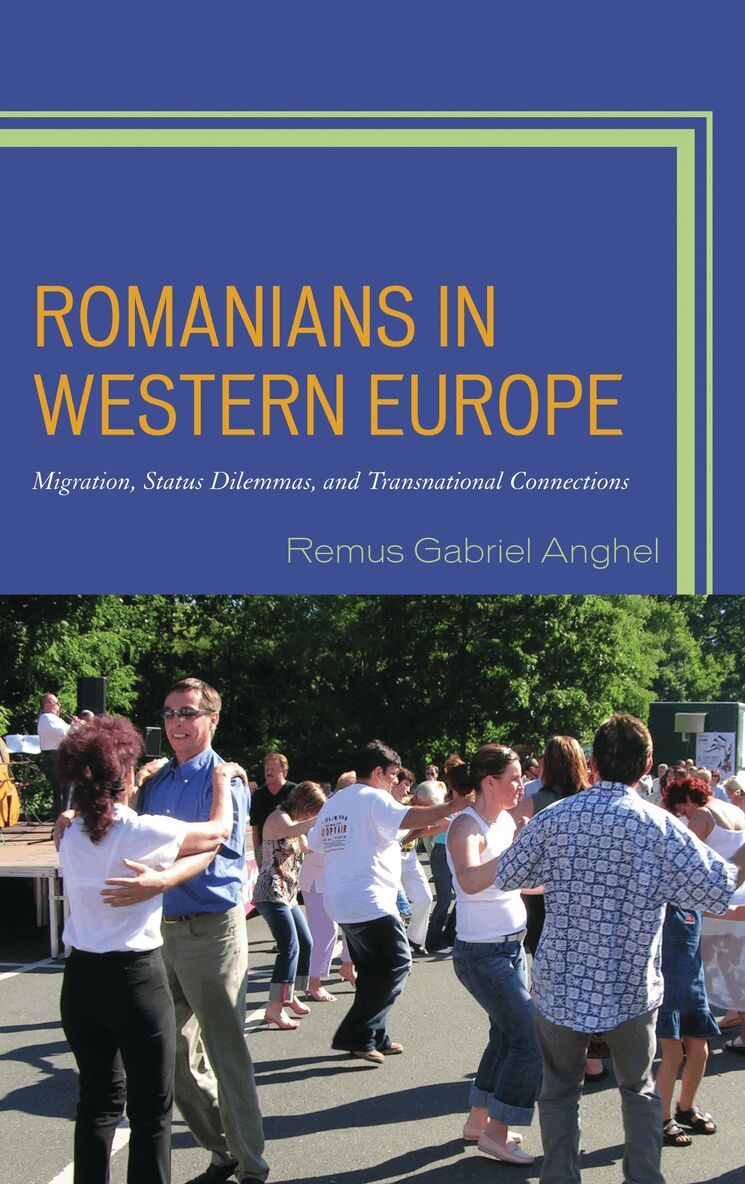
    Romanians in Western Europe

    Migration, Status Dilemmas, and Transnational Connections

    AvRemus Gabriel Anghel

    Häftad, Engelska, 2015

    701 kr

    Beställningsvara. Skickas inom 10-15 vardagar. Fri frakt över 249 kr.

    Beskrivning

    In recent years, Romanians have become the second largest migrant group in Western Europe. Following the liberalization of border controls and the massive economic and political changes in Eastern Europe, human mobility has increased and is becoming a permanent feature of post-Cold War Europe. The arrival of many Eastern Europeans, with Romanians being the largest migrant group, has produced public concerns on immigration in some West European countries. This is particularly the case in Italy, where Romanian irregular migrants are often stigmatized as poor troublemakers by authorities and the mass media. This book challenges such commonly-held assumptions that artificially divide migrants into categories of wished and unwished immigrants—winners and losers of international migration. This book compares two migrant groups. The first is composed of ethnic Germans who migrated legally from Timisoara, Romania, to Nuremberg, Germany. The second is made up of those who migrated irregularly from Borsa, Romania, to Milan, Italy. The analysis highlights a paradoxical situation. Irregular Romanian migrants in Milan had fewer rights and opportunities, yet through migration they gained prestige and came to enjoy a sense of success. Alternately, the Germans who had migrated to Nuremberg, who received more rights and opportunities, perceived that they had suffered a loss of social prestige. The focus on migrants’ social status employed in the book seeks to clarify this puzzle and provide an analytical framework for researching the linkages between the migration and incorporation of Romanians—who are today European citizens—and European states’ migration policies and migrant transnationalism.

    Produktinformation

    • Utgivningsdatum:2015-08-26
    • Mått:155 x 228 x 16 mm
    • Vikt:363 g
    • Format:Häftad
    • Språk:Engelska
    • Antal sidor:218
    • Förlag:Bloomsbury Publishing Plc
    • ISBN:9781498520546

    Utforska kategorier

    • Antropologi inom Samhälle och politik
    • Migration inom Samhälle och politik
    • Sociologi inom Samhälle och politik

    Mer om författaren

    Remus Gabriel Anghel is a researcher at the Romanian Institute of Research on National Minorities, and visiting professor at the Political Science Department, Babes-Bolyai University, Cluj, Romania. He received his PhD in sociology at the University of Bielefeld, Germany. The areas of his research include Romanian migration in Italy and Germany, as well as the migration of ethnic minorities. He has published on the topics of migrant transnationalism, irregular migration, migration, development, and social change. He is currently involved in researching the effects of migration among Romanian and Roma migrants in Romania.

    Recensioner i media

    By using statistical evidence, oral histories, and migration theories, Anghel (Romanian Institute of Research on National Minorities) offers a valuable study of ethnic Germans migrating from Romania to Germany and of Romanian migrants to Italy. The author analyzes the obstacles and opportunities the chosen host nations provided after the collapse of eastern European regimes and the European Union's expansion. Depicting ethnic Germans migrating from Romania to Nuremberg as the saga of people returning to their ancestral homeland allowed for granting of juridical rights and legal employment. The Italian government's laissez-faire attitude toward migration, however, caused more difficulties for Romanians migrating to Milan; these were later ameliorated by legalization processes that developed only after the flood of migrants made their presence too obvious to ignore. In addition to an assessment of migration's impact in countries of origin and destination is an interesting analysis of notions of transnationality in contemporary Europe. Summing Up: Highly recommended. Undergraduates and above.

    Innehållsförteckning

    • AcknowledgmentsIntroductionConstructing Status in Transnational Migration Nation States, Migrants’ Incorporation, and Social StatusFieldwork Encounters: Migrants and Mobilities in the Heart of EuropePart One: Romanian Germans in Germany Chapter 1: Germans Moving “Home:” From Timisoara to NurembergReadiness to Go. German Migration during State SocialismThe Big Wave: Mass Migration of the Romanian GermansChapter 2: Living in Nuremberg: Accepted but DifferentGetting to Nuremberg Labor Market IncorporationGetting Education …and Better JobsSociality Networks, Claims for Identity, and Prestige LossMarriage to Romanian Women and “Romanianization”Chapter 3: A Weak Transnationality: Memory, Leisure, and Plans to Return Remembering Places: Transnationalism as Memory“Romania Tourists:” Transnationalism as LeisureTransnational PensionersPlans to Move BackPart Two: Romanians in ItalyChapter 4: “We Need to Get Out Of Here”: From Borsa to MilanMigration from Borsa: Causes, Periods, and Mechanisms of MigrationThe Initial Phase: Inventing Migration StrategiesThe Development of Migration: Kinship Networks Freedom of Movement in EuropeChapter 5: Making Milan Their Own: From Precariousness to AdaptationGetting to MilanFinding HousingFinding JobsLegalization Freedom to Travel and Its Effects in MilanChapter 6: Back Home: Prestige, Gain, Remittances, and Social ChangeRemittances for Sustaining HouseholdsTransnational Strategies of Investment Migrant Transnationalism, Social Change and Prestige Gain Transnational Migration and Social TransformationConclusionsReferencesIndexAbout the Author