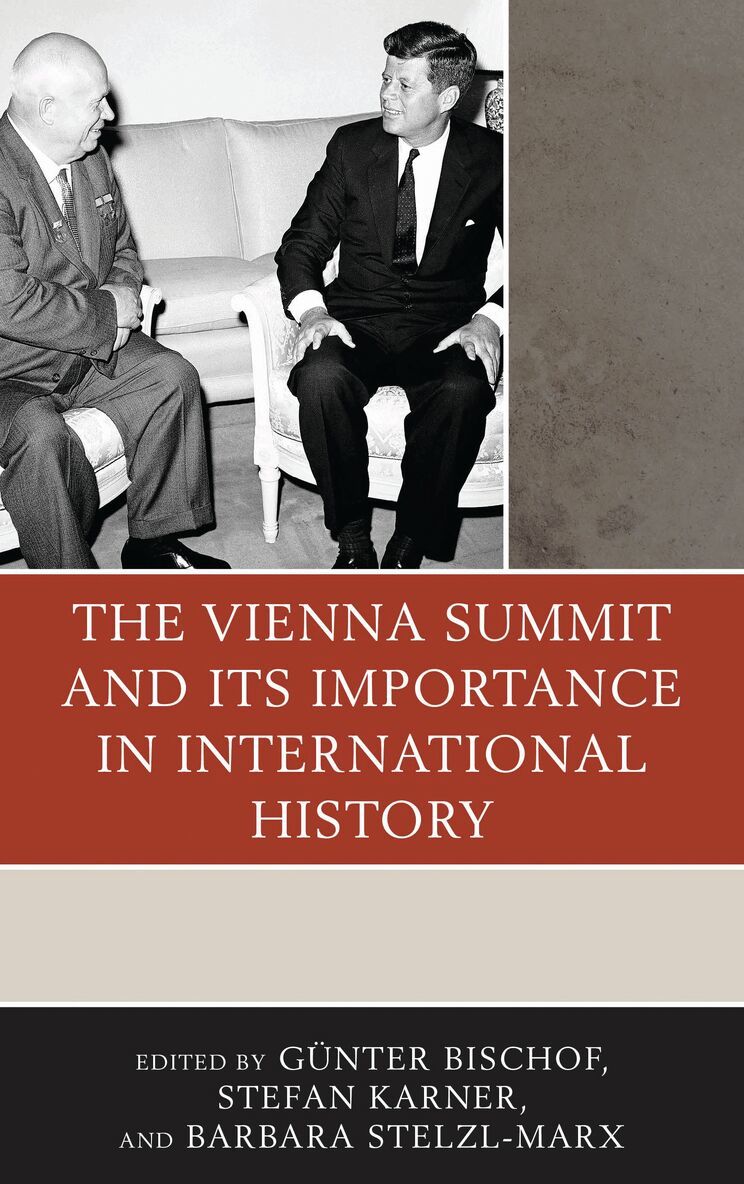
Häftad, Engelska, 2016
Vienna Summit and Its Importance in International History
Av Günter Bischof, Stefan Karner, Barbara Stelzl-Marx
Del i serien Harvard Cold War Studies Book Series
949 kr
Beställningsvara. Skickas inom 10-15 vardagar. Fri frakt över 249 kr.
Beskrivning
Produktinformation
- Utgivningsdatum: 2016-08-25
- Mått: 152 x 225 x 32 mm
- Vikt: 853 g
- Format: Häftad
- Språk: Engelska
- Serie: Harvard Cold War Studies Book Series
- Antal sidor: 540
- Förlag: Bloomsbury Publishing Plc
- ISBN: 9781498524865
- Utmärkelser: Winner of CHOICE Outstanding Academic Titles 2014
Utforska kategorier
Mer om författaren
Günter Bischof is a university research professor and director of CenterAustria at the University of New Orleans, Louisiana.Stefan Karner is head of the Department of Economic, Social, and Business History at the University of Graz and director of the Ludwig Boltzmann Institute for Research of War Consequences, Graz-Vienna.Barbara Stelzl-Marx is deputy director of the Ludwig Boltzmann Institute for Research of War Consequences and lecturer at the University of Graz.
Recensioner i media
Based on Russian and US archives and the multinational research efforts of the Ludwig Boltzmann Institute for the Study of the Consequences of War in Graz, Austria, in conjunction with the Contemporary History Archives (RGANI) in Moscow and the Institute of Contemporary History in Munich-Berlin, this book represents a definitive study of the bilateral Vienna Summit meeting of Nikita Khrushchev and John F. Kennedy. The authors of the various articles are top scholars and, in the case of Ted Sorensen and Viktor Sukhodrev, participants in the summit. This valuable contribution to the history of the Vienna Summit's place in international history and in the history of the Cold War offers fresh assessments of Kennedy, Khrushchev, and the Kremlin's decision-making process. It shows, too, that the US had accepted the Soviet sphere of influence in Eastern Europe. The book is rich in documents and should be in every research library. Includes a useful introduction, index, and bibliography. Summing Up: Essential. All academic levels/libraries.
Betyg & recensioner
0 recensioner
Inga recensioner tillgängliga.