• Fri frakt över 249 kr
  • •
  • Snabba leveranser
  • •
  • Billiga böcker
Kundservice

Du är på sajten för privatpersoner.

Företag, bibliotek eller offentlig verksamhet?

Du handlar på classic.bokus.com, där alla dina funktioner finns intakta.
Till classic.bokus.com
Bokus logotyp. Gå till startsidan.
  • Erbjudanden
  • Student
  • Topplistor
  • Barn & ungdom
  • Bokus Play
  • E-böcker
  • Ljudböcker
  • Pocketböcker
  • Spel & pussel

10% rabatt på allt med kod NYSTART10 →

Sidfot

Mina sidor

    Hjälp

    • Kundservice
    • Vanliga frågor och svar
    • Frakt och leverans
    • Retur vid ångerrätt
    • Reklamera vara
    • Betalning
    • Köpvillkor
    • Allmänna villkor
    • Information om webbplatsens tillgänglighet

    Om Bokus

    • Om oss
    • Pressrum
    • För studenter
    • För företag
    • För bibliotek och offentlig verksamhet
    • För leverantörer
    • Hållbarhet

    Populärt

    • Aktuella erbjudanden
    • Presentkort
    • Studentlitteratur
    • Nya böcker
    • Topplistor
    • Signerade böcker
    • Engelska böcker

    Inspiration

    • Boktips
    • BookTok
    • Populära bokserier
    • Barnbokskaraktärer
    • Populära författare
    Logotyp för Bokus
    Följ oss på Facebook (extern länk)Följ oss på Instagram (extern länk)Följ oss på YouTube (extern länk)Följ oss på TikTok (extern länk)
    bokus @ CookiesAnpassa cookiesIntegritetspolicyKöpvillkor
    Till Citymail hemsida (extern länk)Till Budbee hemsida (extern länk)Till Postnord hemsida (extern länk)Till Schenker hemsida (extern länk)Till Early Bird hemsida (extern länk)Till Walleys hemsida (extern länk)
    1. Samhälle och politik
    2. Samhälle och kultur
    3. Kultur och medier
    4. Kulturvetenskap

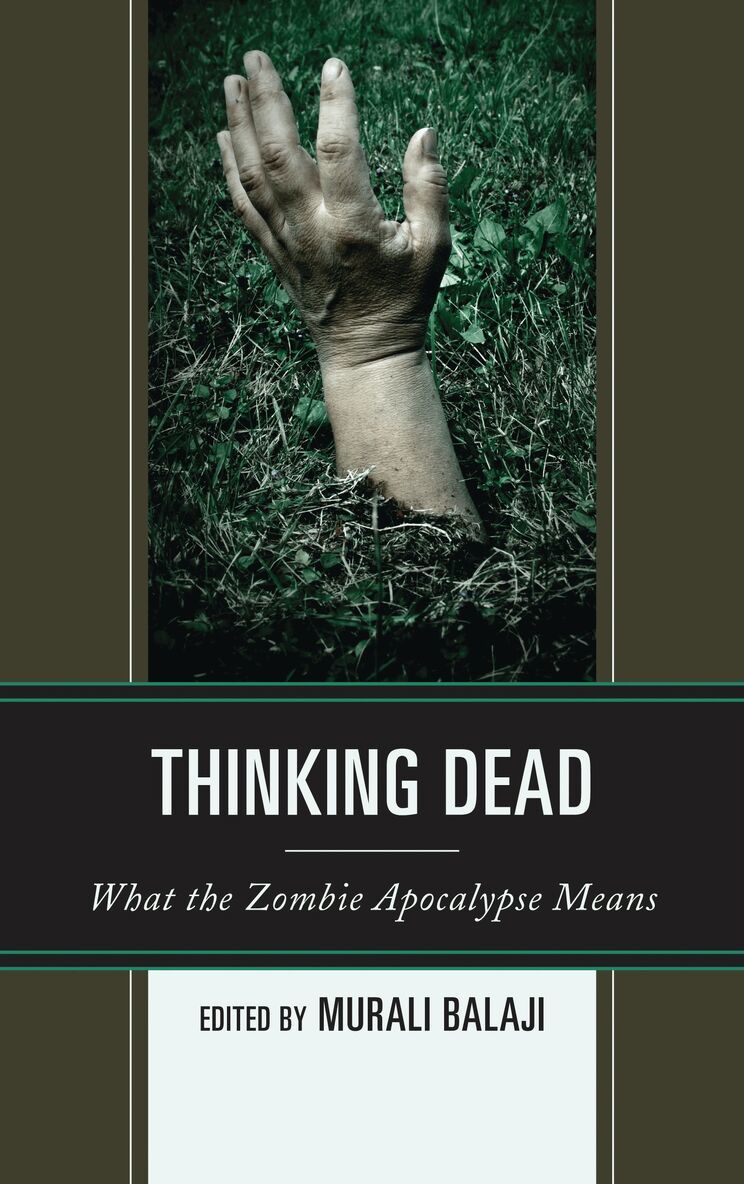
    Thinking Dead

    What the Zombie Apocalypse Means

    AvMurali Balaji

    Häftad, Engelska, 2016

    700 kr

    Beställningsvara. Skickas inom 10-15 vardagar. Fri frakt över 249 kr.

    Beskrivning

    Zombies are everywhere these days. We are consuming zombies as much as they are said to be consuming us in mediated apocalyptic scenarios on popular television shows, video game franchises and movies. The “zombie industry” generates billions a year through media texts and other cultural manifestations (zombie races and zombie-themed parks, to name a few). Zombies, like vampires, werewolves, witches and wizards, have become both big dollars for cultural producers and the subject of audience fascination and fetishization. With popular television shows such as AMC’s The Walking Dead (based on the popular graphic novel) and movie franchises such as the ones pioneered by George Romero, global fascination with zombies does not show signs of diminishing.In The Thinking Dead: What the Zombie Apocalypse Means, edited by Murali Balaji, scholars ask why our culture has becomes so fascinated by the zombie apocalypse. Essays address this question from a range of theoretical perspectives that tie our consumption of zombies to larger narratives of race, gender, sexuality, politics, economics and the end of the world. Thinking Dead brings together an array of media and cultural studies scholars whose contributions to understanding our obsession with zombies will far outlast the current trends of zombie popularity.

    Produktinformation

    • Utgivningsdatum:2016-03-03
    • Mått:149 x 230 x 20 mm
    • Vikt:408 g
    • Format:Häftad
    • Språk:Engelska
    • Antal sidor:268
    • Förlag:Bloomsbury Publishing Plc
    • ISBN:9781498532402

    Utforska kategorier

    • Kulturvetenskap inom Samhälle och politik
    • Medievetenskap inom Samhälle och politik
    • Sociala och etiska frågor inom Samhälle och politik

    Mer om författaren

    Murali Balaji is assistant professor of media studies and production at Temple University.

    Recensioner i media

    This eclectic mix of essays considers how the trope of the zombie apocalypse holds the key to understanding humans' constant struggle to form a stable identity in a changeable universe. The essays analyze media productions as varied as the YA romzomcom Warm Bodies, the video game Resident Evil 5, the Chinese film The Note of Ghoul, and the queer, hardcore zombie pornography of Bruce LaBruce. But the volume's most thought-provoking offerings treat the television series The Walking Dead. For example, Angela Cirucci ('The Social Dead') observes that both the figure of the zombie as popularized in The Walking Dead and figures in old photos posted on social media such as Facebook are disturbing reminders of 'former lives' with the potential to threaten the stability of present identities, and Alicia Kozna ('Leaving It All Behind') considers the trend, in apocalyptic narratives, that calls for renunciation of technology as a precondition of re-creating society in a way that values human connection. Most enlightening is Balaji's essay ('Eating the Dead'), which examines the subordination of Tony Kirkman's graphic novel (on which the television series is based) to the series itself and to show-related merchandise. An important contribution the mushrooming field of zombie studies. Summing Up: Highly recommended. All readers.

    Innehållsförteckning

    • Table of ContentsIntroduction - Thinking Dead: Our obsession with the Undead and Its Implications Murali Balaji, Ph.DPart I: Zombies as the Other and OurselvesChapter 1: Perfect Strangers: The Zombie Imaginary and the Logic of RepresentationGordon Coonfield, Ph.DChapter 2: The Social Dead: How Our Zombie Baggage Threatens to Drag Us into the Crypts of Our PastAngela CirucciChapter 3: "Fight the Dead, Fear The Living": Zombie Apocalypse or Libertarian Paradise?Jennifer M. Proffitt, Ph.DRich Templin, Ph.DChapter 4: Simulating Zombies in Popular Culture and MediaPatrick Hamilton, Ph.DPart II: The Zombie Apocalypse and Social, Technological and Psychological SpaceChapter 5: Return to Darkness: Representations of Africa in Resident Evil 5Hanli GeyserChapter 6: Same as it ever was: Savior Narratives and the Logics of Survival in The Walking DeadMartina BaldwinMark McCarthyChapter 7: The Zombie Monster's Evolution to Empty Undead SignifierRyan Lizardi, Ph.DChapter 8: Gothic Monster and Chinese Cultural Identity: Analysis of The Note of GhoulMeijiadai BaiChapter 9: Zombies and the Modern American Family: Surviving the Destruction of Traditional Society in ZombielandCassie OzogChapter 10: Leave it all Behind: The post-Apocalyptical Renunciation of Technology in the Walking DeadAlicia KozmaChapter 11: Space Junk and the Second Event: The Cosmic Meaning of the Zombie ApocalypseBarry Vacker, Ph.DPart III: Eating the Undead: Consumption and Cultural IndustriesChapter 12: The Necropolitics of the Apocalypse: Queer Zombies in the Cinema of Bruce LaBruceArnau RoigChapter 13: XXXombies: Economies of Desire and DisgustSteve Jones, Ph.DChapter 14: Teen Movies and Summit Entertainment's Construction of Warm BodiesCate BuckleyChapter 15: Eating the Dead: AMC's use of Synergy to Cultivate Zombie ConsumptionMurali Balaji, Ph.D