• Fri frakt över 249 kr
  • •
  • Snabba leveranser
  • •
  • Billiga böcker
Kundservice

Du är på sajten för privatpersoner.

Företag, bibliotek eller offentlig verksamhet?

Du handlar på classic.bokus.com, där alla dina funktioner finns intakta.
Till classic.bokus.com
Bokus logotyp. Gå till startsidan.
  • Erbjudanden
  • Nyheter
  • Student
  • Topplistor
  • Barn & ungdom
  • Bokus Play
  • E-böcker
  • Pocketböcker
  • Spel & pussel

Må bättre, för mindre! Upp till 50% rabatt på hälsoböcker

Sidfot

Mina sidor

    Hjälp

    • Kundservice
    • Vanliga frågor och svar
    • Frakt och leverans
    • Retur vid ångerrätt
    • Reklamera vara
    • Betalning
    • Köpvillkor
    • Allmänna villkor
    • Information om webbplatsens tillgänglighet

    Om Bokus

    • Om oss
    • Pressrum
    • För studenter
    • För företag
    • För bibliotek och offentlig verksamhet
    • För leverantörer
    • Hållbarhet

    Populärt

    • Aktuella erbjudanden
    • Presentkort
    • Studentlitteratur
    • Nya böcker
    • Topplistor
    • Signerade böcker
    • Engelska böcker

    Inspiration

    • Boktips
    • BookTok
    • Populära bokserier
    • Barnbokskaraktärer
    • Populära författare
    Logotyp för Bokus
    Följ oss på Facebook (extern länk)Följ oss på Instagram (extern länk)Följ oss på YouTube (extern länk)Följ oss på TikTok (extern länk)
    bokus @ CookiesAnpassa cookiesIntegritetspolicyKöpvillkor
    Till Citymail hemsida (extern länk)Till Budbee hemsida (extern länk)Till Postnord hemsida (extern länk)Till Schenker hemsida (extern länk)Till Early Bird hemsida (extern länk)Till Walleys hemsida (extern länk)
    1. Samhälle och politik
    2. Samhälle och kultur
    3. Kultur och medier
    4. Kulturvetenskap

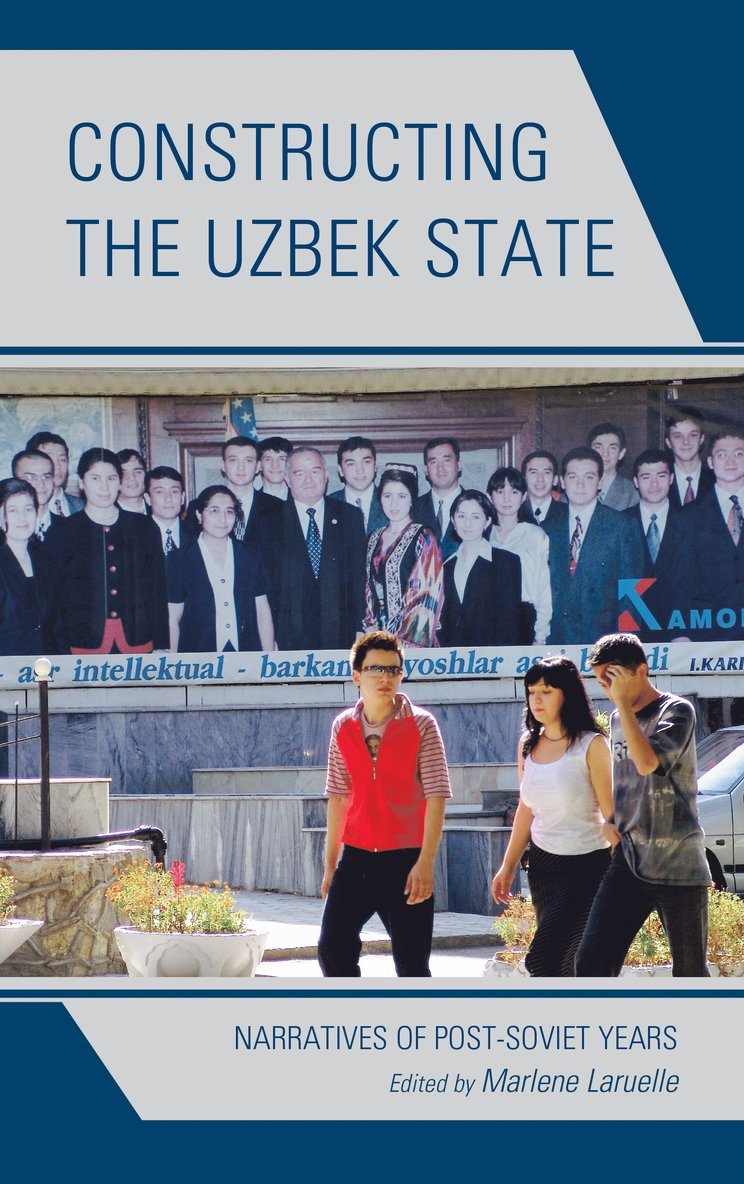
    Constructing the Uzbek State

    Narratives of Post-Soviet Years

    AvMarlene Laruelle

    Inbunden, Engelska, 2017

    Del i serien Contemporary Central Asia: Societies, Politics, and Cultures

    1 722 kr

    Beställningsvara. Skickas inom 10-15 vardagar. Fri frakt över 249 kr.

    Beskrivning

    Over the past three decades, Uzbekistan has attracted the attention of the academic and policy communities because of its geostrategic importance, its critical role in shaping or unshaping Central Asia as a region, its economic and trade potential, and its demographic weight: every other Central Asian being Uzbek, Uzbekistan’s political, social, and cultural evolutions largely exemplify the transformations of the region as a whole. And yet, more than 25 years after the collapse of the Soviet Union, evaluating Uzbekistan’s post-Soviet transformation remains complicated. Practitioners and scholars have seen access to sources, data, and fieldwork progressively restricted since the early 2000s.The death of President Islam Karimov, in power for a quarter of century, in late 2016, reopened the future of the country, offering it more room for evolution. To better grasp the challenges facing post-Karimov Uzbekistan, this volume reviews nearly three decades of independence. In the first part, it discusses the political construct of Uzbekistan under Karimov, based on the delineation between the state, the elite, and the people, and the tight links between politics and economy. The second section of the volume delves into the social and cultural changes related to labor migration and one specific trigger – the difficulties to reform agriculture. The third part explores the place of religion in Uzbekistan, both at the state level and in society, while the last part looks at the renegotiation of collective identities.

    Produktinformation

    • Utgivningsdatum:2017-12-20
    • Mått:159 x 237 x 29 mm
    • Vikt:671 g
    • Format:Inbunden
    • Språk:Engelska
    • Serie:Contemporary Central Asia: Societies, Politics, and Cultures
    • Antal sidor:384
    • Förlag:Bloomsbury Publishing Plc
    • ISBN:9781498538367

    Utforska kategorier

    • Kulturvetenskap inom Samhälle och politik
    • Ekonomisk politik inom Ekonomi och Ledarskap
    • Nationell befrielse och självständighet inom Historia och arkeologi

    Mer om författaren

    Marlene Laruelle is research professor, director of the Central Asia Program, and associate director of the Institute for European, Russian, and Eurasian Studies (IERES) at the Elliott School of International Affairs of George Washington University.

    Recensioner i media

    This is an excellent book, one that examines the most pressing issues in contemporary Uzbekistan Combining insights from a rare mix of top specialists, this very readable volume takes a penetrating look into Uzbekistan’s society, culture, and politics. A country with enormous possibility, yet burdened by deep-seated challenges, Uzbekistan highlights the truly multifaceted nature of building a state in this part of the world. Covering migration, economic reform, security threats, and how gender, religion, and culture define Uzbekistan’s rich social fabric, Constructing the Uzbek State is essential reading for anyone interested in this important country.

    Innehållsförteckning

    • Introduction, Marlene LaruellePart I: Uzbekistan’s Political ConstructChapter 1: When Security Trumps Identity: Uzbekistan’s Foreign Policy under Islam Karimov, Matteo FumagalliChapter 2: The Magic of Territory: Remaking of Border Landscapes as a Spatial Manifestation of Nationalist Ideology, Nick MegoranChapter 3: Grand Corruption in Uzbekistan’s Telecommunications Sector: Root Causes and Social Costs, Alisher IlkhamovChapter 4: Uzbek Political Thinking in the Third Decade of Independence, Morgan Y. LiuPart II: Agriculture and Labor Migration. Changing the Social FabricChapter 5: Government, Cotton Farms, and Labor Migration from Uzbekistan, Russell ZancaChapter 6: Uzbeks in Russia: A New Diaspora or a Transnational Society?, Sergei AbashinChapter 7: Establishing an “Uzbek Mahalla” via Smartphones and Social Media: Everyday Transnational Lives of Uzbek Labor Migrants in Russia, Rustamjon UrinboyevPart III: Uzbek Islam: State Control, Resilience, and ResistanceChapter 8: Counter-Extremism, Secularism, and the Category of Religion in the United Kingdom and Uzbekistan: Should We Be Studying Islam at All?, Johan RasanayagamChapter 9: At the Crossroads of Religion and Regime Security: Teaching Islam in Uzbekistan,Sebastien PeyrouseChapter 10: Moral Exemplars and Ordinary Ethics: Sufism in Bukhara, Maria LouwChapter 11: The Evolving “Uzbek Jihad”: Islamist Militant Recruiting and State Responses, Noah TuckerPart IV: Renegotiating Identities and Cultural LegaciesChapter 12: Be(com)ing Uzbek: Patterns of Identification and Processes of Assimilation,Peter FinkeChapter 13: The Nation Narrated: Uzbekistan’s Political and Cultural Nationalism, Marlene LaruelleChapter 14: Public Life in Private Spaces in Uzbekistan: Women, Religion, and Politics, Svetlana PeshkovaChapter 15: Gender and Changing Women’s Roles in Uzbekistan: From Soviet Workers to Post-Soviet Entrepreneurs, Rano Turaeva-Hoehne