• Fri frakt över 249 kr
  • •
  • Snabba leveranser
  • •
  • Billiga böcker
Kundservice

Du är på sajten för privatpersoner.

Företag, bibliotek eller offentlig verksamhet?

Du handlar på classic.bokus.com, där alla dina funktioner finns intakta.
Till classic.bokus.com
Bokus logotyp. Gå till startsidan.
  • Erbjudanden
  • Nyheter
  • Student
  • Topplistor
  • Barn & ungdom
  • Bokus Play
  • E-böcker
  • Pocketböcker
  • Spel & pussel

Må bättre, för mindre! Upp till 50% rabatt på hälsoböcker

Sidfot

Mina sidor

    Hjälp

    • Kundservice
    • Vanliga frågor och svar
    • Frakt och leverans
    • Retur vid ångerrätt
    • Reklamera vara
    • Betalning
    • Köpvillkor
    • Allmänna villkor
    • Information om webbplatsens tillgänglighet

    Om Bokus

    • Om oss
    • Pressrum
    • För studenter
    • För företag
    • För bibliotek och offentlig verksamhet
    • För leverantörer
    • Hållbarhet

    Populärt

    • Aktuella erbjudanden
    • Presentkort
    • Studentlitteratur
    • Nya böcker
    • Topplistor
    • Signerade böcker
    • Engelska böcker

    Inspiration

    • Boktips
    • BookTok
    • Populära bokserier
    • Barnbokskaraktärer
    • Populära författare
    Logotyp för Bokus
    Följ oss på Facebook (extern länk)Följ oss på Instagram (extern länk)Följ oss på YouTube (extern länk)Följ oss på TikTok (extern länk)
    bokus @ CookiesAnpassa cookiesIntegritetspolicyKöpvillkor
    Till Citymail hemsida (extern länk)Till Budbee hemsida (extern länk)Till Postnord hemsida (extern länk)Till Schenker hemsida (extern länk)Till Early Bird hemsida (extern länk)Till Walleys hemsida (extern länk)
    1. Filosofi och religion
    2. Religion och tro
    3. Religion: allmänt

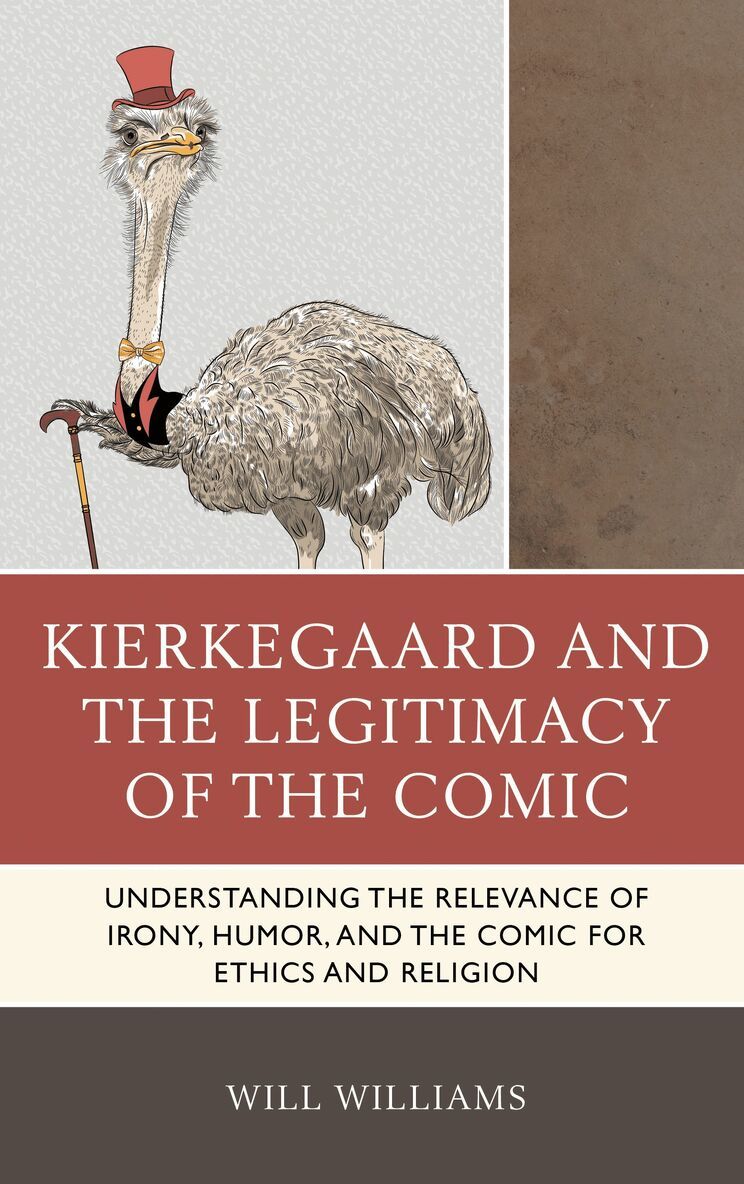
    Kierkegaard and the Legitimacy of the Comic

    Understanding the Relevance of Irony, Humor, and the Comic for Ethics and Religion

    AvWill Williams

    Inbunden, Engelska, 2018

    1 325 kr

    Beställningsvara. Skickas inom 10-15 vardagar. Fri frakt över 249 kr.

    Fler format och utgåvor

    Häftad

    534 kr

    Beskrivning

    While some see the comic as trivial, fit mainly for amusement or distraction, Søren Kierkegaard disagrees. This book examines Kierkegaard’s earnest understanding of the nature of the comic and how even the triviality of comic jest is deeply tied to ethics and religion. It rigorously explicates terms such as “irony,” “humor,” “jest,” and “comic” in Kierkegaard, revealing them to be essential to his philosophical and theological program, beyond aesthetic interest alone.Drawing centrally from Kierkegaard’s most concentrated treatment of these ideas, Concluding Unscientific Postscript (1846), this account argues that he defines the comic as a “contradiction” or misrelation that is essentially (though not absolutely) painless because it provides a “way out.” The comic lies in a contradiction between norms and so springs from one’s viewpoint, whether ethical or religious. “Irony” and “humor” play essential transitional roles for Kierkegaard’s famous account of the stages of existence because subjective development is closely tied to one’s capacity to perceive the comic, making the comic both diagnostic of and formative for one’s subjective maturity. For Kierkegaard, the Christian is far from humorless, instead having the maximal comic perception because he has the highest possible subjective development. The book demonstrates that the comic is not the expression of a particular pseudonym or of a single period in Kierkegaard’s thinking but is an abiding and fundamental concept for him. It finds his comic understanding even outside of Postscript, locating it in such differing works as Prefaces (1844), Upbuilding Discourses in Various Spirits (1847), and the Corsair affair (c.1845-1848).The book also examines the comic in contemporary Kierkegaard scholarship. First, it argues that Deconstructionists, while accurately perceiving the widespread irony in Kierkegaard’s corpus, incorrectly take the irony to imply a lack of earnest interest in philosophy and theology, misunderstanding Kierkegaard on the nature of irony. Second, it considers two theological readings to argue that their positions, while generally preferable to the Deconstructionists’, lack the same attentiveness to the comic’s role in Kierkegaard. Their significant theological arguments would be strengthened by increased appreciation of the legitimate power of the comic for cultivating ethics and religion.

    Produktinformation

    • Utgivningsdatum:2018-09-15
    • Mått:158 x 230 x 23 mm
    • Vikt:513 g
    • Format:Inbunden
    • Språk:Engelska
    • Antal sidor:226
    • Förlag:Bloomsbury Publishing Plc
    • ISBN:9781498577144

    Utforska kategorier

    • Religion: allmänt inom Filosofi och religion
    • Filosofi inom Filosofi och religion
    • Filosofiska discipliner inom Filosofi och religion

    Mer om författaren

    Will Williams is lecturer at Baylor University

    Recensioner i media

    Williams's volume is much more than a monograph about Kierkegaard’s understanding of the comic; it is a springboard to the exploration of the importance of the comic in theology and the life of faith. Williams cogently argues that in Kierkegaard’s pages the comic is exceedingly earnest business. Theologians have often have obscured Kierkegaard’s use of the comic by focusing on his overtly religious earnestness, while deconstructionists have ignored his earnestness by concentrating on his playful and seemingly indeterminate literary tropes. But, as Williams shows, far from being opposites, earnestness and the comic require one another. Kierkegaard uses the comic to expose unrecognized contradictions between worldly, ethical, and Christian norms, and to sensitize readers to the incommensurability of inner aspirations and outward performance. By doing so, the comic weans us away from worldliness and edges us close to humility and repentance. We must thank Williams for reminding us that learning to laugh wisely is crucial to our religious formation.

    Innehållsförteckning

    • IntroductionPart I. Kierkegaard’s Conception of the ComicChapter 1. Kierkegaard’s Conception of the Comic Set ForthChapter 2. Kierkegaard’s Conception of the Comic Illustrated in Other WorksPart II. Kierkegaard’s Comic LegacyChapter 3. Irony and Deconstructionist Readings of KierkegaardChapter 4. Theology and Kierkegaard’s Conception of the ComicConclusionBibliography