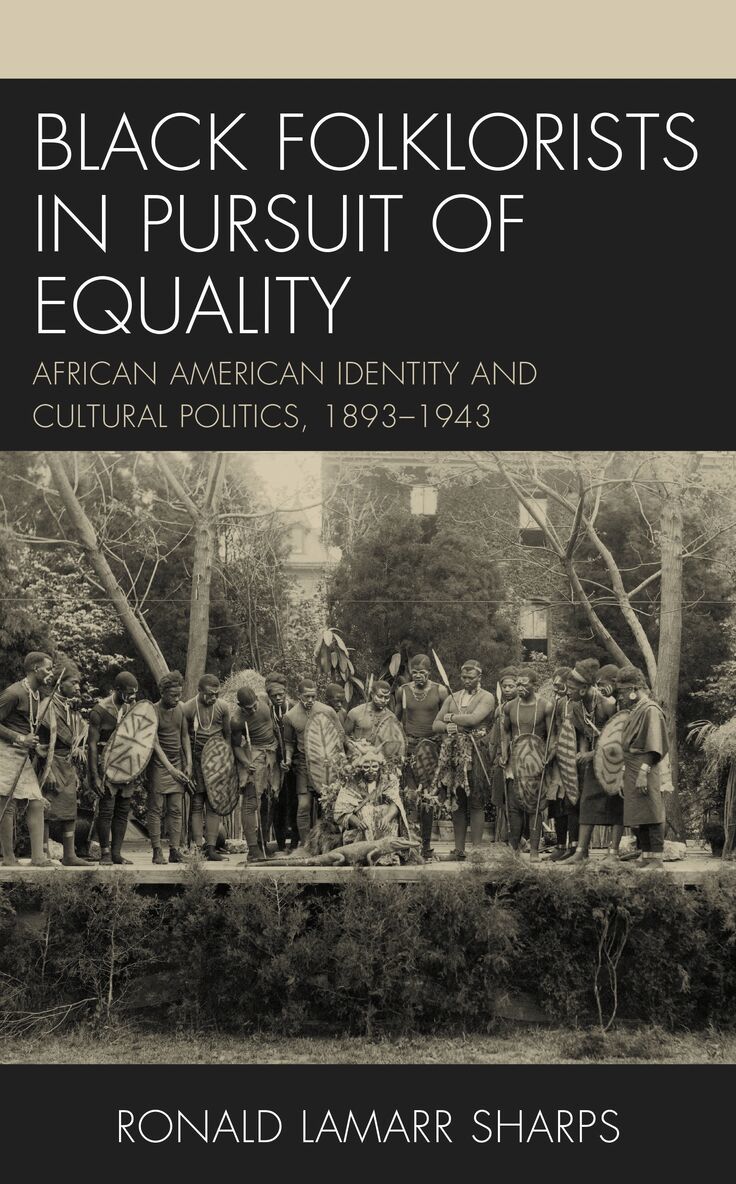
Inbunden, Engelska, 2023
Black Folklorists in Pursuit of Equality
African American Identity and Cultural Politics, 1893–1943
Del i serien Studies in Folklore and Ethnology: Traditions, Practices, and Identities
1546 kr
Beställningsvara. Skickas inom 10-15 vardagar. Fri frakt över 249 kr.
Beskrivning
Produktinformation
- Utgivningsdatum: 2023-06-16
- Mått: 158 x 236 x 34 mm
- Vikt: 735 g
- Format: Inbunden
- Språk: Engelska
- Serie: Studies in Folklore and Ethnology: Traditions, Practices, and Identities
- Antal sidor: 400
- Förlag: Bloomsbury Publishing Plc
- ISBN: 9781498586139
Mer om författaren
Ronald LaMarr Sharps serves as associate dean of the College of the Arts at Montclair State University.
Recensioner i media
Sharps’s 50-year history is rooted in extensive research in archives and the literature. It [addresses] in great detail the personal, social, political, and literary contexts in which a smattering of African American folklore is expressed. These include detailed descriptions of the Hampton Institute, Tuskegee University, Fisk University, the American Negro Academy, the Friends of Negro Freedom, the NAACP, the Universal Negro Improvement Association, the Urban League, and figures such as W. E. B Dubois, Marcus Garvey, Robert Moton, Carter Woodson, Charles S. Johnson, Alain Locke, and, especially, Booker T. Washington. Sharps reviews Black scholars' and writers’ relationships to communism and how it influenced perceptions of folklore. Folklore themes and subjects often referenced include the egregious misappropriation of folklore to fabricate a happy plantation and enslavement narrative, slave oral histories, “sorrow songs” and work songs, and the figure of John Henry. Sharps contrasts lower-class jazz, blues, and ragtime with the elites’ reconceived and supposedly improved folk songs, referring to the banjo and fiddle as “rude instruments.” The book primarily focuses on using folklore to help prepare Black people for full and equal participation in American society and includes much information not previously available. Bibliographic documentation is thorough. Recommended. Advanced undergraduates through faculty.
Betyg & recensioner
0 recensioner
Inga recensioner tillgängliga.