• Fri frakt över 249 kr
  • •
  • Snabba leveranser
  • •
  • Billiga böcker
Kundservice

Du är på sajten för privatpersoner.

Företag, bibliotek eller offentlig verksamhet?

Du handlar på classic.bokus.com, där alla dina funktioner finns intakta.
Till classic.bokus.com
Bokus logotyp. Gå till startsidan.
  • Erbjudanden
  • Student
  • Topplistor
  • Barn & ungdom
  • Bokus Play
  • E-böcker
  • Ljudböcker
  • Pocketböcker
  • Spel & pussel

10% rabatt på allt med kod NYSTART10 →

Sidfot

Mina sidor

    Hjälp

    • Kundservice
    • Vanliga frågor och svar
    • Frakt och leverans
    • Retur vid ångerrätt
    • Reklamera vara
    • Betalning
    • Köpvillkor
    • Allmänna villkor
    • Information om webbplatsens tillgänglighet

    Om Bokus

    • Om oss
    • Pressrum
    • För studenter
    • För företag
    • För bibliotek och offentlig verksamhet
    • För leverantörer
    • Hållbarhet

    Populärt

    • Aktuella erbjudanden
    • Presentkort
    • Studentlitteratur
    • Nya böcker
    • Topplistor
    • Signerade böcker
    • Engelska böcker

    Inspiration

    • Boktips
    • BookTok
    • Populära bokserier
    • Barnbokskaraktärer
    • Populära författare
    Logotyp för Bokus
    Följ oss på Facebook (extern länk)Följ oss på Instagram (extern länk)Följ oss på YouTube (extern länk)Följ oss på TikTok (extern länk)
    bokus @ CookiesAnpassa cookiesIntegritetspolicyKöpvillkor
    Till Citymail hemsida (extern länk)Till Budbee hemsida (extern länk)Till Postnord hemsida (extern länk)Till Schenker hemsida (extern länk)Till Early Bird hemsida (extern länk)Till Walleys hemsida (extern länk)
    1. Samhälle och politik
    2. Samhälle och kultur
    3. Kultur och medier
    4. Kulturvetenskap

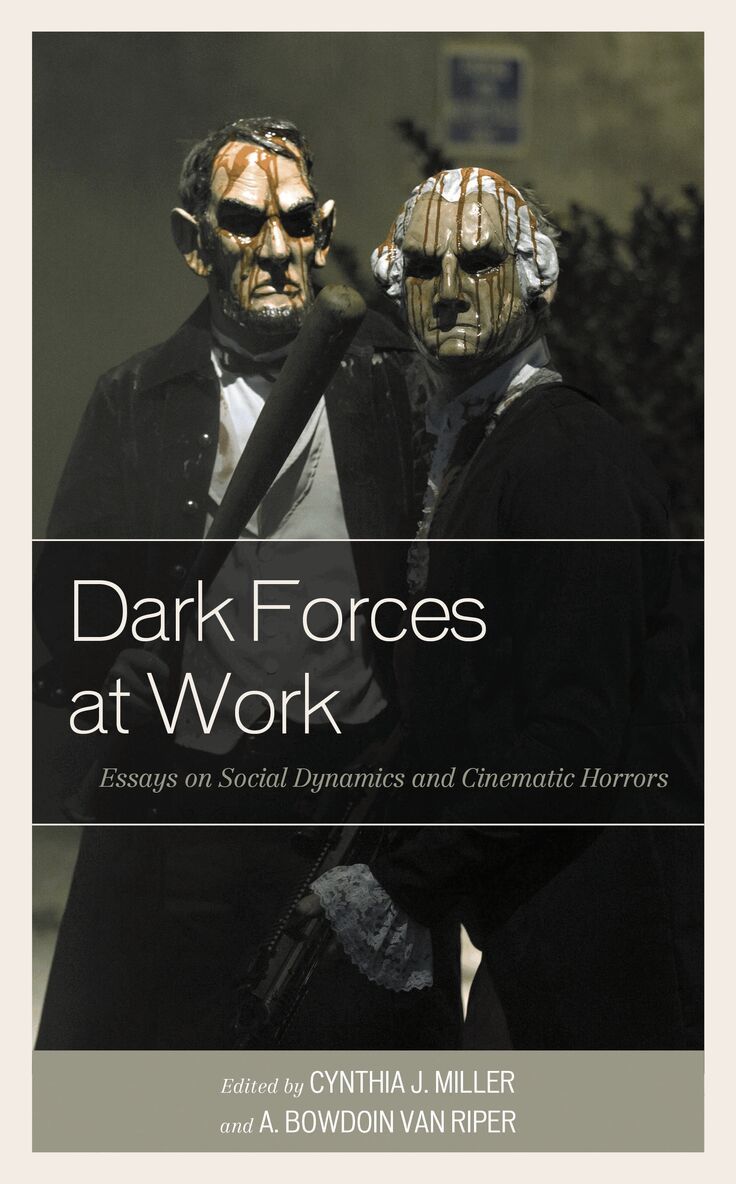
    Dark Forces at Work

    Essays on Social Dynamics and Cinematic Horrors

    AvCynthia J. Miller,A. Bowdoin Van Riper

    Häftad, Engelska, 2023

    Del i serien Research in Horror Studies

    506 kr

    Beställningsvara. Skickas inom 10-15 vardagar. Fri frakt över 249 kr.

    Beskrivning

    Dark Forces at Work examines the role of race, class, gender, religion, and the economy as they are portrayed in, and help construct, horror narratives across a range of films and eras. These larger social forces not only create the context for our cinematic horrors, but serve as connective tissue between fantasy and lived reality, as well.While several of the essays focus on “name” horror films such as IT, Get Out, Hellraiser, and Don’t Breathe, the collection also features essays focused on horror films produced in Asia, Europe, and Latin America, and on American classic thrillers such as Alfred Hitchcock’s Psycho. Key social issues addressed include the war on terror, poverty, the housing crisis, and the Time’s Up movement. The volume grounds its analysis in the films, rather than theory, in order to explore the ways in which institutions, identities, and ideologies work within the horror genre.

    Produktinformation

    • Utgivningsdatum:2023-04-18
    • Mått:155 x 226 x 21 mm
    • Vikt:549 g
    • Format:Häftad
    • Språk:Engelska
    • Serie:Research in Horror Studies
    • Antal sidor:348
    • Förlag:Bloomsbury Publishing Plc
    • ISBN:9781498588577

    Utforska kategorier

    • Kulturvetenskap inom Samhälle och politik
    • Film inom Kultur

    Mer om författaren

    Cynthia J. Miller is senior faculty at the Emerson College Institute for the Liberal Arts and Interdisciplinary Studies.A. Bowdoin Van Riper is a historian who specializes in depictions of science and technology in popular culture.

    Recensioner i media

    Miller and Van Riper have edited a bookshelf’s worth of fascinating tomes, to which Dark Forces at Work is a valuable addition. Covering both canonical and more obscure horror films, it assembles a host of strong essays, surely of interest to any horror scholar.

    Innehållsförteckning

    • IntroductionPart I. National Identity: Haunting the Homeland Chapter One: Ringing Home, Missed Calls, and Unbroken Land-lines: Domestication of, and Miscommunication in, K- and J- Horror Rea AmitChapter Two: Redefining the Heimat: Austrian Horror Cinema and the “Home” in a Global Age Michael FuchsChapter Three: Korean National Trauma and the Myth of Hypermasculinity in The Wailing (2016)Luisa KooChapter Four: The Witch, the Wolf, and the Monster: Monstrous Bodies and Empire in Penny DreadfulAllyson MarinoPart II. Market Forces and Their MonstersChapter Five: Recession Horror: The Haunted Housing Crisis in Contemporary Fiction Lindsey Michael BancoChapter Six: Classism and Horror in the Seventies: The Rural Dweller as a MonsterErika Tiburcio MorenoChapter Seven: All Against All: Dystopia, Dark Forces, and Hobbesian Anarchy in the Purge FilmsA. Bowdoin Van RiperChapter Eight: Motor City Gothic: White Youth and Economic Anxiety in It Follows and Don’t BreatheRussell Meeuf and Benjamin JamesPart III. Ideology: You Just Have to BelieveChapter Nine: Gothic Neoliberalism in 1980s British Horror CinemaFernando Gabriel Pagnoni Berns, Juan Juvé, and Emiliano AguilarChapter Ten: Infringing on Cycles of Oppression: Artisanal Bricolage and Synthesis in MumblegoreBrandon NiezgodaChapter Eleven: Faith as Confinement: Alejandro Amenábar’s The Others (2004)Maria Gil PoisaPart IV. History Never DiesChapter Twelve: The Pursuit of Certainty: Legends and Local Knowledge in CandymanCynthia J. MillerChapter Thirteen: “Nothing Is What It Seems”: Montage and Misread Histories in Nicolas Roeg’s Don’t Look Now (1973)Thomas PraschChapter Fourteen: “Tens of Thousands of Men Died Here”: Desire, Revenge, and Memories of War in Edgar G. Ulmer’s The Black CatJames J. WardChapter Fifteen: Peril, Imprisonment, and the Power of Place in Jordan Peele’s Get OutMichael C. ReiffPart V. The Horrors of PlaceChapter Sixteen: The Hovel Condemned: The Environmental Psychology of Place in HorrorJacqueline MorrillChapter Seventeen: Coming Home to Horror: Stephen King’s Derry and Castle RockAlissa BurgerChapter Eighteen: It Follows and the Uncertainties of the Middle ClassKatherine LizzaChapter Nineteen: “We’re all in our private traps”: Reconfiguring Suburbia’s Protective Borders in Psycho (1960)Kevin Thomas McKenna