• Fri frakt över 249 kr
  • •
  • Snabba leveranser
  • •
  • Billiga böcker
Kundservice

Du är på sajten för privatpersoner.

Företag, bibliotek eller offentlig verksamhet?

Du handlar på classic.bokus.com, där alla dina funktioner finns intakta.
Till classic.bokus.com
Bokus logotyp. Gå till startsidan.
  • Erbjudanden
  • Nyheter
  • Student
  • Topplistor
  • Barn & ungdom
  • Bokus Play
  • E-böcker
  • Pocketböcker
  • Spel & pussel

10% rabatt på allt med kod: NYSTART10 →

Sidfot

Mina sidor

    Hjälp

    • Kundservice
    • Vanliga frågor och svar
    • Frakt och leverans
    • Retur vid ångerrätt
    • Reklamera vara
    • Betalning
    • Köpvillkor
    • Allmänna villkor
    • Information om webbplatsens tillgänglighet

    Om Bokus

    • Om oss
    • Pressrum
    • För studenter
    • För företag
    • För bibliotek och offentlig verksamhet
    • För leverantörer
    • Hållbarhet

    Populärt

    • Aktuella erbjudanden
    • Presentkort
    • Studentlitteratur
    • Nya böcker
    • Topplistor
    • Signerade böcker
    • Engelska böcker

    Inspiration

    • Boktips
    • BookTok
    • Populära bokserier
    • Barnbokskaraktärer
    • Populära författare
    Logotyp för Bokus
    Följ oss på Facebook (extern länk)Följ oss på Instagram (extern länk)Följ oss på YouTube (extern länk)Följ oss på TikTok (extern länk)
    bokus @ CookiesAnpassa cookiesIntegritetspolicyKöpvillkor
    Till Citymail hemsida (extern länk)Till Budbee hemsida (extern länk)Till Postnord hemsida (extern länk)Till Schenker hemsida (extern länk)Till Early Bird hemsida (extern länk)Till Walleys hemsida (extern länk)
    1. Djur och Natur
    2. Naturböcker
    3. Svampböcker

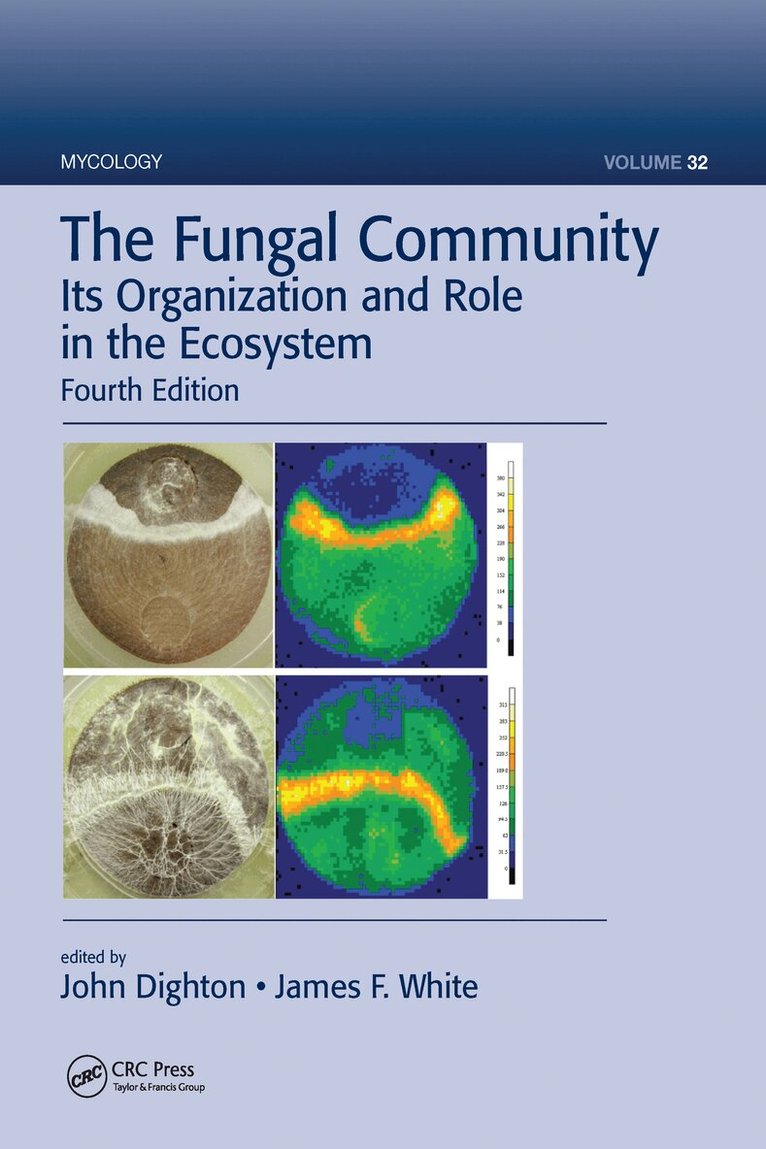
    Fungal Community

    Its Organization and Role in the Ecosystem, Fourth Edition

    AvJohn Dighton,James F. White

    Inbunden, Engelska, 2017

    Del i serien Mycology

    2 957 kr

    Beställningsvara. Skickas inom 5-8 vardagar. Fri frakt över 249 kr.

    Beskrivning

    "…a number of chapters provide excellent summaries of the modern methods available for studying fungal ecology, along with those more traditional methods that are still extremely valuable…overall it is a hugely valuable compendium of fungal ecology research. It is a must for the library shelf."-Lynne Boddy, Cardiff University, UK, Mycological Research, 2006"These 44 chapters are an excellent starting point for anyone interested in fungal communities, in the broadest sense of the term. It is a book for dipping into…may be the last comprehensive treatment of fungal communities before the molecular revolution."-Meriel Jones, University of Liverpool, UK, Microbiology Today"… the scope of the work is tremendous. … Excellent chapters providing overviews of methods … provide a snap shot of the current approaches used to understand fungal communities at several levels of organization. This book should probably be on the shelf of every student of mycology, and many ecologists too. For all students, this book should be a valuable resource and source of inspiration."-Daniel Henk, Imperial College Faculty of Medicine, London, in Inoculum, Vol. 59, No. 3, May 2008"Thorough taxonomic and subject indices further aid the reader in navigating through multiple authors’ treatments of subjects of interest." - Anthony Amend, Department of Botany, University of Hawaii at Manoa in Economic Botany, V. 61In all subjects in science, new findings and the use of new technologies allow us to develop an ever-greater understanding of our world. Expanded and updated coverage in the fourth edition includes: Adds new sections on Integrating Genomics and Metagenomics into Community Analysis, Recent Advances in Fungal Endophyte Research, Fungi in the Built Environment, and Fungal Signaling and Communication Includes a broader treatment of fungal communities in natural ecosystems with in-depth coverage of fungal adaptations to stress and conservation Expands coverage of the influence of climate change on fungi and the role of fungi in organically polluted ecosystemsIncludes contributions from scientists from 20 nations to illustrate a true global approach for bridging gaps between ecological concepts and mycology

    Produktinformation

    • Utgivningsdatum:2017-01-19
    • Mått:210 x 280 x 41 mm
    • Vikt:1 692 g
    • Format:Inbunden
    • Språk:Engelska
    • Serie:Mycology
    • Antal sidor:597
    • Upplaga:4
    • Förlag:Taylor & Francis Inc
    • ISBN:9781498706650

    Utforska kategorier

    • Svampböcker inom Djur och Natur
    • Svampar inom Naturvetenskap och teknik
    • Miljövetenskap och miljöpolitik inom Naturvetenskap och teknik

    Mer om författaren

    John Dighton, James F. White

    Recensioner i media

    PRAISE FOR THE THIRD EDITION"…a number of chapters provide excellent summaries of the modern methods available for studying fungal ecology, along with those more traditional methods that are still extremely valuable…overall it is a hugely valuable compendium of fungal ecology research. It is a must for the library shelf, and at its reasonable price I highly recommend it for purchase by any researcher with an interest in fungi and the environment."—Lynne Boddy, Cardi University, UK, Mycological Research, 2006"These 44 chapters are an excellent starting point for anyone interested in fungal communities, in the broadest sense of the term. It is a book for dipping into…may be the last comprehensive treatment of fungal communities before the molecular revolution."—Meriel Jones, University of Liverpool, UK, Microbiology Today"… the scope of the work is tremendous. The editors have done an admirable job of assembling authors whose combined writings convey current ideas in fungal ecology while still managing to introduce mycologists and ecologists to the concepts and historical context of each others’ work. Excellent chapters providing overviews of methods … provide a snap shot of the current approaches used to understand fungal communities at several levels of organization. This book should probably be on the shelf of every student of mycology, and many ecologists too. For all students, this book should be a valuable resource and source of inspiration."—Daniel Henk, Imperial College Faculty of Medicine, Dept. of Infectious Disease Epidemiology, London in Inoculum, Vol. 59, No. 3, May 2008"Thorough taxonomic and subject indices further aid the reader in navigating through multiple authors’ treatments of subjects of interest. Well provisioned bibliographies are another useful addition. … this book would be a handy reference for researchers … ."—Anthony Amend, Department of Botany, University of Hawai at Manoa in Economic Botany, Vol. 61, No. 1, 2007

    Innehållsförteckning

    • Integrating genomics and metagenomics into community analysis. Changing the species concept. Molecular methods for fungal identification. Metagenomics, transcriptomics and proteomics. Recent advances in fungal endophyte research. Host switching and speciation in Cordicipitaceae. Endophytes and plant stress protection. Endophytes and defensive mutualism. Ecologies of endophytes (life styles of endophytes). Fungal communities in natural ecosystems. Terrestrial communities. Marine and Aquatic communities. Fungal Faunal Interactions. Below ground trophic interactions. Fungal propagule dispersal. Entomopathogenic fungi. Emerging fungal diseases. Bark beetle fungal interactions. Fungal communities and climate change and pollution. Climate change. Metal and organic pollutants. Invasive plant diseases. Fungal conservation. Harvesting practices and impacts. State of fungal conservation around the world. Fungi in the built envitonment. Decomposition of structures. Molds asthmas and allergies. Spoilage of human artefacts (paper, film etc.). Fungal communities in stresses environments (space station, Antarctic structures, etc.). Fungal signaling and communication. Mycorrhizal network as a communication system. Plant fungal communications. Plant animal communication. Fungal bacterial communication.