• Fri frakt över 249 kr
  • •
  • Snabba leveranser
  • •
  • Billiga böcker
Kundservice

Du är på sajten för privatpersoner.

Företag, bibliotek eller offentlig verksamhet?

Du handlar på classic.bokus.com, där alla dina funktioner finns intakta.
Till classic.bokus.com
Bokus logotyp. Gå till startsidan.
  • Erbjudanden
  • Nyheter
  • Student
  • Topplistor
  • Barn & ungdom
  • Bokus Play
  • E-böcker
  • Pocketböcker
  • Spel & pussel

Må bättre, för mindre! Upp till 50% rabatt på hälsoböcker

Sidfot

Mina sidor

    Hjälp

    • Kundservice
    • Vanliga frågor och svar
    • Frakt och leverans
    • Retur vid ångerrätt
    • Reklamera vara
    • Betalning
    • Köpvillkor
    • Allmänna villkor
    • Information om webbplatsens tillgänglighet

    Om Bokus

    • Om oss
    • Pressrum
    • För studenter
    • För företag
    • För bibliotek och offentlig verksamhet
    • För leverantörer
    • Hållbarhet

    Populärt

    • Aktuella erbjudanden
    • Presentkort
    • Studentlitteratur
    • Nya böcker
    • Topplistor
    • Signerade böcker
    • Engelska böcker

    Inspiration

    • Boktips
    • BookTok
    • Populära bokserier
    • Barnbokskaraktärer
    • Populära författare
    Logotyp för Bokus
    Följ oss på Facebook (extern länk)Följ oss på Instagram (extern länk)Följ oss på YouTube (extern länk)Följ oss på TikTok (extern länk)
    bokus @ CookiesAnpassa cookiesIntegritetspolicyKöpvillkor
    Till Citymail hemsida (extern länk)Till Budbee hemsida (extern länk)Till Postnord hemsida (extern länk)Till Schenker hemsida (extern länk)Till Early Bird hemsida (extern länk)Till Walleys hemsida (extern länk)
    1. Djur och Natur
    2. Naturböcker
    3. Växtböcker

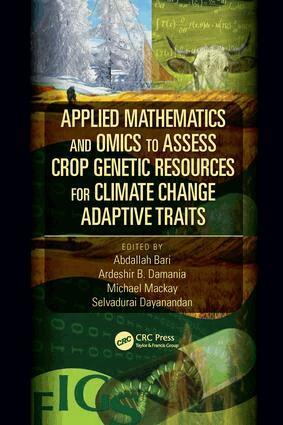
    Applied Mathematics and Omics to Assess Crop Genetic Resources for Climate Change Adaptive Traits

    AvAbdallah Bari,Ardeshir B. Damania

    Inbunden, Engelska, 2016

    2 954 kr

    Beställningsvara. Skickas inom 5-8 vardagar. Fri frakt över 249 kr.

    Beskrivning

    Applied Mathematics and Omics to Assess Crop Genetic Resources for Climate Change Adaptive Traits focuses on practical means and approaches to further the use of genetic resources for mitigating the effects of climate change and improving crop production. Genetic diversity in crop plants is being further explored to increase yield, disease resistance, and nutritional value by employing recent advances in mathematics and omics technologies to promote the adaptation of crops to changing climatic conditions.This book presents a broad view of biodiversity and genetic resources in agriculture and provides answers to some current problems. It also highlights ways to provide much-needed information to practitioners and innovators engaged in addressing the effects of global climate change on agriculture. The book is divided into sections that cover:The implications of climate change for drylands and farming communitiesThe potential of genetic resources and biodiversity to adapt to and mitigate climate change effectsApplications of mathematics and omics technologiesGenomics and gene identificationWe are in the midst of significant changes in global climates, and its effects are already being felt throughout the world. The increasing frequency of droughts and heat waves has had negative impacts on agricultural production, especially in the drylands of the world. This book shares the collective knowledge of leading scientists and practitioners, giving readers a broader appreciation and heightened awareness of the stakes involved in improving and sustaining agricultural production systems in the face of climate change.

    Produktinformation

    • Utgivningsdatum:2016-02-19
    • Mått:156 x 234 x 23 mm
    • Vikt:578 g
    • Format:Inbunden
    • Språk:Engelska
    • Antal sidor:284
    • Förlag:Taylor & Francis Inc
    • ISBN:9781498730136

    Utforska kategorier

    • Växtböcker inom Djur och Natur
    • Botanik inom Naturvetenskap och teknik
    • Agronomi och lantbruk inom Naturvetenskap och teknik

    Mer om författaren

    Abdallah Bari is a researcher focusing on applied mathematics in agricultural research. He received his PhD in imaging techniques to assess genetic variation for water-use efficiency from the University of Cordoba, Spain. His research involves elaborating and applying mathematical models and theoretical aspects to seek practical solutions, such as the application of fractal geometry to capture complex trait variation in plants. He has published peer-reviewed articles and chapters and has edited a book on the assessment of genetic resources for water-use efficiency. He collaborates with researchers from universities, research institutions, and development organizations to explore new frontiers of applied mathematics in agricultural research to address climate change issues.Ardeshir B. Damania is an associate in the Agricultural Experimental Station (AES) at the University of California, Davis. He received his PhD in crop plant genetic resources from the University of Birmingham, United Kingdom. His current research interests include climate change, biodiversity conservation, origins of agriculture, crop domestication, and plants of economic and medicinal values. He has edited a number of books, including Biodiversity and Wheat Improvement, which has been translated into Chinese. He has authored numerous papers in refereed international journals and articles in the popular press on wheat improvement, conservation of genetic resources, and Asian agricultural history.Michael Mackay is an honorary associate professor at the Queensland Alliance for Agriculture and Food Innovation, an institute based at the University of Queensland, St. Lucia in Brisbane, Australia. He received his PhD from the Swedish University of Agricultural Sciences. His main research interest is in how pre-breeders and breeders actually go about identifying and using plant genetic resources. This research eventually led to the development of a different approach known as Focused Identification of Germplasm Strategy (FIGS) in a collaborative Grains Research and Development Corporation project between ICARDA, the AWCC, and the N. I. Vavilov Research Institute of Plant Industry in St. Petersburg, Russia. He has published more than 40 articles, including book chapters, refereed scientific papers, and conference proceedings.Selvadurai Dayanandan is a professor and graduate program director in the biology department of Concordia University, Montreal, Canada. He received his PhD in biology from Boston University. He was director of the graduate diploma program in biotechnology and genomics at Concordia University as well as an Izaak W. Killam postdoctoral fellow at the University of Alberta. His current research focuses on understanding the origin and maintenance of biodiversity in forest and agricultural landscapes using genomics technologies. He has published extensively in the field of biodiversity conservation, ranging from socioeconomic factors and tropical deforestation through the population, conservation, and evolutionary genomics of forest trees and crop plants.

    Innehållsförteckning

    • CLIMATE-CHANGE IMPLICATIONS FOR DRYLANDS AND FARMING COMMUNITIES. Climate Change and Dryland Systems. Plant Genetic Resources and Climate Change: Stakeholder Perspectives from the Nordic and Arctic Regions. Adaptation of Farmers to Climate Change: A Systems Approach to Cereal Production in Benslimane Region, Morocco. Assessment of the Demand–Supply Match for Agricultural Innovations in Africa. POTENTIAL OF USING GENETIC RESOURCES AND BIODIVERSITY TO ADAPT TO AND MITIGATE CLIMATE CHANGE. Exploitation of Genetic Resources to Sustain Agriculture in the Face of Climate Change with Special Reference to Wheat. Utilizing the Diversity of Wild Soybeans in China for Accelerating Soybean Breeding in the Genome Era. Adaptation of Potato (Solanum tuberosum) and Tomato (S. lycopersicum) to Climate Change. Barley Genetic Resources for Climate-Change Adaptation: Searching for Heat-Tolerant Traits through Rapid Evaluation of Subsets. Fruit Genetic Resources Facing Increasing Climate Uncertainty. APPLIED MATHEMATICS (UNLOCKING THE POTENTIAL OF MATHEMATICAL CONCEPTUAL FRAMEWORKS). Applied Mathematics in Genetic Resources: Toward a Synergistic Approach Combining Innovations with Theoretical Aspects. Power Transformations: Application for Symmetrizing the Distribution of Sample Coefficient of Variation from Inverse Gaussian Populations. Toward More Effective Discovery and Deployment of Novel Plant Genetic Variation: Reflection and Future Directions. Identifying Climate Patterns during the Crop-Growing Cycle from 30 Years of CIMMYT Elite Spring Wheat International Yield Trials. Assessing Plant Genetic Resources for Climate-Change Adaptive Traits: Heat Traits. Plant Genetic Diversity: Statistical Methods for Analyzing Distribution and Diversity of Species. APPLIED OMICS TECHNOLOGIES. Exploiting Germplasm Resources for Climate-Change Adaptation in Faba Bean. Developing Climate-Change Adaptive Crops to Sustain Agriculture in Dryland Systems through Applied Mathematics and Genomics. Toward the Rapid Domestication of Perennial Grains: Developing Genetic and Genomic Resources for Intermediate Wheatgrass. Traits for Testing, Screening, and Improving Salt Tolerance of Durum Wheat Genetic Resources. Gene Flow as a Source of Adaptation of Durum Wheat to Changing Conditions Including Climate Change: Double Gradient Selection Technique. Addressing Diversity of Ethiopian Durum Wheat Landrace Populations Using Microsatellite Markers.