• Fri frakt över 249 kr
  • •
  • Snabba leveranser
  • •
  • Billiga böcker
Kundservice

Du är på sajten för privatpersoner.

Företag, bibliotek eller offentlig verksamhet?

Du handlar på classic.bokus.com, där alla dina funktioner finns intakta.
Till classic.bokus.com
Bokus logotyp. Gå till startsidan.
  • Erbjudanden
  • Nyheter
  • Student
  • Topplistor
  • Barn & ungdom
  • Bokus Play
  • E-böcker
  • Pocketböcker
  • Spel & pussel

10% rabatt på allt med kod NYSTART10 →

Sidfot

Mina sidor

    Hjälp

    • Kundservice
    • Vanliga frågor och svar
    • Frakt och leverans
    • Retur vid ångerrätt
    • Reklamera vara
    • Betalning
    • Köpvillkor
    • Allmänna villkor
    • Information om webbplatsens tillgänglighet

    Om Bokus

    • Om oss
    • Pressrum
    • För studenter
    • För företag
    • För bibliotek och offentlig verksamhet
    • För leverantörer
    • Hållbarhet

    Populärt

    • Aktuella erbjudanden
    • Presentkort
    • Studentlitteratur
    • Nya böcker
    • Topplistor
    • Signerade böcker
    • Engelska böcker

    Inspiration

    • Boktips
    • BookTok
    • Populära bokserier
    • Barnbokskaraktärer
    • Populära författare
    Logotyp för Bokus
    Följ oss på Facebook (extern länk)Följ oss på Instagram (extern länk)Följ oss på YouTube (extern länk)Följ oss på TikTok (extern länk)
    bokus @ CookiesAnpassa cookiesIntegritetspolicyKöpvillkor
    Till Citymail hemsida (extern länk)Till Budbee hemsida (extern länk)Till Postnord hemsida (extern länk)Till Schenker hemsida (extern länk)Till Early Bird hemsida (extern länk)Till Walleys hemsida (extern länk)
    1. Samhälle och politik
    2. Samhälle och kultur
    3. Kultur och medier
    4. Kulturvetenskap

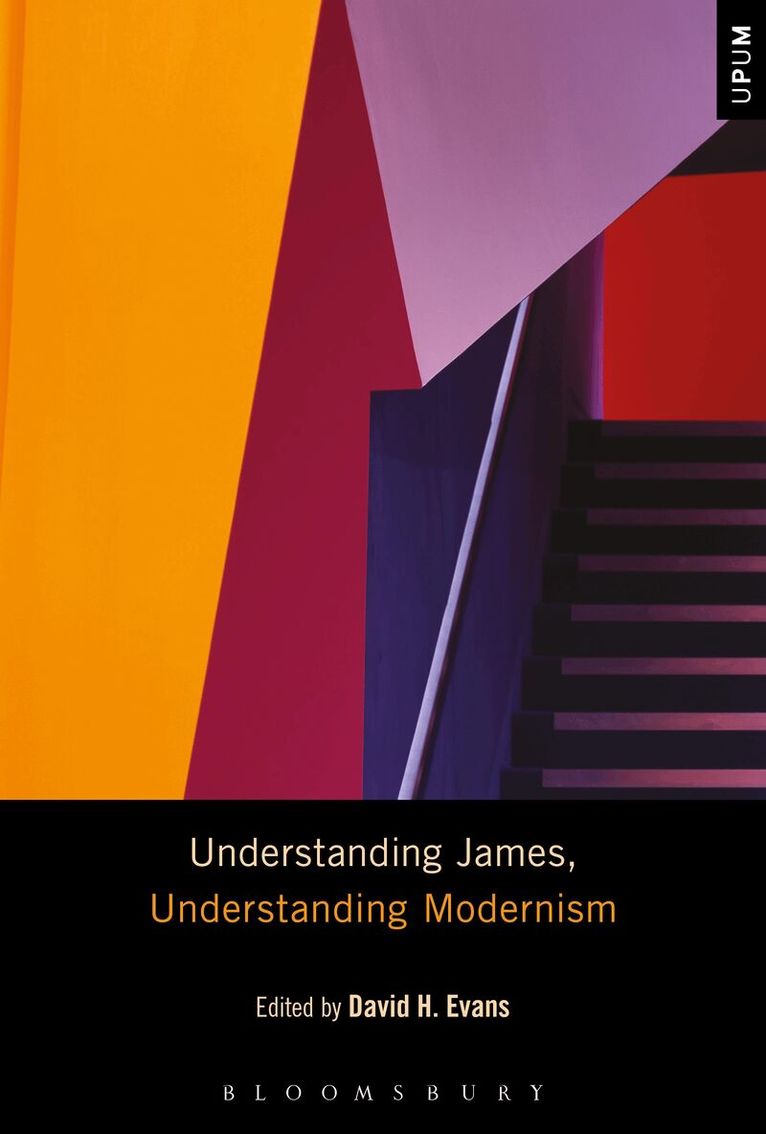
    Understanding James, Understanding Modernism

    AvDavid H. Evans

    Inbunden, Engelska, 2017

    Del i serien Understanding Philosophy, Understanding Modernism

    2 243 kr

    Beställningsvara. Skickas inom 10-15 vardagar. Fri frakt över 249 kr.

    Beskrivning

    Psychologist, philosopher, teacher, writer—William James stood closer than any other thinker to the center of the confluence of intellectual and artistic forces that defined the culture of modernism. The outstanding feature of this volume lies in its intent to investigate James’s influence on both American and International Modernism. It provides, on the one hand, a multifaceted introduction to students of history, philosophy, and culture, and on the other, a compendium of some of the most up-to-date thinking on this central figure.James’s first book, Principles of Psychology (1890) immediately established James as the leading psychologist of his time, at a moment in history when psychology seemed to offer the promise of finding some definitive answers to eternal philosophical conundra. James’s innovations would register a clear effect on much modernist art, most evidently in the stylistic prose experiments of James Joyce, Virginia Woolf, and their imitators. James’s tentative skepticism concerning the concept of consciousness as such, and the post-Cartesian ego that was its foundation, also anticipates the questioning of the subject that would be the theme of much modern, and indeed postmodern thought. The contributors to this volume explore James’s most essential texts as well as his influence on contemporary writers, artists, and thinkers. The final section is a glossary of James’s key terms, with entries written by leading experts.

    Produktinformation

    • Utgivningsdatum:2017-04-20
    • Mått:152 x 229 x 22 mm
    • Vikt:603 g
    • Format:Inbunden
    • Språk:Engelska
    • Serie:Understanding Philosophy, Understanding Modernism
    • Antal sidor:328
    • Förlag:Bloomsbury Publishing Plc
    • ISBN:9781501302749

    Utforska kategorier

    • Kulturvetenskap inom Samhälle och politik
    • Psykologiska teorier och skolor inom Psykologi och pedagogik
    • Filosofiska discipliner inom Filosofi och religion

    Mer om författaren

    David H. Evans is Associate Professor of English at Dalhousie University, Canada. He is the author of William Faulkner, William James, and the American Pragmatic Tradition (2008) and co-editor of America and Violence, a special issue of the Canadian Review of American Studies (2008).

    Recensioner i media

    Understanding James, Understanding Modernism collects into a single volume an impressive set of essays by both well-established and emerging experts guiding us through James's entire philosophy, viewed through the prism of literary and cultural modernism. Many of James's well-known ideas—including pragmatism, pluralism, philosophical temperaments, radical empiricism, stream of thought, and the will to believe—are illuminated in strikingly novel ways in this context. It turns out that modernism, emphasizing temporality, change, and the 'flux' of reality in contrast to fixity, abstraction, and unchanging essences, captures much of what is central to James's basic pragmatist, pluralist, and empiricist approach. The book offers an astonishing breadth and coverage, a plurality of perspectives on his thought that James himself would have admired.

    Innehållsförteckning

    • Series PrefaceList of AbbreviationsIntroduction: Unstiffening All Our Theories: William James and the Culture of ModernismDavid H. Evans, Dalhousie University, CanadaPart 1: Conceptualizing James1 The Character of ConsciousnessOwen Flanagan and Heather Wallace, Duke University, USA 2 Redeeming the Wild Universe: William James’s Will to BelieveJohn J. Stuhr, Emory University, USA3 The Psychology of Religion: William James’s The Varieties of Religious ExperienceMichael Bacon, Royal Holloway, University of London, UK4 The Human Contribution: James and Modernity in Pragmatism and The Meaning of TruthAlan Malachowski, Stellenbosch University, South Africa5 “Ever Not Quite!”: William James’s A Pluralistic UniverseBarry Allen, McMaster University, Canada6 James’s Radical EmpiricismJames Campbell, University of Toledo, USAPart 2: James and Modernist Culture7 James and Bergson: Fighting the Beast Intellectualism with MetaphorsRosa Slegers, Babson College, USA8 William James, Henry James and the Turn Toward ModernismJill Kress Karn, Villanova University, USA9 “Never Reject Anything. Nothing Has Been Proved”: William James and Gertrude Stein on Time and LanguageDavid H. Evans, Dalhousie University, Canada10 The Varieties of Robert Frost’s Religious ExperienceMark Richardson, Doshisha University, Japan11 Notes Toward the Specious Present: James and StevensKristen Case, University of Maine at Farmington, USA12 Modernist Figures and James’s Pluralistic UniversePatricia Rae, Queen's University, Canada13 William James’s Stream of Consciousness and the River of the Unconscious in Joyce and ProustGian Balsamo, Stanford University, USA14 “That skilful but slow-moving arranger”: Habit in James and ProustLisi Schoenbach, University of Tennessee, USA15 William James and Italian PragmatismGiovanni Maddalena, University of Molise, Italy, and Michela Bella, Università degli Studi Roma Tre, Italy16 James’s Pluralism and the Problems of Modern Political and Social ThoughtRobert Danisch, University of Waterloo, CanadaPart 3: Glossary17 James on Chance and IndeterminacyKyle Bromhall, University of Guelph, Canada18 James on HabitLisi Schoenbach, University of Tennessee, USA19 James on MoralityDavid Rondel, University of Nevada, USA20 James on Philosophical TemperamentsTom Donaldson21 James on PluralismSusan Dieleman, University of Saskatchewan, Canada22 James on PragmatismColin Koopman, University of Oregon, USA23 James on Psychical PhenomenaErmine Algaier IV, Harvard University, USA24 James on Pure ExperienceJoel Krueger, University of Exeter, UK25 James on Radical EmpiricismLoren Goldman, University of Pennslyvania, USA26 James on the Reinstatement of the VagueRosa Slegers, Babson College, USA27 James on Religious ExperienceMichael Bacon, Royal Holloway, University of London, UK28 James on the Stream of ThoughtAlexis Dianda, The New School, USA29 James on Time and the Specious PresentDavid H. Evans, Dalhousie University, Canada30 James on the Will to BelieveMark Richardson, Doshisha University, JapanNotes on ContributorsIndex