• Fri frakt över 249 kr
  • •
  • Snabba leveranser
  • •
  • Billiga böcker
Kundservice

Du är på sajten för privatpersoner.

Företag, bibliotek eller offentlig verksamhet?

Du handlar på classic.bokus.com, där alla dina funktioner finns intakta.
Till classic.bokus.com
Bokus logotyp. Gå till startsidan.
  • Erbjudanden
  • Nyheter
  • Student
  • Topplistor
  • Barn & ungdom
  • Bokus Play
  • E-böcker
  • Pocketböcker
  • Spel & pussel

10% rabatt på allt med kod NYSTART10 →

Sidfot

Mina sidor

    Hjälp

    • Kundservice
    • Vanliga frågor och svar
    • Frakt och leverans
    • Retur vid ångerrätt
    • Reklamera vara
    • Betalning
    • Köpvillkor
    • Allmänna villkor
    • Information om webbplatsens tillgänglighet

    Om Bokus

    • Om oss
    • Pressrum
    • För studenter
    • För företag
    • För bibliotek och offentlig verksamhet
    • För leverantörer
    • Hållbarhet

    Populärt

    • Aktuella erbjudanden
    • Presentkort
    • Studentlitteratur
    • Nya böcker
    • Topplistor
    • Signerade böcker
    • Engelska böcker

    Inspiration

    • Boktips
    • BookTok
    • Populära bokserier
    • Barnbokskaraktärer
    • Populära författare
    Logotyp för Bokus
    Följ oss på Facebook (extern länk)Följ oss på Instagram (extern länk)Följ oss på YouTube (extern länk)Följ oss på TikTok (extern länk)
    bokus @ CookiesAnpassa cookiesIntegritetspolicyKöpvillkor
    Till Citymail hemsida (extern länk)Till Budbee hemsida (extern länk)Till Postnord hemsida (extern länk)Till Schenker hemsida (extern länk)Till Early Bird hemsida (extern länk)Till Walleys hemsida (extern länk)
    1. Samhälle och politik
    2. Samhälle och kultur
    3. Kultur och medier
    4. Medievetenskap

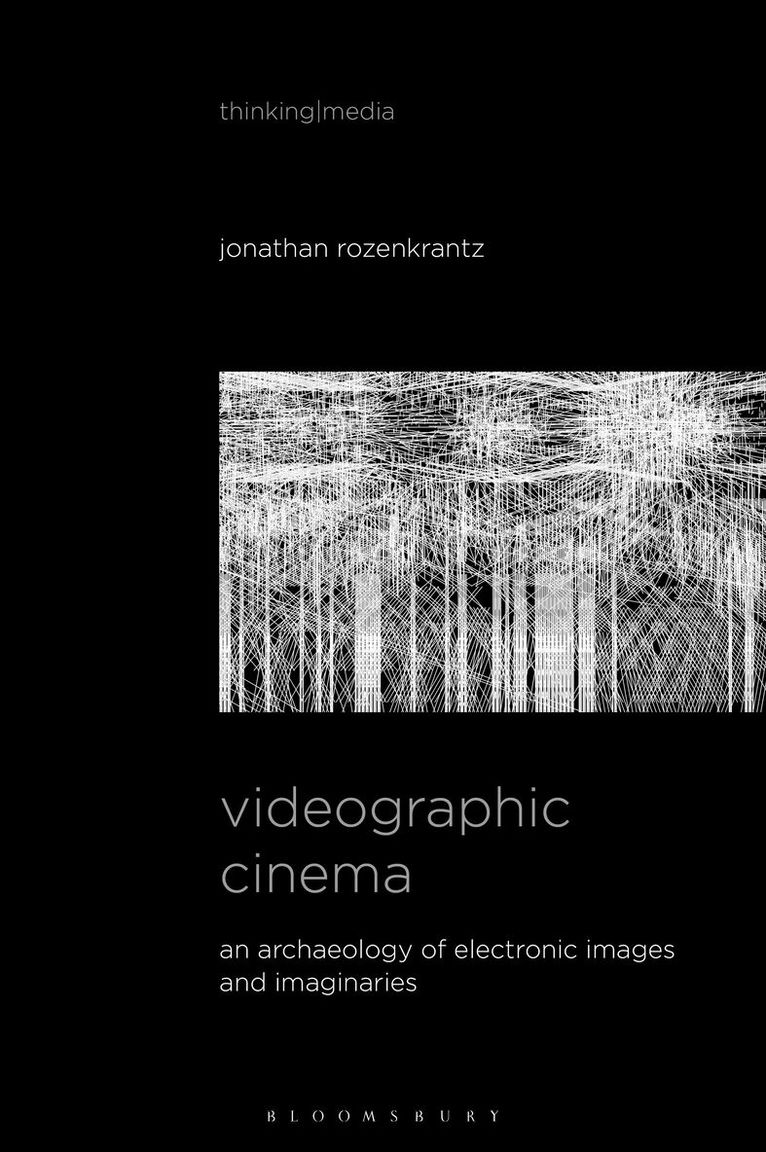
    Videographic Cinema

    An Archaeology of Electronic Images and Imaginaries

    AvJonathan Rozenkrantz,Bernd Herzogenrath

    Inbunden, Engelska, 2020

    Del i serien Thinking Media

    1 673 kr

    Beställningsvara. Skickas inom 10-15 vardagar. Fri frakt över 249 kr.

    Fler format och utgåvor

    Häftad

    451 kr

    E-bok

    483 kr

    E-bok

    483 kr

    Beskrivning

    In 1957, A Face in the Crowd incorporated live video images to warn about the future of broadcast TV. In 2015, Kung Fury was infused with analogue noise to evoke the nostalgic feeling of watching an old VHS tape. Between the two films, numerous ones would incorporate video images to imagine the implications of video practices. Drawing on media archaeology, Videographic Cinema shows how such images and imaginaries have emerged, changed and remained over time according to their shifting technical, historical and institutional conditions. Rediscovering forgotten films like Anti-Clock (1979) and reassessing ones like Lost Highway (1997), Jonathan Rozenkrantz charts neglected chapters of video history, including self-confrontation techniques in psychiatry, their complex relation with surveillance, and the invention/discovery of the “videographic psyche” by artists, therapists and filmmakers. Spanning six decades, Videographic Cinema discovers an epistemic shift from prospective imaginaries of surveillance and control conditioned on video as a medium for live transmission, to retrospective ones concerned with videotape as a recording memory. It ends by considering videographic filmmaking itself as a form of archaeology in the age of analogue obsolescence.

    Produktinformation

    • Utgivningsdatum:2020-10-01
    • Mått:140 x 218 x 18 mm
    • Vikt:400 g
    • Format:Inbunden
    • Språk:Engelska
    • Serie:Thinking Media
    • Antal sidor:232
    • Förlag:Bloomsbury Publishing Plc
    • ISBN:9781501362422

    Utforska kategorier

    • Medievetenskap inom Samhälle och politik
    • Film inom Kultur

    Mer om författaren

    Jonathan Rozenkrantz is a lecturer in the Department of Media Studies, Stockholm University, Sweden, while also working as a writer for the Swedish Film Institute.

    Recensioner i media

    This take on expanded video offers a compelling scholarly approach to the other of cinema – or more accurately, as Rozenkrantz demonstrates: we need to pay attention to the media archaeological ties and remediations that define the materiality of moving images. Videographic Cinema maps those material aesthetics, but also the second-order echoes of the medium. Rozenkrantz skilfully maps how cinema, video, and TV have contaminated each other; this mingle defines their dynamic transformations. A joy to read.

    Innehållsförteckning

    • Conditions1. What is Videographic Cinema?2. Archaeology How?Part 1 - Emergence1. Futurity Effects: The Emergence of Videographic Cinema2. Canned Life: Imagining Reality TV3. Autopticon: Video Therapy and/as SurveillancePart 2 - Remanence4. Mnemopticon: Creative Treatment of Psychic Reality5. Vilified Videophiles: Nightmares of Video's Home Invasion6. Arrière-Garde: Videographic Cinema as Media ArchaeologyConclusionsBibliographyIndex