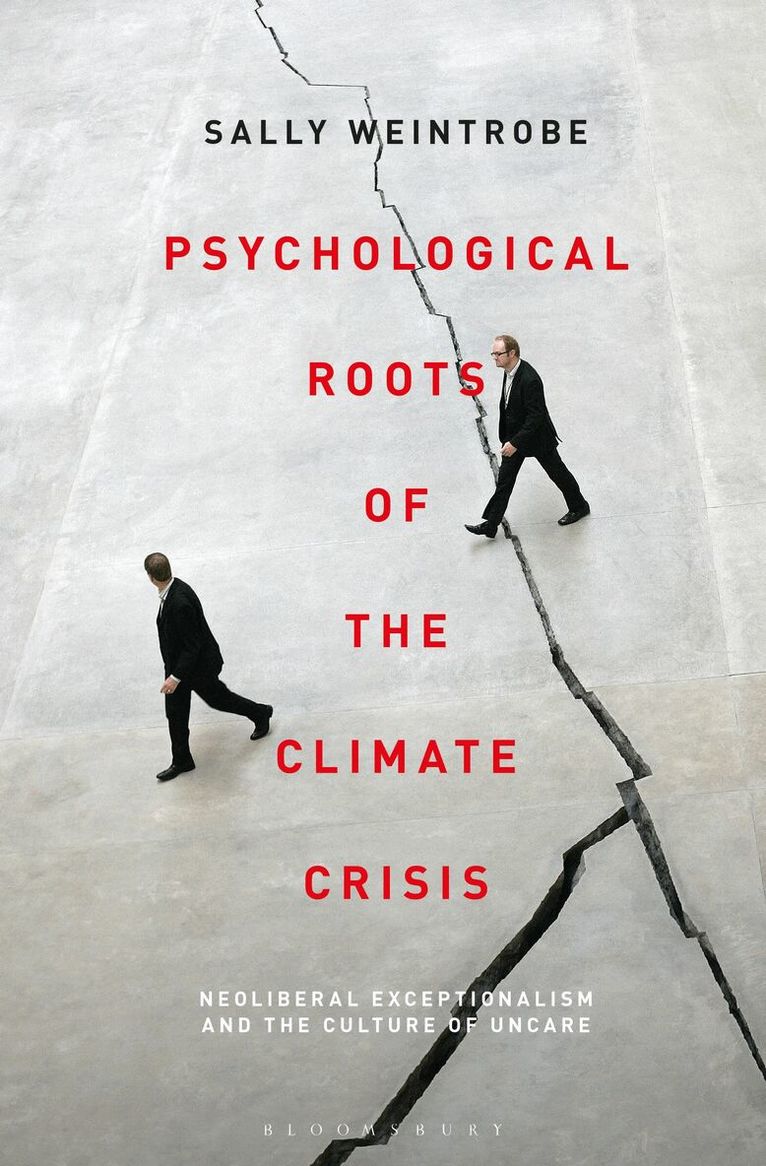
Häftad, Engelska, 2021
Psychological Roots of the Climate Crisis
Neoliberal Exceptionalism and the Culture of Uncare
Av Sally Weintrobe, Esther Rashkin, Peter L Rudnytsky, Hilary Neroni
396 kr
Beställningsvara. Skickas inom 10-15 vardagar. Fri frakt över 249 kr.
Fler format och utgåvor
Beskrivning
Produktinformation
- Utgivningsdatum: 2021-05-06
- Mått: 140 x 211 x 28 mm
- Vikt: 409 g
- Format: Häftad
- Språk: Engelska
- Serie: Psychoanalytic Horizons
- Antal sidor: 344
- Förlag: Bloomsbury Publishing Plc
- ISBN: 9781501372865
Utforska kategorier
Mer om författaren
Sally Weintrobe is a Fellow of The British Psychoanalytical Society, a founder member of the Climate Psychology Alliance and she Chairs the International Psychoanalytic Association’s (IPA’s) Committee on Climate. In 2021 she won an award from the IPA for her work on climate. Her past publications include, as editor and contributor, Engaging with Climate Change, short-listed in 2014 for the International Gradiva Prize for contributions to psychoanalysis.
Recensioner i media
Among the lessons Weintrobe’s book holds for climate scientists is that human vulnerability to climate change cannot be measured on a simple quantitative scale running from the most vulnerable populations to the most resilient. To be sure, the risks of climate change are distributed highly unevenly, with poor, marginalized communities likely to suffer the worst effects. Yet, for the privileged readers to whom Weintrobe addresses this book, vulnerability is not the opposite of resilience. Rather, feeling vulnerable is the first step toward building sustainable relationships.
Betyg & recensioner
0 recensioner
Inga recensioner tillgängliga.