• Fri frakt över 249 kr
  • •
  • Snabba leveranser
  • •
  • Billiga böcker
Kundservice

Du är på sajten för privatpersoner.

Företag, bibliotek eller offentlig verksamhet?

Du handlar på classic.bokus.com, där alla dina funktioner finns intakta.
Till classic.bokus.com
Bokus logotyp. Gå till startsidan.
  • Erbjudanden
  • Nyheter
  • Student
  • Topplistor
  • Barn & ungdom
  • Bokus Play
  • E-böcker
  • Pocketböcker
  • Spel & pussel

10% rabatt på allt med kod: NYSTART10 →

Sidfot

Mina sidor

    Hjälp

    • Kundservice
    • Vanliga frågor och svar
    • Frakt och leverans
    • Retur vid ångerrätt
    • Reklamera vara
    • Betalning
    • Köpvillkor
    • Allmänna villkor
    • Information om webbplatsens tillgänglighet

    Om Bokus

    • Om oss
    • Pressrum
    • För studenter
    • För företag
    • För bibliotek och offentlig verksamhet
    • För leverantörer
    • Hållbarhet

    Populärt

    • Aktuella erbjudanden
    • Presentkort
    • Studentlitteratur
    • Nya böcker
    • Topplistor
    • Signerade böcker
    • Engelska böcker

    Inspiration

    • Boktips
    • BookTok
    • Populära bokserier
    • Barnbokskaraktärer
    • Populära författare
    Logotyp för Bokus
    Följ oss på Facebook (extern länk)Följ oss på Instagram (extern länk)Följ oss på YouTube (extern länk)Följ oss på TikTok (extern länk)
    bokus @ CookiesAnpassa cookiesIntegritetspolicyKöpvillkor
    Till Citymail hemsida (extern länk)Till Budbee hemsida (extern länk)Till Postnord hemsida (extern länk)Till Schenker hemsida (extern länk)Till Early Bird hemsida (extern länk)Till Walleys hemsida (extern länk)
    1. Historia och arkeologi
    2. Historia
    3. Historia: särskilda händelser och ämnen
    4. Socialhistoria och kulturhistoria

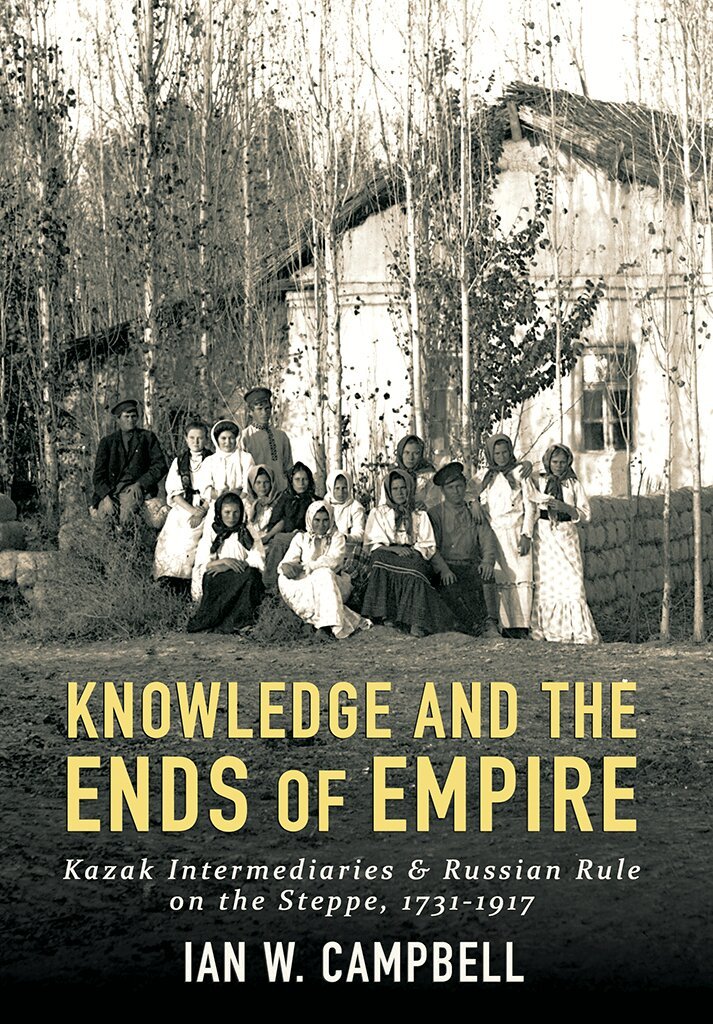
    Knowledge and the Ends of Empire

    Kazak Intermediaries and Russian Rule on the Steppe, 1731-1917

    AvIan W. Campbell

    Inbunden, Engelska, 2017

    780 kr

    Beställningsvara. Skickas inom 10-15 vardagar. Fri frakt över 249 kr.

    Beskrivning

    In Knowledge and the Ends of Empire, Ian W. Campbell investigates the connections between knowledge production and policy formation on the Kazak steppes of the Russian Empire. Hoping to better govern the region, tsarist officials were desperate to obtain reliable information about an unfamiliar environment and population. This thirst for knowledge created opportunities for Kazak intermediaries to represent themselves and their landscape to the tsarist state. Because tsarist officials were uncertain of what the steppe was, and disagreed on what could be made of it, Kazaks were able to be part of these debates, at times influencing the policies that were pursued.Drawing on archival materials from Russia and Kazakhstan and a wide range of nineteenth-century periodicals in Russian and Kazak, Campbell tells a story that highlights the contingencies of and opportunities for cooperation with imperial rule. Kazak intermediaries were at first able to put forward their own idiosyncratic views on whether the steppe was to be Muslim or secular, whether it should be a center of stock-raising or of agriculture, and the extent to which local institutions needed to give way to imperial institutions. It was when the tsarist state was most confident in its knowledge of the steppe that it committed its gravest errors by alienating Kazak intermediaries and placing unbearable stresses on pastoral nomads. From the 1890s on, when the dominant visions in St. Petersburg were of large-scale peasant colonization of the steppe and its transformation into a hearth of sedentary agriculture, the same local knowledge that Kazaks had used to negotiate tsarist rule was transformed into a language of resistance.

    Produktinformation

    • Utgivningsdatum:2017-03-07
    • Mått:152 x 229 x 27 mm
    • Vikt:907 g
    • Format:Inbunden
    • Språk:Engelska
    • Antal sidor:288
    • Förlag:Cornell University Press
    • ISBN:9781501700798
    • Utmärkelser:Central Eurasian Studies Society Book Prize

    Utforska kategorier

    • Socialhistoria och kulturhistoria inom Historia och arkeologi
    • Europas historia inom Historia och arkeologi

    Mer om författaren

    Ian W. Campbell is Assistant Professor of History at the University of California, Davis.

    Recensioner i media

    Campbell makes a valuable contribution to the understanding of Russian imperial rule of the Kazakh Steppe.... This fascinating study weaves through the complexities of gathering, disseminating, and leveraging the empire's growing bureaucratic and scholarly knowledge base of the steppe to more effectively develop and exploit the territory. Joining a group of excellent works from the last decade focused on late-imperial Russian colonial rule in Central Asia, such as Alexander Morrison's Russian Rule in Samarkand, 1868–1910: A Comparison with British India (2005) and Jeff Sahadeo's Russian Colonial Society in Tashkent, 1865–1923 (CH, Mar'08, 45-3949), Campbell's meticulously researched work highlights how this era of at-times cooperative acquisition of knowledge devolved into a one-sided colonial enterprise that led to chaos for the Kazakh Steppe at the end of Romanov rule.(Choice) Makes a strong intervention into work on the Russian Empire.... On the whole, Knowledge and the Ends of Empire is a well-written study.... Campbell skillfully brings insights from the literature on empire to bear on the Kazak steppe. His decision to address the relationships of knowledge and power as expressed in assessments of nomadic pastoralism, land norms, and economic practices yields an important and original view.(The Russian Review) Campbell assembles wonderfully rich biographies of many leading Kazakh figures.... the fascinating details that Campbell offers on many of these figures, such as their noble origins or claims to belong to sacred lineages, raise questions as to how the composition of this group of intermediaries, as Campbell defines it, changed over the course of the... period that Campbell covers in his study and how, in turn, Russian imperial rule altered Kazakh political culture. Like all good books, Campbell's study uncovers new questions for other researchers to take up.(Canadian American Slavic Studies) This is an impressively researched and argued study of the construction of knowledge by an imperial power with the ultimate aim of subjugating and transforming an outlying region with an environment, population, way of life, economy and culture that was quite different to the empire's heartland. His book merits wide readership and will facilitate the growing assimilation of such studies of Russian Empire and Soviet Union into global environmental histories.(Environment and History) Knowledge and the Ends of Empire does succeed in adding to the picture. Any fresh engagement with the Qazaq colonial period is valuable, but perhaps more thought-provoking is the book's joust with the hoary question of the empire's col- lapse.(Slavic Review) The book contributes unquestionably to the academic literature on Russian colonialism. It is a must-read for specialists and graduate students focusing on Russian eastward colonial expansion in general, and Central Eurasia in particular. Most certainly, the book yields an exceptionally compelling account on the role of the Kazak intermediaries in shaping imperial policies.(Acta Via Serica)

    Innehållsförteckning

    • Introduction1. Seeing Like a Half-Blind State: Getting to Know the Central Eurasian Steppe, 1731–1840s2. Information Revolution and Administrative Reform, ca. 1845–18683. An Imperial Biography: Ibrai Altynsarin as Ethnographer and Educator, 1841–18894. The Key to the World's Treasures: "Russian Science," Local Knowledge, and the Civilizing Mission on the Siberian Steppe5. Norming the Steppe: Statistical Knowledge and Tsarist Resettlement, 1896–19176. A Double Failure: Epistemology and the Crisis of a Settler Colonial EmpireConclusion