• Fri frakt över 249 kr
  • •
  • Snabba leveranser
  • •
  • Billiga böcker
Kundservice

Du är på sajten för privatpersoner.

Företag, bibliotek eller offentlig verksamhet?

Du handlar på classic.bokus.com, där alla dina funktioner finns intakta.
Till classic.bokus.com
Bokus logotyp. Gå till startsidan.
  • Erbjudanden
  • Nyheter
  • Student
  • Topplistor
  • Barn & ungdom
  • Bokus Play
  • E-böcker
  • Pocketböcker
  • Spel & pussel

10% rabatt på allt med kod: NYSTART10 →

Sidfot

Mina sidor

    Hjälp

    • Kundservice
    • Vanliga frågor och svar
    • Frakt och leverans
    • Retur vid ångerrätt
    • Reklamera vara
    • Betalning
    • Köpvillkor
    • Allmänna villkor
    • Information om webbplatsens tillgänglighet

    Om Bokus

    • Om oss
    • Pressrum
    • För studenter
    • För företag
    • För bibliotek och offentlig verksamhet
    • För leverantörer
    • Hållbarhet

    Populärt

    • Aktuella erbjudanden
    • Presentkort
    • Studentlitteratur
    • Nya böcker
    • Topplistor
    • Signerade böcker
    • Engelska böcker

    Inspiration

    • Boktips
    • BookTok
    • Populära bokserier
    • Barnbokskaraktärer
    • Populära författare
    Logotyp för Bokus
    Följ oss på Facebook (extern länk)Följ oss på Instagram (extern länk)Följ oss på YouTube (extern länk)Följ oss på TikTok (extern länk)
    bokus @ CookiesAnpassa cookiesIntegritetspolicyKöpvillkor
    Till Citymail hemsida (extern länk)Till Budbee hemsida (extern länk)Till Postnord hemsida (extern länk)Till Schenker hemsida (extern länk)Till Early Bird hemsida (extern länk)Till Walleys hemsida (extern länk)
    1. Historia och arkeologi
    2. Historia
    3. Historia: särskilda händelser och ämnen
    4. Socialhistoria och kulturhistoria

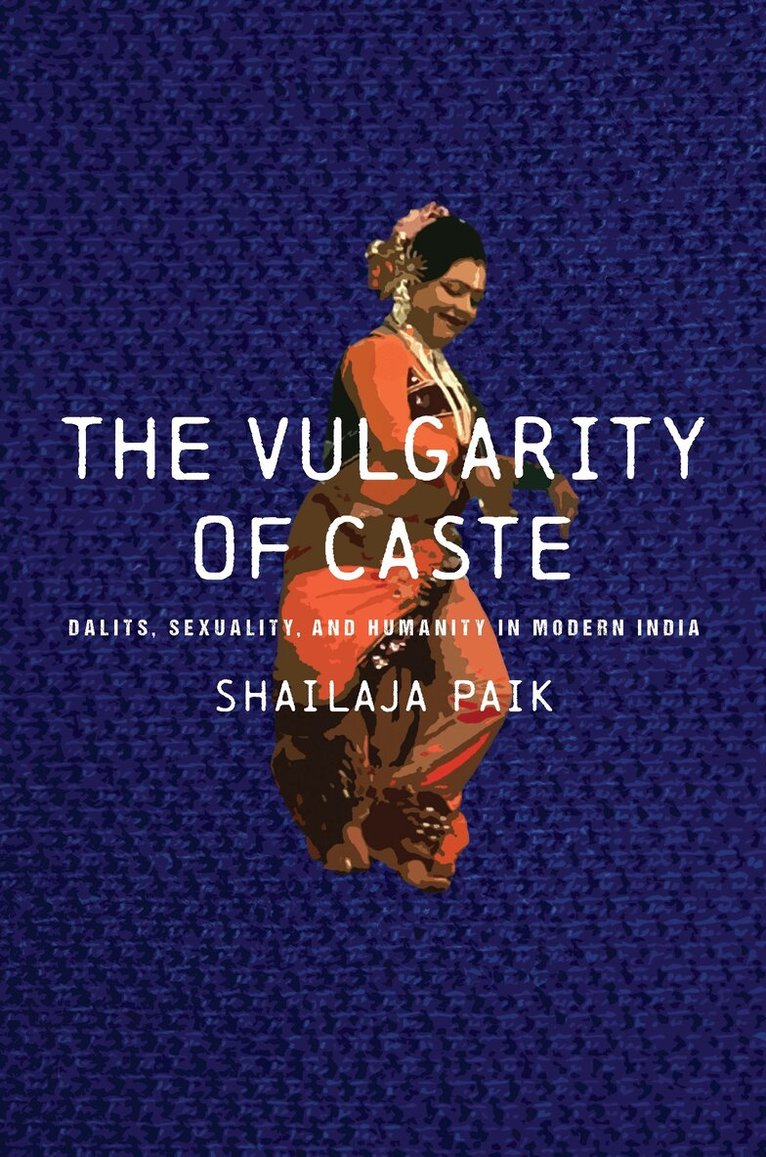
    Vulgarity of Caste

    Dalits, Sexuality, and Humanity in Modern India

    AvShailaja Paik

    Inbunden, Engelska, 2022

    Del i serien South Asia in Motion

    1 078 kr

    Beställningsvara. Skickas inom 5-8 vardagar. Fri frakt över 249 kr.

    Fler format och utgåvor

    Häftad

    337 kr

    E-bok

    553 kr

    Beskrivning

    This book offers the first social and intellectual history of Dalit performance of Tamasha—a popular form of public, secular, traveling theater in Maharashtra—and places Dalit Tamasha women who represented the desire and disgust of the patriarchal society at the heart of modernization in twentieth century India. Drawing on ethnographies, films, and untapped archival materials, Shailaja Paik illuminates how Tamasha was produced and shaped through conflicts over caste, gender, sexuality, and culture. Dalit performers, activists, and leaders negotiated the violence and stigma in Tamasha as they struggled to claim manuski (human dignity) and transform themselves from ashlil (vulgar) to assli (authentic) and manus (human beings). Building on and departing from the Ambedkar-centered historiography and movement-focused approach of Dalit studies, Paik examines the ordinary and everydayness in Dalit lives. Ultimately, she demonstrates how the choices that communities make about culture speak to much larger questions about inclusion, inequality, and structures of violence of caste within Indian society, and opens up new approaches for the transformative potential of Dalit politics and the global history of gender, sexuality, and the human.

    Produktinformation

    • Utgivningsdatum:2022-10-25
    • Mått:152 x 229 x 30 mm
    • Vikt:739 g
    • Format:Inbunden
    • Språk:Engelska
    • Serie:South Asia in Motion
    • Antal sidor:422
    • Förlag:Stanford University Press
    • ISBN:9781503632387

    Utforska kategorier

    • Socialhistoria och kulturhistoria inom Historia och arkeologi
    • Asiens historia inom Historia och arkeologi
    • Genusvetenskap inom Samhälle och politik

    Mer om författaren

    Shailaja Paik is Associate Professor of History at the University of Cincinnati. She is the author of Dalit Women's Education in Modern India: Double Discrimination (2014).

    Recensioner i media

    "In this brilliant original account of women in Tamasha, Shailaja Paik argues that the extractive sexual economy of caste rests on their desired as well as derided labor. Drawing on rare archival sources and careful ethnography, she calls attention to how the women negotiate stigma, especially in relation to a Dalit emancipatory politics, embarrassed by their 'sexual excess.'"—V. Geetha, author of Bhimrao Ramji Ambedkar and the Question of Socialism in India "Paik not only breaks new ground but also builds a foundation. Combining ethnography, archival work, and critical readings of key thinkers, she offers a dazzling interdisciplinary exploration of how Tamasha serves as a metonym for the ways gender, caste, and power construct identity in caste-patriarchal society. This work is one of the many reasons Paik is at the forefront of Dalit feminist studies and why she is one of the most innovative historians of South Asia writing today."—Christian Lee Novetzke, University of Washington "Paik repeatedly identifies herself as a feminist Dalit and attributes this to her unprecedented anthropological access to, and understanding of, contemporary Tamasha artists. She also draws on Marathi-language lyrics, articles, advertisements, and other sources never before available in English. Recommended."—M. H. Fisher, CHOICE "While demonstrating the 'agency' of Tamashe women as a product of complex, contingent historical processes, Paik makes a significant argument about the mutually constitutive binaries of touchability/untouchability, brahmin/untouchable, ashlil/aslee, housewife/prostitute, among others. In doing so, she offers conceptual resources for Indian feminist and Dalit thought to deal with the impasse of the 'prostitute' question. Equally important, Paik develops her earlier emphasis on contingency, context and rupture of Dalit women's agency to illuminate the contingency and temporality of Ambedkar's thinking around manuski, family and caste labour and the material limits that history imposes on its actualisation."—A. Suneetha, Contributions to Indian Sociology "As a path breaking book within Dalit, caste and gender studies, [The Vulgarity of Caste] opens new terrain within the larger discipline of cultural studies."—Ali Ahsan, Cultural Studies "This book not only makes an original contribution to debates on the intersectionality of caste and gender but also challenges the mainstream privileged position of feminists and presents a perspective from the margins."—Chinnaiah Jangam, Pacific Affairs "[The] Vulgarity of Caste reworks our understanding of caste, asserting that caste cannot be studied by divorcing it from questions of gender, region, labour, and the regulation of sexuality. Paik's research rests heavily on the vernacular print archive as well as on photography and cinema. She demonstrates a careful and empathetic way of carrying out ethnography, which does not seem like an overreach into the private lives of her subject."—Kaustubh Naik, Nidān: International Journal for Indian Studies "[The Vulgarity of Caste] offers several fascinating insights, none more incisive than the production and reproduction of the sex-gender-caste complex in modern India through the bodies of the Dalit tamasha women."—Juned Shaikh, American Historical Review

    Innehållsförteckning

    • Introduction: Performing Precarity: Sex-Gender-Caste/Ashlil-Manuski-Assli1. Policing Dalits and Producing Tamasha in Maharashtra2. Constructing Caste, Desire, and Danger3. Ambedkar, Manuski, and Reconstructing Dalit Life-Worlds, 1920-19564. Singing Resistance and Rehumanizing Poetics-Politics, Post-19305. Claiming Authenticity and Becoming Marathi, Post-19606. Forging New Futures and Measures of HumanityConclusion.: Queering the "Vulgar": Tamasha without Women