• Fri frakt över 249 kr
  • •
  • Snabba leveranser
  • •
  • Billiga böcker
Kundservice

Du är på sajten för privatpersoner.

Företag, bibliotek eller offentlig verksamhet?

Du handlar på classic.bokus.com, där alla dina funktioner finns intakta.
Till classic.bokus.com
Bokus logotyp. Gå till startsidan.
  • Erbjudanden
  • Nyheter
  • Student
  • Topplistor
  • Barn & ungdom
  • Bokus Play
  • E-böcker
  • Pocketböcker
  • Spel & pussel

10% studentrabatt med kod TERM26

Sidfot

Mina sidor

    Hjälp

    • Kundservice
    • Vanliga frågor och svar
    • Frakt och leverans
    • Retur vid ångerrätt
    • Reklamera vara
    • Betalning
    • Köpvillkor
    • Allmänna villkor
    • Information om webbplatsens tillgänglighet

    Om Bokus

    • Om oss
    • Pressrum
    • För studenter
    • För företag
    • För bibliotek och offentlig verksamhet
    • För leverantörer
    • Hållbarhet

    Populärt

    • Aktuella erbjudanden
    • Presentkort
    • Studentlitteratur
    • Nya böcker
    • Topplistor
    • Signerade böcker
    • Engelska böcker

    Inspiration

    • Boktips
    • BookTok
    • Populära bokserier
    • Barnbokskaraktärer
    • Populära författare
    Logotyp för Bokus
    Följ oss på Facebook (extern länk)Följ oss på Instagram (extern länk)Följ oss på YouTube (extern länk)Följ oss på TikTok (extern länk)
    bokus @ CookiesAnpassa cookiesIntegritetspolicyKöpvillkor
    Till Citymail hemsida (extern länk)Till Budbee hemsida (extern länk)Till Postnord hemsida (extern länk)Till Schenker hemsida (extern länk)Till Early Bird hemsida (extern länk)Till Walleys hemsida (extern länk)
    1. Psykologi och pedagogik
    2. Pedagogik
    3. Undervisning i specifika ämnen

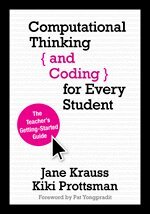
    Computational Thinking and Coding for Every Student

    The Teacher’s Getting-Started Guide

    AvJane Krauss,Kiki Prottsman

    Häftad, Engelska, 2017

    392 kr

    Beställningsvara. Skickas inom 3-6 vardagar. Fri frakt över 249 kr.

    Beskrivning


    Empower tomorrow’s tech innovators


    Our students are avid users and consumers of technology. Isn’t it time that they see themselves as the next technological innovators, too?  Computational Thinking and Coding for Every Student is the beginner’s guide for K-12 educators who want to learn to integrate the basics of computer science into their curriculum. Readers will find 

    • Practical strategies for teaching computational thinking and the beginning steps to introduce coding at any grade level, across disciplines, and during out-of-school time
    • Instruction-ready lessons and activities for every grade
    • Specific guidance for designing a learning pathway for elementary, middle, or high school students
    • Justification for making coding and computer science accessible to all
    • A glossary with definitions of key computer science terms, a discussion guide with tips for making the most of the book,  and companion website with videos, activities, and other resources 

    Momentum for computer science education is growing as educators and parents realize how fundamental computing has become for the jobs of the future. This book is for educators who see all of their students as creative thinkers and active contributors to tomorrow’s innovations.

    “Kiki Prottsman and Jane Krauss have been at the forefront of the rising popularity of computer science and are experts in the issues that the field faces, such as equity and diversity. In this book, they’ve condensed years of research and practitioner experience into an easy to read narrative about what computer science is, why it is important, and how to teach it to a variety of audiences. Their ideas aren’t just good, they are research-based and have been in practice in thousands of classrooms…So to the hundreds and thousands of teachers who are considering, learning, or actively teaching computer science—this book is well worth your time.”
    Pat Yongpradit
    Chief Academic Officer, Code.org

    Produktinformation

    • Utgivningsdatum:2017-02-06
    • Mått:175 x 251 x 15 mm
    • Vikt:409 g
    • Format:Häftad
    • Språk:Engelska
    • Antal sidor:208
    • Upplaga:1
    • Förlag:SAGE Publications
    • ISBN:9781506341286

    Utforska kategorier

    • Undervisning i specifika ämnen inom Psykologi och pedagogik
    • Material och digital teknik i undervisningen inom Psykologi och pedagogik

    Mer om författaren

    Jane Krauss is a teacher, author and consultant who does curriculum and program development designed to increase participation of girls and other underrepresented groups in computer science. She will gladly tell you why computational thinking is the fundamental literacy of our technical age! Jane also writes and offers professional development internationally around the topic of project-based learning with technology. With Suzie Boss, she is coauthor of Reinventing Project-Based Learning: Your Field Guide to Real World Projects in the Digital Age (2nd ed., 2014, ISTE) and Thinking Through Project-Based Learning: Guiding Deeper Inquiry (2013, Corwin). In her free time, Jane enjoys dabbling in glasswork and mosaics, and keeps fit running and hiking on woodland trails just outside her door in Eugene, Oregon.Kiki Prottsman is an expert in computer science education and an advocate for equity and inclusion in STEM fields. With over 15 years of experience teaching and developing educational programs, Kiki has made significant contributions to the field of CSEd. She is also an author of several other books on computer science which have been widely praised for their innovative and engaging approach.Kiki is currently Director of Education for Microsoft MakeCode, an organization that works to increase access to computer science in schools across the United States. In this role, she oversees the development of curriculum and resources as well as training programs for teachers. She also builds and manages partnerships with stakeholders worldwide.Kiki speaks internationally on the subject of computer science. She is known for her engaging and practical approach to teaching and has been recognized with awards such as the Golden Halo Award for Best Education Campaign and Stevie’s Female Innovator of the Year award.In addition to her work in computer science education, Kiki is an outdoors enthusiast and enjoys hiking, kayaking, and camping, as well as customizing her 4×4 SUV to look like it belongs in a Marvel movie.

    Recensioner i media

    "Change in education and schooling comes in waves, and coding, computer science, and computational thinking represent the next very big wave. This very readable book will introduce teachers, parents and students to the future."

    Innehållsförteckning

    • ForewordPrefaceWhy This Book? Why Now?What to ExpectA Note About PreparationLights, Camera, Action!AcknowledgmentsAbout the AuthorsPart 1: StoryboardingChapter 1. An Introduction to Computer ScienceComputer Science Is Within YouAn Introduction to Computational ThinkingWhat Computer Science IsWhat Computer Science Is NotChapter 2. Why Kids Should Have the Opportunity to LearnWhat Computer Science Really TeachesA Look BackIt Would Be Irresponsible Not to Introduce Computer SciencePart 2: Casting CallChapter 3. Try Your Hand at CodingTime Well SpentKey Strategy: Pair ProgrammingTeacher Warm-ups and ExercisesChapter 4. Getting Started in the ClassroomStart Low-TechEncourage MovementFoster Critical ConsumptionProtect Privacy and Prevent CyberbullyingAchieve AccessBanish AnxietyChapter 5. Dos and Don’ts of Teaching Computer Science1. DON’T Expect to Be an Expert2. DO Let Your Class Explore3. DO Let Your Class Share4. DO Give Kids Time to Move5. DO Get Creative6. DON’T Be a Bore7. DO Relate Computer Science to Students’ Lives8. DON’T Expect Cookie-Cutter Results9. DO Set Students up for Success10. DO Treat CS as an Art11. DO Give It a TryPart 3: In ProductionChapter 6. Activities That Foster Computational ThinkingThinking ComputationallyDigging Deeper Into Computational ThinkingChapter 7. DecompositionDecomposition ResourcesLesson Plan: Break It Down!Decomposition: Break It Up!Chapter 8. Pattern Recognition (With Pattern Matching)Pattern Recognition ResourcesLesson Plan: Divine PatternsChapter 9. AbstractionAbstraction ResourcesLesson Plan: So AbstractSample StoriesChapter 10. AutomationAutomation ResourcesLesson Plan: Algorithms and Automation— A Compliment GeneratorA Last Word on Computational ThinkingWhat’s Next?Chapter 11. Activities That Foster Spatial ReasoningSpatial Abilities Tied to Success in STEM“Spatialize” Your TeachingWrapping It UpChapter 12: Making With CodeMaking Within STEAM StudiesDesign for Design Thinking“Freestyle” MakingPart 4: Your Feature PresentationChapter 13. Designing a Curriculum Continuum Across K–12Chapter 14. Important Ideas Across All GradesPair ProgrammingLearning to LearnResources at the ReadyEquitable PracticesChapter 15. The Elementary PathwayKindergarten and First GradeSecond and Third GradesFourth and Fifth GradesOut-of-School Learning in the Elementary GradesElementary Computer Science ResourcesCurriculum: Build an Alligator!Chapter 16. The Middle School PathwayOut-of-School Time in the Middle GradesMiddle School Computer Science ResourcesCurriculum: Create Your Own FortuneChapter 17. The High School PathwayOut-of-School Time in High SchoolHigh School Computer Science ResourcesCurriculum: Roll the DiceChapter 18. Adapting Lessons for Your Class1. The Lessons Are Only Suggestions2. Adapt a Lesson for Younger Students3. Adapt a Lesson for Older Students4. Create a Lesson to Squeeze Into Other CurriculaChapter 19. What People Are Doing and How They Are Doing It WellTaking It to the Streets: Build Community Enthusiasm for Computer ScienceTestimonialsAfterword: Opportunities AboundDiscussion GuideGlossaryReferencesIndex