• Fri frakt över 249 kr
  • •
  • Snabba leveranser
  • •
  • Billiga böcker
Kundservice

Du är på sajten för privatpersoner.

Företag, bibliotek eller offentlig verksamhet?

Du handlar på classic.bokus.com, där alla dina funktioner finns intakta.
Till classic.bokus.com
Bokus logotyp. Gå till startsidan.
  • Erbjudanden
  • Nyheter
  • Student
  • Topplistor
  • Barn & ungdom
  • Bokus Play
  • E-böcker
  • Pocketböcker
  • Spel & pussel

10% rabatt på allt med kod: NYSTART10 →

Sidfot

Mina sidor

    Hjälp

    • Kundservice
    • Vanliga frågor och svar
    • Frakt och leverans
    • Retur vid ångerrätt
    • Reklamera vara
    • Betalning
    • Köpvillkor
    • Allmänna villkor
    • Information om webbplatsens tillgänglighet

    Om Bokus

    • Om oss
    • Pressrum
    • För studenter
    • För företag
    • För bibliotek och offentlig verksamhet
    • För leverantörer
    • Hållbarhet

    Populärt

    • Aktuella erbjudanden
    • Presentkort
    • Studentlitteratur
    • Nya böcker
    • Topplistor
    • Signerade böcker
    • Engelska böcker

    Inspiration

    • Boktips
    • BookTok
    • Populära bokserier
    • Barnbokskaraktärer
    • Populära författare
    Logotyp för Bokus
    Följ oss på Facebook (extern länk)Följ oss på Instagram (extern länk)Följ oss på YouTube (extern länk)Följ oss på TikTok (extern länk)
    bokus @ CookiesAnpassa cookiesIntegritetspolicyKöpvillkor
    Till Citymail hemsida (extern länk)Till Budbee hemsida (extern länk)Till Postnord hemsida (extern länk)Till Schenker hemsida (extern länk)Till Early Bird hemsida (extern länk)Till Walleys hemsida (extern länk)
    1. Filosofi och religion
    2. Filosofi
    3. Filosofiska discipliner

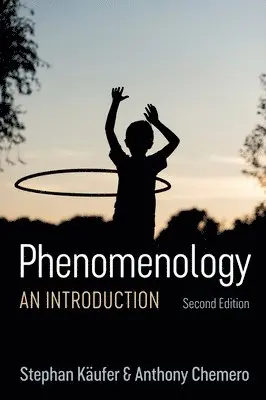
    Phenomenology

    An Introduction

    AvStephan Käufer,Anthony Chemero

    Häftad, Engelska, 2021

    253 kr

    Beställningsvara. Skickas inom 5-8 vardagar. Fri frakt över 249 kr.

    Fler format och utgåvor

    Inbunden

    764 kr

    Beskrivning

    A classic in its field, this comprehensive book introduces the core history of phenomenology and assesses its relevance to contemporary psychology, philosophy of mind, and cognitive science. It provides a jargon-free explanation of central themes in the works of Husserl, Heidegger, Sartre, and Merleau-Ponty. From artificial intelligence to embodiment and enactivism, Käufer and Chemero go on to trace how phenomenology has produced a valuable framework for analyzing cognition and perception, whose impact on contemporary psychological and scientific research, and philosophical debates, continues to grow.New to this second edition are a treatment of nineteenth-century precursors of experimental psychology; a detailed exploration of Husserl's analysis of the body; and a discussion of the work of Aron Gurwitsch and other philosophers and psychologists who explored the intersection of phenomenology and Gestalt psychology. The new material also includes an expanded consideration of enactivism, and an up-to-date examination of current work in phenomenologically informed cognitive science.This is an ideal introduction to phenomenology and cognitive science for the uninitiated, and will shed new light on the topic for experienced readers, showing clearly the contemporary relevance and influence of phenomenological ideas.

    Produktinformation

    • Utgivningsdatum:2021-05-21
    • Mått:152 x 226 x 23 mm
    • Vikt:431 g
    • Format:Häftad
    • Språk:Engelska
    • Antal sidor:288
    • Upplaga:2
    • Förlag:Polity Press
    • ISBN:9781509540662

    Utforska kategorier

    • Filosofiska discipliner inom Filosofi och religion

    Mer om författaren

    Stephan Käufer is John Williamson Nevin Memorial Professor of Philosophy at Franklin and Marshall College.Anthony Chemero is Distinguished Research Professor of Philosophy and Psychology at the University of Cincinnati.

    Recensioner i media

    “Käufer and Chemero have written a superb introduction to phenomenology, not merely as a chapter in intellectual history or as a gallery of great thinkers, but as a living tradition in philosophy, psychology, and cognitive science.”Taylor Carman, Professor of Philosophy, Barnard College, Columbia University“A sparklingly clear and widely insightful introduction to phenomenology for beginners – which, if we are phenomenologists, includes all of us. Highly recommended.”Gayle Salamon, Professor of English, Princeton UniversityPraise for the first edition:“A remarkably thorough and comprehensible account of the history of phenomenology that offers illuminating commentary on the work of Kant, Wundt, Husserl, Heidegger, Gestalt psychologists, Merleau-Ponty, Sartre, and Gibson.”Hubert Dreyfus, Former Professor of Philosophy, University of California, Berkeley

    Innehållsförteckning

    • AcknowledgementsList of FiguresIntroduction1 Kant: Eighteenth and Nineteenth-Century Background 1.1 Kant’s critical philosophy1.2 Intuitions and concepts1.3 The transcendental deduction1.4 Kantian themes in phenomenology 2 The Rise of Experimental Psychology2.1  Wilhelm Wundt and the rise of scientific psychology2.2 William James and functionalism2.3  The structuralism-functionalism debate3 Edmund Husserl and Transcendental Phenomenology3.1  Transcendental phenomenology3.2  Brentano3.3  Between logic and psychology3.4  Ideas3.5  The body 3.6  Phenomenology of time consciousness4 Martin Heidegger and Existential Phenomenology      4.1  The intelligibility of the everyday world4.2  Descartes and occurrentness4.3  Being-in-the-world4.4  Being-with others and the anyone4.5  The existential conception of the self4.6  Death, guilt, and authenticity5 Gestalt Psychology5.1 Gestalt criticisms of atomistic psychology5.2 Perception and the environment5.3 Influence of Gestalt psychology6 Aron Gurwitsch: Merging Gestalt Psychology and Phenomenology6.1  Phenomenology of Thematics and of the Pure Ego6.2 Others and the Social World7     Jean-Paul Sartre: Phenomenological Existentialism7.1  Transcendence of the Ego7.2  The Imagination and The Imaginary7.3  Being and Nothingness8 Maurice Merleau-Ponty: The Body and Perception8.1 Phenomenology of Perception8.2 Phenomenology, psychology, and the phenomenal field8.3 The lived body8.4 Perceptual constancy and natural objects9 Critical Phenomenology9.1 The path not taken9.2 Phenomenology and Gender9.3 Phenomenology and Race10 James J. Gibson and Ecological Psychology10.1 Gibson’s early work: Two examples10.2 The ecological approach10.3 Ecological ontology10.4 Affordances and invitations11 Hubert Dreyfus and the Phenomenological Critique of Cognitivism11.1       The cognitive revolution and cognitive science11.2 “Alchemy and artificial intelligence”11.3 What Computers Can’t Do11.4 Heideggerian artificial intelligence12 Enactivism and the Embodied Mind12.1 Embodied, Embedded, Extended, Enactive12.2 The Original Enactivism12.3 Other Enactivisms: The sensorimotor approach and radical enactivism12.4 Enactivism as a Philosophy of Nature13 Phenomenological Cognitive Science13.1 The frame problem13.2 Radical embodied cognitive science13.3 Dynamical systems theory13.4 Heideggerian cognitive science13.5 The future of scientific phenomenologyReferencesIndex