• Fri frakt över 249 kr
  • •
  • Snabba leveranser
  • •
  • Billiga böcker
Kundservice

Du är på sajten för privatpersoner.

Företag, bibliotek eller offentlig verksamhet?

Du handlar på classic.bokus.com, där alla dina funktioner finns intakta.
Till classic.bokus.com
Bokus logotyp. Gå till startsidan.
  • Erbjudanden
  • Nyheter
  • Student
  • Topplistor
  • Barn & ungdom
  • Bokus Play
  • E-böcker
  • Pocketböcker
  • Spel & pussel

10% rabatt på allt med kod NYSTART10 →

Sidfot

Mina sidor

    Hjälp

    • Kundservice
    • Vanliga frågor och svar
    • Frakt och leverans
    • Retur vid ångerrätt
    • Reklamera vara
    • Betalning
    • Köpvillkor
    • Allmänna villkor
    • Information om webbplatsens tillgänglighet

    Om Bokus

    • Om oss
    • Pressrum
    • För studenter
    • För företag
    • För bibliotek och offentlig verksamhet
    • För leverantörer
    • Hållbarhet

    Populärt

    • Aktuella erbjudanden
    • Presentkort
    • Studentlitteratur
    • Nya böcker
    • Topplistor
    • Signerade böcker
    • Engelska böcker

    Inspiration

    • Boktips
    • BookTok
    • Populära bokserier
    • Barnbokskaraktärer
    • Populära författare
    Logotyp för Bokus
    Följ oss på Facebook (extern länk)Följ oss på Instagram (extern länk)Följ oss på YouTube (extern länk)Följ oss på TikTok (extern länk)
    bokus @ CookiesAnpassa cookiesIntegritetspolicyKöpvillkor
    Till Citymail hemsida (extern länk)Till Budbee hemsida (extern länk)Till Postnord hemsida (extern länk)Till Schenker hemsida (extern länk)Till Early Bird hemsida (extern länk)Till Walleys hemsida (extern länk)
    1. Samhälle och politik
    2. Politik och statsskick
    3. Statsvetenskap och politisk teori

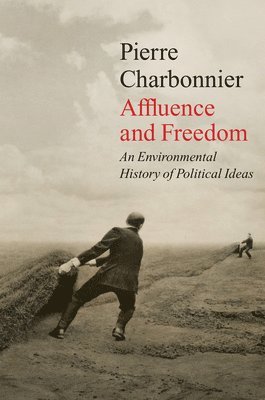
    Affluence and Freedom

    An Environmental History of Political Ideas

    AvPierre Charbonnier

    Häftad, Engelska, 2021

    322 kr

    Beställningsvara. Skickas inom 5-8 vardagar. Fri frakt över 249 kr.

    Fler format och utgåvor

    E-bok

    351 kr

    Inbunden

    762 kr

    Beskrivning

    In this pathbreaking book, Pierre Charbonnier opens up a new intellectual terrain: an environmental history of political ideas. His aim is not to locate the seeds of ecological thought in the history of political ideas as others have done, but rather to show that all political ideas, whether or not they endorse ecological ideals, are informed by a certain conception of our relationship to the Earth and to our environment.The fundamental political categories of modernity were founded on the idea that we could improve on nature, that we could exert a decisive victory over its excesses and claim unlimited access to earthly resources. In this way, modern thinkers imagined a political society of free individuals, equal and prosperous, alongside the development of industry geared towards progress and liberated from the Earth’s shackles. Yet this pact between democracy and growth has now been called into question by climate change and the environmental crisis. It is therefore our duty today to rethink political emancipation, bearing in mind that this can no longer draw on the prospect of infinite growth promised by industrial capitalism. Ecology must draw on the power harnessed by nineteenth-century socialism to respond to the massive impact of industrialization, but it must also rethink the imperative to offer protection to society by taking account of the solidarity of social groups and their conditions in a world transformed by climate change.This timely and original work of social and political theory will be of interest to a wide readership in politics, sociology, environmental studies and the social sciences and humanities generally.

    Produktinformation

    • Utgivningsdatum:2021-07-02
    • Mått:152 x 229 x 20 mm
    • Vikt:476 g
    • Format:Häftad
    • Språk:Engelska
    • Antal sidor:328
    • Förlag:Polity Press
    • ISBN:9781509543724
    • Översättare:Andrew Brown

    Utforska kategorier

    • Statsvetenskap och politisk teori inom Samhälle och politik

    Mer om författaren

    Pierre Charbonnier is a researcher at the CNRS and a member of the Centre d'études européennes; he teaches at Sciences Po, Paris.

    Recensioner i media

    "Because he speaks the language of political philosophy and not that of environmentalism, Charbonnier manages, paradoxically, to bring questions of the material conditions of existence much closer to what those who pursue the modern ideals of freedom and prosperity need in order to realize them. He might succeed in rendering political ecology mainstream."Bruno Latour, Sciences Po, Paris"Impressive and forensic"Times Higher Education“An unlikely environmental history of Enlightenment political and economic thought.”London Review of Books

    Innehållsförteckning

    • AcknowledgementsForeword IntroductionChapter One. The critique of ecological reasonThe fabric of libertyThe other history. Ecology and the labour questionSubsisting, dwelling, knowingAutonomy and abundanceChapter Two. Sovereignty and property. Political philosophy and the landThe political affordances of the landGrotius: Empire and possessionLocke: the improving citizenChapter Three. Grain and the market. The order of commerce and the organic economy in the eighteenth centuryThe good use of the landThe agrarian kingdom of the PhysiocratsThe liberal pact: Adam SmithTwo types of growthFichte: the ubiquity of the modernsChapter Four. The new ecological regimeFrom one liberalism to anotherThe paradoxes of autonomy: GuizotThe paradoxes of abundance: JevonsColonial extractionsExtraction-autonomy: TocquevilleChapter Five. Industrial democracy. From Proudhon to DurkheimRevolutions and industryProperty and labourProudhon as critic of the liberal pactThe fraternal idiomDurkheim: ‘carbon sociology’The political affordances of coalChapter Six. The technocratic hypothesis. Saint-Simon and VeblenMaterial flows and market arrangementsThe technological normativity of the modernsLaying bare the productive schema Veblen and the cult of efficiency              The engineer and propertyChapter Seven. Nature in a market societyMarx as a thinker of autonomyPutting the forest to good useTechnology and agronomyConquering the globeKarl Polanyi: protecting society, protecting natureDisembeddingSocialism, liberalism, conservatismChapter Eight. The great acceleration and the eclipse of natureFreedom from wantEmancipation and acceleration: Herbert MarcuseOil and atomic power: invisible energiesChapter Nine. Risks and limits: the end of certaintiesAlarms and controversiesThe critique of development and political naturalismRisk and the reinvention of autonomyThe impasse: between collapse and resilienceChapter Ten. The end of the modern exception and political ecologySymmetrizationsAuthority and compositionUnder naturalism lies production  Unequal ecological exchangeProvincializing critiqueA new conceptual cartographyChanging expectations of justiceAutonomy without abundanceTowards a new critical subjectChapter Eleven. The self-protection of the Earth.Changing expectations of justiceAutonomy without abundanceTowards a new critical subjectConclusion. Reinventing libertyNotesBibliographyIndex