• Fri frakt över 249 kr
  • •
  • Snabba leveranser
  • •
  • Billiga böcker
Kundservice

Du är på sajten för privatpersoner.

Företag, bibliotek eller offentlig verksamhet?

Du handlar på classic.bokus.com, där alla dina funktioner finns intakta.
Till classic.bokus.com
Bokus logotyp. Gå till startsidan.
  • Erbjudanden
  • Nyheter
  • Student
  • Topplistor
  • Barn & ungdom
  • Bokus Play
  • E-böcker
  • Pocketböcker
  • Spel & pussel

10% rabatt på allt med kod: NYSTART10 →

Sidfot

Mina sidor

    Hjälp

    • Kundservice
    • Vanliga frågor och svar
    • Frakt och leverans
    • Retur vid ångerrätt
    • Reklamera vara
    • Betalning
    • Köpvillkor
    • Allmänna villkor
    • Information om webbplatsens tillgänglighet

    Om Bokus

    • Om oss
    • Pressrum
    • För studenter
    • För företag
    • För bibliotek och offentlig verksamhet
    • För leverantörer
    • Hållbarhet

    Populärt

    • Aktuella erbjudanden
    • Presentkort
    • Studentlitteratur
    • Nya böcker
    • Topplistor
    • Signerade böcker
    • Engelska böcker

    Inspiration

    • Boktips
    • BookTok
    • Populära bokserier
    • Barnbokskaraktärer
    • Populära författare
    Logotyp för Bokus
    Följ oss på Facebook (extern länk)Följ oss på Instagram (extern länk)Följ oss på YouTube (extern länk)Följ oss på TikTok (extern länk)
    bokus @ CookiesAnpassa cookiesIntegritetspolicyKöpvillkor
    Till Citymail hemsida (extern länk)Till Budbee hemsida (extern länk)Till Postnord hemsida (extern länk)Till Schenker hemsida (extern länk)Till Early Bird hemsida (extern länk)Till Walleys hemsida (extern länk)
    1. Historia och arkeologi
    2. Historia
    3. Europas historia

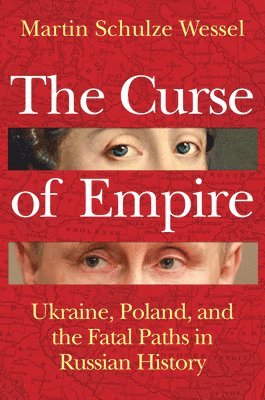
    Curse of Empire

    Ukraine, Poland, and the Fatal Paths in Russian History

    AvMartin Schulze Wessel

    Inbunden, Engelska, 2025

    359 kr

    Beställningsvara. Skickas inom 5-8 vardagar. Fri frakt över 249 kr.

    Fler format och utgåvor

    E-bok

    408 kr

    Beskrivning

    Russia's attack on Ukraine marks an epochal break in European and global history. Undoubtedly, the decision to go to war is closely linked to one person, Vladimir Putin, but Russia's war is not driven solely by one man's power calculations. We can only make sense of Russia's actions in Ukraine, argues the distinguished historian Martin Schulze Wessel, by putting them in the broader context of the history of Russian imperialism and the influence it continues to exert today.Schulze Wessel argues that Russian imperialism was shaped by Russia's relationship to Poland and Ukraine. These states were absorbed or partitioned by Russia in the eighteenth century, but Russia's rule over them was contested both by the Poles and by the Ukrainians. The entangled history of these three states produced path dependencies whose impact is still felt toda. Poland and Ukraine share a common history characterized by Russian domination and Polish and Ukrainian resistance to it; just as the Polish question challenged the Russian Empire in previous centuries, so too does the Ukrainian question today. Schulze Wessel argues that, as a result of Russia's confrontation with the Polish and Ukrainian questions, Russia's national identity merged with imperial claims in ways that were pernicious and consequential – the curse of empire. By placing the war in Ukraine in the context of an era of Russian imperialism that spans three centuries, this book sheds new light on one of the bloodiest and most destructive conflicts of our time.Also available as an audiobook.

    Produktinformation

    • Utgivningsdatum:2025-11-28
    • Mått:160 x 234 x 38 mm
    • Vikt:658 g
    • Format:Inbunden
    • Språk:Engelska
    • Antal sidor:352
    • Förlag:Polity Press
    • ISBN:9781509563999
    • Översättare:Neil Solomon

    Utforska kategorier

    • Europas historia inom Historia och arkeologi

    Mer om författaren

    Martin Schulze Wessel is Professor of Eastern European History at Ludwig Maximilian University of Munich.

    Recensioner i media

    "Martin Schulze Wessel is an outstanding historian of Eastern Europe and of Russia. He quite rightly places Poland together with Ukraine in a powerfully interpretive history of Russian imperialism. We cannot do without the concept of imperialism in our analysis of the present war, and this book is a sure guide to its meaning and its significance. Journalists, policymakers, and everyone concerned with the present Russian war on Ukraine would do well to read it."Timothy Snyder, Yale University"The Curse of Empire is a tour de force of international history. Martin Schulze Wessel explains the deep roots of Russian expansionism and places Moscow's aggression against Ukraine in a perspective often missed by both academics and the general public. Erudite, clear, and objective."Serhii Plokhy, author of The Russo-Ukrainian War "Russia's attack on Ukraine might seem like the irrational whim of a megalomaniacal leader – until you read this book. Nothing necessitated the aggression, but it finds acceptance among ordinary Russians because they share expectations of imperial power created over many centuries. If the author's message is sober, his language is rich, compelling, and direct; no other book makes as urgent a case for the importance of history."John Connelly, UC Berkeley "Martin Schulze Wessel helps us to understand the current Russian war of aggression in Ukraine in relation to the deeper history of Russia's ambitions in Eastern Europe. He is a brilliant historian whose work gives us new insight into contemporary international affairs."Larry Wolff, author of Inventing Eastern Europe"this excellent book is a delight for both professional and amateur historians."The Polish Review"Overall, Schulze Wessel's study offers an approach to historiography that is urgently needed in today's historical moment – nuanced and transnationally oriented. Given its scope, nuance, and timeliness, this book is equally significant as a scholarly and civic contribution."Irina Kogan, Ab imperio

    Innehållsförteckning

    • IntroductionChapter 1. Russia's Empire, the Hetmanate, and the Republic of Poland (1700–1795)Moscow's Road to EuropeThe Ukrainian Hetmanate between Poland and RussiaPoltavaEurop's First East–West ConflictRussia and Ukraine after the Northern WarCatherine II: Completing the Works of Peter IChapter 2. Imperial Order and the National Challenge (1796–1856)Russia's Empire in the Age of NapoleonThe Holy AllianceThe November Uprising in Poland as a European EventRussia's Response to EuropePolish and Ukrainian Ideas of LiberationThe Identity Politics of the Tsarist EmpireGeopolitics in ExileThe European Revolution and the War over CrimeaPoland's Revolt and Russis's Fear of the Ukrainian QuestionChapter 3. The Idea of Russian Exceptionalism and the End of the Tsarist Empire (1856–1917)The Imperial Set of Ideas Following the Crimean War and the Polish UprisingUkrainian AlternativesTsarist Symbolic Politics and the Search for a Foreign Policy DoctrineNational and Social Dynamics in UkraineThe First World WarThe Founding of the Nation State in KyivRevolution and Civil WarChapter 4. The Soviet Experiment and the Imperial Tradition (1917–1991)Old Borders, New BordersNationalization of Culture, Centralism in the EconomyPoland and PrometheismHolodomorThe Return of the Great Russian PeopleFrom Rapallo to the Hitler–Stalin PactWar against PolandThe Great Patriotic WarRussian and Ukrainian MythsYalta and the Cold WarUkraine as the Second Nation of the Soviet UnionPost-StalinismThe New Policy toward the East (Ostpolitik)Poland and Ukraine in the Last Years of the Soviet EmpireChapter 5. Post-Soviet Ukraine and Russia's Neo-imperialism (1992–2022)The Belated Revolution in UkraineRussia's Road to DictatorshipEmpire Fatigue and Soviet NostalgiaImperial InfrastructuresImperial Fantasies: Dugin and PutinConclusionAcknowledgementsList of IllustrationsMapsBibliographyNotesIndex