• Fri frakt över 249 kr
  • •
  • Snabba leveranser
  • •
  • Billiga böcker
Kundservice

Du är på sajten för privatpersoner.

Företag, bibliotek eller offentlig verksamhet?

Du handlar på classic.bokus.com, där alla dina funktioner finns intakta.
Till classic.bokus.com
Bokus logotyp. Gå till startsidan.
  • Erbjudanden
  • Nyheter
  • Student
  • Topplistor
  • Barn & ungdom
  • Bokus Play
  • E-böcker
  • Pocketböcker
  • Spel & pussel

10% rabatt på allt med kod: NYSTART10 →

Sidfot

Mina sidor

    Hjälp

    • Kundservice
    • Vanliga frågor och svar
    • Frakt och leverans
    • Retur vid ångerrätt
    • Reklamera vara
    • Betalning
    • Köpvillkor
    • Allmänna villkor
    • Information om webbplatsens tillgänglighet

    Om Bokus

    • Om oss
    • Pressrum
    • För studenter
    • För företag
    • För bibliotek och offentlig verksamhet
    • För leverantörer
    • Hållbarhet

    Populärt

    • Aktuella erbjudanden
    • Presentkort
    • Studentlitteratur
    • Nya böcker
    • Topplistor
    • Signerade böcker
    • Engelska böcker

    Inspiration

    • Boktips
    • BookTok
    • Populära bokserier
    • Barnbokskaraktärer
    • Populära författare
    Logotyp för Bokus
    Följ oss på Facebook (extern länk)Följ oss på Instagram (extern länk)Följ oss på YouTube (extern länk)Följ oss på TikTok (extern länk)
    bokus @ CookiesAnpassa cookiesIntegritetspolicyKöpvillkor
    Till Citymail hemsida (extern länk)Till Budbee hemsida (extern länk)Till Postnord hemsida (extern länk)Till Schenker hemsida (extern länk)Till Early Bird hemsida (extern länk)Till Walleys hemsida (extern länk)
    1. Samhälle och politik
    2. Samhälle och kultur
    3. Sociala grupper och identitet

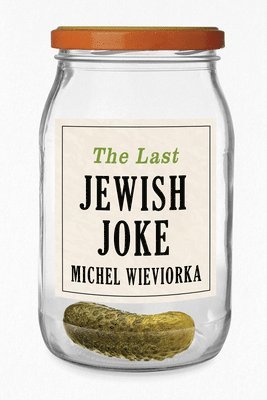
    Last Jewish Joke

    AvMichel Wieviorka

    Inbunden, Engelska, 2025

    182 kr

    Beställningsvara. Skickas inom 5-8 vardagar. Fri frakt över 249 kr.

    Fler format och utgåvor

    E-bok

    316 kr

    Beskrivning

    The golden age of Jewish humour flourished in the second half of the twentieth century, enjoyed by Jews and non-Jews alike, but its twilight years are now in sight.  Telling jokes has the potential to reaffirm community once religion, political loyalties and victimhood are stripped away: from the 1960s on, a unique cultural dynamism bound up in these jokes reminded Jews around the world of what it means to be Jewish. Often, jokes pit one group against another, but Jewish jokes opted for self-deprecation instead, and in this case, laughing at the group reinforced it. They enabled Jews to live in harmony with others in full conscience of their differences and they safeguarded a desire for survival at the heart of Jewish identity.  Moreover, absurd, larger-than-life characters such as Rabbi Jacob generated tolerance, empathy and tenderness among non-Jews after the horror and guilt of the Shoah.  From the early 2000s, however, the space that allowed Jewish jokes to flourish began to shrink, due to a decline in the understanding of the Shoah, a less positive image of Israel and a waning of the importance of Jewish culture in American intellectual and cultural life.  This playful and personal book by Michel Wieviorka includes Jewish jokes but also laments the disappearance of the Jewish joke and eulogises its ability to allow the thriving of community alongside difference. It is an original and wide-ranging analysis of the evolution of the diaspora and its relationship with the State of Israel, its history and dramas as well as its cultural creativity.

    Produktinformation

    • Utgivningsdatum:2025-06-20
    • Mått:200 x 10 x 140 mm
    • Vikt:165 g
    • Format:Inbunden
    • Språk:Engelska
    • Antal sidor:160
    • Förlag:Polity Press
    • ISBN:9781509564651
    • Översättare:Cory Stockwell

    Utforska kategorier

    • Sociala grupper och identitet inom Samhälle och politik

    Mer om författaren

    Michel Wieviorka is Professor of Sociology at EHESS, Paris.

    Recensioner i media

    “In the last three or four decades of the twentieth century, Jewish jokes became a central feature of popular culture in the US and, as Michel Wieviorka tells us, in France, too. Today, those jokes don’t have anything like their old resonance. Wieviorka ingeniously connects this observation to an illuminating account of the newly precarious position of diaspora Jews and their growing distance from an increasingly illiberal Israel.”Michael Walzer, Institute for Advanced Study, Princeton“The Last Jewish Joke is a rich and rewarding reflection on humor, identity, and Jewish life. Michel Wieviorka, a renowned French sociologist, combines astute cultural analysis and poignant personal memories, using the Jewish joke as a prism through which we can glimpse the shifting shape of Jewish identity and standing in France and the US over the past half century.”Michael J. Sandel, Harvard University"Wieviorka…argues that the great Jewish comic tradition – one that historically appeals to empathy through gentle self-mockery – is in danger of dying out.  His book is both a homage to that humour, which he sees as rich in generosity, absurdity and self-ironising asides, and the story of its evolution through the 20th century, jumping from the shtetl to Hollywood to France to Britain and beyond."The Daily Telegraph“It is right and proper that the flag flies for Jewish jokes. Our entertainment culture would be poorer without them. A cheer or two, then, for Michel Wieviorka.” Graham Elliott, The Critic"Michel Wieviorka writes about a golden age of Jewish comedy and the dark forces that may be killing it" Jewish Telegraphic Agency"For all its methodical, highly intellectual analysis, The Last Jewish Joke might be best appreciated as a moving Kaddish for the demise of anecdotes that were once considered the height of drollery. It is very much a product of brainy French Jewish creativity, which itself deserves to be cherished and celebrated."Forward"Wieviorka gives us much to ponder."Contemporary Jewry"Wieviorka's analysis seems spot on."The Jewish Standard"Densely packed"The Canadian Jewish News

    Innehållsförteckning

    • Acknowledgements Instructions for UseI The American Invention of Jewish JokesII ProlegomenaIII In France, in the 1960s and 1970sIV What Counts as a Jewish Joke and What Doesn’tV The Heyday in FranceVI The American DeclineVII In France, a Changed SituationVIII What about Israel?Conclusion: The Last Jewish JokeNotes