John of Salisbury and the Medieval Roman Renaissance
1 188 kr
Beställningsvara. Skickas inom 5-8 vardagar. Fri frakt över 249 kr.
Du är på sajten för privatpersoner.
1 188 kr
Beställningsvara. Skickas inom 5-8 vardagar. Fri frakt över 249 kr.
Irene O'Daly is a Researcher at Huygens ING (De Koninklijke Nederlandse Akademie van Wetenschappen), Amsterdam
‘O’Daly (Huygens Institute for the History of the Netherlands) offers a contextualized history of the political thought of John of Salisbury. She argues that he used ancient sources often filtered through Christian intermediaries to create unique ideas about political ethics, duty, and community. John was heavily influenced by ancient stoics, whose ideas he usually encountered through patristic writers, medieval compilations, and classical authors such as Cicero and Seneca. O’Daly uses methodologies developed by the Cambridge School of Intellectual History to reconstruct the most likely specific texts to which John had access. After a chapter exploring John’s source material, the book turns to unpacking the key characteristics of John’s thought. In chapters 2, 3, and 4, O’Daly shows how John combined Roman stoic thought with Christianity to create a rational conception of political duty that extended through entire communities. In the final two chapters, the book shows the application of these ideas to conceptions of just rule and practical examples through which John lived and on which he commented. This thoughtful study will interest specialists of medieval thought and politics.’B. J. Maxson, East Tennessee State University, ChoiceSumming Up: Recommended. Advanced undergraduates and above‘The case made for John of Salisbury’s Stoic influences is forceful throughout, and she makes a strong case that that topic has been understudied…It adds richly to the conversation on this important writer in general; going further, scholars concerned with the broader subjects of classical reception and the place of Cicero and Seneca in medieval intellectual history will appreciate its learned content.’John Hosler (Command and General Staff College), H-Net November 2018'students and scholars in other specialties will find in this book a clear and helpful introduction to John's ethical and political thought, and also to the diffusion of Roman ideas in the twelfth century. Not only that, but experienced scholars will be provoked to rethink assumptions about how received traditions subtly worked their way through medieval schools, manuscripts, and minds.'The Medieval Review
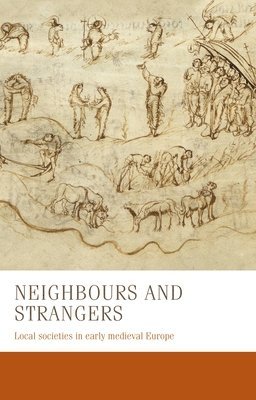
Bernhard Zeller, Charles West, Francesca Tinti, Marco Stoffella, Nicolas Schroeder, Carine van Rhijn, Steffen Patzold, Thomas Kohl, Wendy Davies, Miriam Czock
Inbunden, 2020
1 224 kr
Du är på sajten för privatpersoner.
1 188 kr
Beställningsvara. Skickas inom 5-8 vardagar. Fri frakt över 249 kr.
Irene O'Daly is a Researcher at Huygens ING (De Koninklijke Nederlandse Akademie van Wetenschappen), Amsterdam
‘O’Daly (Huygens Institute for the History of the Netherlands) offers a contextualized history of the political thought of John of Salisbury. She argues that he used ancient sources often filtered through Christian intermediaries to create unique ideas about political ethics, duty, and community. John was heavily influenced by ancient stoics, whose ideas he usually encountered through patristic writers, medieval compilations, and classical authors such as Cicero and Seneca. O’Daly uses methodologies developed by the Cambridge School of Intellectual History to reconstruct the most likely specific texts to which John had access. After a chapter exploring John’s source material, the book turns to unpacking the key characteristics of John’s thought. In chapters 2, 3, and 4, O’Daly shows how John combined Roman stoic thought with Christianity to create a rational conception of political duty that extended through entire communities. In the final two chapters, the book shows the application of these ideas to conceptions of just rule and practical examples through which John lived and on which he commented. This thoughtful study will interest specialists of medieval thought and politics.’B. J. Maxson, East Tennessee State University, ChoiceSumming Up: Recommended. Advanced undergraduates and above‘The case made for John of Salisbury’s Stoic influences is forceful throughout, and she makes a strong case that that topic has been understudied…It adds richly to the conversation on this important writer in general; going further, scholars concerned with the broader subjects of classical reception and the place of Cicero and Seneca in medieval intellectual history will appreciate its learned content.’John Hosler (Command and General Staff College), H-Net November 2018'students and scholars in other specialties will find in this book a clear and helpful introduction to John's ethical and political thought, and also to the diffusion of Roman ideas in the twelfth century. Not only that, but experienced scholars will be provoked to rethink assumptions about how received traditions subtly worked their way through medieval schools, manuscripts, and minds.'The Medieval Review
Bernhard Zeller, Charles West, Francesca Tinti, Marco Stoffella, Nicolas Schroeder, Carine van Rhijn, Steffen Patzold, Thomas Kohl, Wendy Davies, Miriam Czock
Inbunden, 2020
1 224 kr